Showing posts with label Conversation. Show all posts

Friday, October 16, 2026

Tooth Fairy

The Tooth Fairy is one of the earliest money teachers. 

My daughter had her first visit last night, after she very excitedly got her first wobbly tooth. She had a little wallet which she put the tooth in, and then put under her pillow. In the morning the transaction was done.

I love asking people how they did pocket money when they were young. Some got theirs through chores, some had to ask, some got fixed allowances that ran out, some didn't even know about money because things just arrived, and others because there was none.

Some parents plan for kids spending, retirement, or game-changing.

- Some start saving for university, cars, or first offshore trips when a child is born.

- Some open Retirement Annuities for children, that they won't access till they retire, but will have substantial disallowed contributions. A disallowed contribution is a retirement fund contribution that wasn’t deductible from taxable income in the year it was made. The kid isn't making taxable income. Those contributions can be deducted from taxable income when the money is eventually taken.

- Some open Tax-Free Savings accounts so that by the time the child is a teenager, they already have a fully tax-free engine firing on full power. Capital not intended to be harassed. Capital not there for spending. Capital with the potential to change the game if given time. Intergenerational Capital.

Other kids don't get visits from the Tooth Fairy or Father Christmas, and see Mom and/or Dad struggling to get food to the table. My friend Ben says he tells his kids, "If life was fair, you would be far worse off." A little reminder that the global average GDP is about R20,000 per month. Can you live off that? The global contrasts are hard.

The personal transitions and contrasts are hard too. When there is a gap, in either direction, between how parents live and how kids live. Or when there is a gap between how you grew up and how you end up. Or between how you and your siblings or friends live.

The Eagle Nest problem is when wealth parents constrain their kids choices to high paying jobs in order to self-fund keeping up with the parents life style.

Other kids end up supporting, often begrudgingly, parents who didn't make adequate provisions. Sometimes because they were supporting their kids, sometimes just because. That can be complicated once people start their own family, and money decisions become joint decisions with new priorities.

There isn't just one way to do money. One financial plan. One correct answer.

Money is just a story. A story deeply woven into what we care about, and how we get on with choices and trade-offs. Deeply personal. Deeply human. Deeply conversational.


Thursday, September 25, 2025

It's Not About You

I’ve always been a “try hard.” At school that meant signing up for everything: sport, debating, drama, chasing every chance to prove myself or die trying (for example losing 111-0 to Martizburg College - Thanks Murray). The world rewards that. Activity is visible. Effort is measurable. Roles are sorted by who tries the hardest and delivers fastest. But the danger of living like that is you start to believe the story: that everything depends on you, that outcomes are always cause and effect, that meritocracy is fair and final. It is flattering, and it is exhausting. Over time I learned that life does not bend to our trying. It bends to context, to randomness, to relationships. The real practice is to see things as they are, and then nudge.

That wiring carried me into university and then into my early career. I raced through my studies, eager to qualify as fast as possible, and landed in an industry built for competitors. Benchmarks, performance tables, stock-picking contests; finance is structured like an endless exam. Every meeting, every appraisal, was another chance to prove whether you were winning. I told myself I could “leave my ego at the door,” but the system was designed to poke it. I would walk in calm, and by the time someone pressed the right button, I would walk out rattled.

Meritocracy is seductive like that. If you are doing well, you must be smart. If you are doing badly, you must be stupid. That story is empowering because you believe your actions matter. But it also creates a gnawing anxiety. Every setback feels like a personal failure, and every success is only temporary. When you look around and see others doing better, it whispers that you are falling behind.

That is when I started to notice the trap of being seduced by success. When you are good at something, the world nudges you to double down. You narrow yourself into the lanes that reward you most quickly. Soon you become defined by that success. But you also start neglecting the parts of yourself that are not as visible or easy to measure. The scoreboard becomes your compass, and you can lose sight of what you actually value.

The irony is that when you make it all about you, your performance, your reputation, your edge, you end up hollow. Success becomes a treadmill, and you never arrive. For me, that realisation came in the frustration of constantly defending underperformance, trying to act like a stock-picking god, or sitting through appraisals that felt more like battles of ego than constructive conversations. It was draining, and I began to ask whether this was really what life was about.

Stepping back, I began to think differently. At the time, the median income in the UK was about £2,000 a month. Globally, $11,000 a year placed you at the 50th percentile. That perspective mattered. If I could live below the median, if I could focus on what I later came to call democratic goods, the shared infrastructure of society, I did not need to constantly prove myself by chasing the next rung of status. I could choose to consume less, compete less, and buy myself freedom.

Of course, that freedom came with its own anxieties. Not everyone has the option to step away. For many, life is hand to mouth, and talk of “leaving ego behind” can sound tone deaf. But for me, it was a philosophical decision: to stop letting money be a mirror of my self-worth. Financial Yoga, as I have come to describe it, is the practice of staying motivated while detaching from the negative aspects of identifying with wealth. It is about designing a life where capital has a job, but you are not that job.

Eastern philosophy helped me make sense of this. The Bhagavad Gita, for example, is a story about war. It sounds strange for a yogic text to focus on battle, but its teaching is about dharma, or duty. Life is not about your ego, but it is about showing up for your responsibilities. You engage in the fight because your family, your dependents, your community need you. Yet you detach your identity from the outcome. You do your duty, but you do not let the result define who you are.

That is a powerful shift for financial decision-making. If you make it all about your ego, you will chase returns, overtrade, and panic when things go wrong. If you detach completely, you risk apathy. But if you anchor yourself in dharma, you find balance. You accept that randomness plays a role, that outcomes are not perfectly fair, and you focus instead on process. Saving consistently, building trust, playing the long game. It is and it is not about you.

The difference between one-off contests and repeated games is crucial here. In a one-off contest, like a school exam or a quarterly appraisal, everything is about proving yourself in the moment. In a repeated game, like a long-term advisor-client relationship, trust compounds over time. You do not need to “win” every round. You need to keep showing up, keep the conversation alive, and keep learning together. Over the long run, consistency beats theatre.

This is where “the juice” comes in, the joy of practice itself. Early on, progress is slow. Learning a skill takes at least 100 hours before you are even competent. You may feel clumsy, exposed, even embarrassed. But stick with it, and you start to embody the skill. Just as a musician no longer thinks about each note, or an athlete no longer thinks about each stride, your financial habits can become second nature. You move from “numbers to leave numbers, form to leave form.” You build a rhythm that frees you from overthinking.

The best part? You do not need to keep your craft secret. World-class performers like Josh Waitzkin talk about practicing in public, letting others see your process. The competitive advantage is not in hiding; it is in embodying. Advisors can take the same approach. Instead of trying to be the smartest person in the room, show your work. Share your process openly with clients. Build trust through transparency. Over time, that trust becomes your edge.

So what does this mean in practice? It means channeling competitiveness into system design rather than self-performance. Set spending floors and saving rails. Agree on rebalancing rules. Document beneficiary intentions and next-generation plans. These are things you can own and improve without making them part of your identity. They are repeatable, transparent, and trustworthy.

And it means remembering, always, that financial advice is about relationships. It is about listening to the client’s story, not just projecting your own. It is about creating safe spaces where people can explore anxieties without judgment. It is about helping them build habits that compound over time. None of that requires you to be the hero. In fact, the less it is about you, the more it is about them, and the stronger the results.

In the end, “It’s not about you” is not a criticism. It is an invitation. When you let go of the need to prove yourself, you gain freedom. When you stop making money your mirror, you stop chasing illusions. When you focus on dharma, on responsibilities, relationships, and trust, you find peace.

The paradox is that what you do still matters deeply. Your actions, your habits, your conversations compound into real outcomes for you and for others. But they matter most when they are not about ego. They matter when they are about stewardship, connection, and long-term growth.

So here is my challenge: make one financial decision this week that is not about you. Ask a client what “enough” feels like this year. Set one simple constraint, like a savings rail or a review cadence. Do something small, transparent, and repeatable.

It is not about you. And that is exactly why it matters.

Thursday, July 17, 2025

Conversational Tools

I don’t think we’re ever really having the same conversation.

It’s like sitting in a theatre watching the same play but from different seats, distracted by different things. Maybe you’re focusing on one actor, while I’m captivated by the lighting.

Jonathan Haidt uses the metaphor of the rider and the elephant. The elephant (our emotions, intuitions, and embodied experience) is doing most of the habitual and automatic work. The rider (the conscious mind) tries to explain it afterward.

Inside my head, it feels like there’s a committee in constant debate. Each member has their own agenda, and their words float around, interrupting and overlapping. When I speak, it’s not a clean stream of thought—it’s fragments trying to make sense of each other. Dipping in and out of connection with my elephant.

I don’t have access, but I am as sure as I can be that the same thing is happening in your head.

So when we talk, it’s not just me talking to you, it’s my inner committee talking to yours. No wonder we miss each other.

That’s why we need better tools for conversation. Tools like Interpretive Charity, Transcription, Summarising, Questions, Reframing… and teasing out meaning rather than thinking we can just force it on each other.

To truly hear.
To truly listen.
Because sometimes… we’re not even in the same conversation.

Truth is conversational. 

Friday, June 20, 2025

Refining Conversation

Conversation is not the same as the written word. 

When you read a transcript of a lively discussion, it often looks as if we’ve forgotten how to speak. Sentences zig-zag, filler words appear, we change tack mid-thought, someone interrupts, and on paper we can seem semi-literate. We blame the voice-to-text software, but the truth is that real-time conversation is messy by design. 

Think about how we listen. We are not like a driverless car with hundreds of sensors. We have one brain that’s simultaneously attending, drifting, and free-associating. We catch enough to respond, yet our thoughts wander to whatever the moment triggers. Transcribe that dance and it’s chaos. 

Inside my own head (and, I suspect, yours) there’s a five-person committee chattering away. Jonathan Haidt’s “rider and elephant” analogy captures it well: the rider (conscious mind) believes it’s steering, but the elephant (subconscious) actually decides where we go, and only afterwards does the rider cook up a justification. Free will exists, but it’s more like gentle guidance than total control. 

That’s why stories matter. They take those bouncing ideas and smooth them into a clear arc: beginning, conflict, resolution. Even then, a short story or a two-hour film is a drastic simplification of real life, which is infinitely messier, full of randomness and ambiguity. Storytelling is how we compress complexity so we can think, and act. 

Writing is the workshop where this compression happens. Forcing thoughts onto the page helps us sequence them, trim the excess, and discover what we really believe. It’s also why I’m excited about large language models. They act like mirrors to our half-formed ideas—reflecting, rearranging, challenging. Modern AI isn’t rigidly rule-based; it learns the way children and, yes, elephants learn: through iteration, feedback, and embodied patterning. 

That’s not something to fear. Humans excel at adaptive learning too, especially in the context of relationships and collaboration. The task is to stay aware of what our inner elephant is absorbing, remain reflective and conversational, and keep refining the stories that steer us. 

Conversation is the raw material, writing is the refinery, and learning (human or artificial) is the fuel that keeps the whole system evolving.


Wednesday, November 16, 2022

The Conversation

My big take-away/practice from my experience of Yoga is managing expectations. Personally, I wrestle with triage and trade-offs. There is so much going on, and every choice has unintended consequences. I work on developing an ability to accept being “a part of the conversation” and create meaning/purpose as a part of something bigger where I am not constantly judging myself/others. 

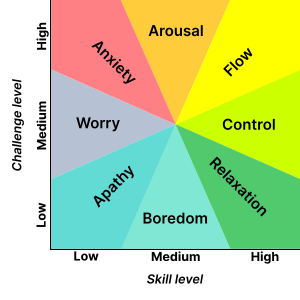
Mihaly Csikszentmihalyi called this flow. Those moments when you are balancing skill & challenge so finely that it focuses your attention and time seems to stand still. There is no anxiety where the task seems beyond you. There is no boredom where the task doesn’t engage you. 

Where learning and activity merge in a playful way and mistakes don’t chip at your sense of self, but build your wisdom. Where you are a participant and connected to everything else. There is no time for panic or worry because you are breathing into the stuff that matters.

Monday, September 26, 2022

Creativity and Learning

One of my frustrations with my religious roots was when I was having a conversation with someone, and the tone of their voice changed. Ken Robinson, who passed away in 2020, was one of my favourite presenters. It sounded like he was having a conversation with you. You get the feeling it is two-way, even when it is just him talking. It felt like he was also listening. 

I got really frustrated when people I was opening up to put on their “lecture voice” (it's not unique to religious conversations) or what I called the “Bible voice”. If I was talking to someone about one of the issues that I was facing, and suddenly I realised from their tone of voice, they were not listening anymore. They were telling me a story. The issue I mentioned triggered a story I had probably heard multiple times before. I was a regular once-on-Friday, twice-on-Sunday church attendee. I knew the Bible stories. 

It was difficult for me when someone stopped listening, and went onto what felt like automatic pilot. It was also difficult when I reached some kind of impasse, where the answer wasn't satisfactory, and I was still struggling. The philosophy, as I experienced it, was also antagonistic towards other world views. You do not need to explore widely, as the truth is in the Bible. I went to lots of churches, while I was growing up in Westville, although the Methodist Church and the Baptist Church were the main ones. I did not go to the Temples or Mosques. I did not even go to the Catholic Church. I did read “The Life of Pi”, and felt a kinship for his search where he did end up exploring all these various religions. I read “Sophie's World” which opened up this idea of Philosophy. Of exploring widely around the meaning of life. I loved the name Sophie. The idea of a Goddess of knowledge. At a later stage, when in the yoga world, with a new understanding or perception of what a deity is, or what imagination of god was useful for me, I chose Saraswathi. Saraswathi is the goddess of creativity and learning.

Wrestling the Truth


Thursday, August 19, 2021

Right Tool

Sometimes in conversation, we get confused about what we are actually doing. There is not clear agreement on “the game we are playing”. Is it advice? Is it listening? Are we just waiting for our turn to speak? The advantage of knowing what game you are playing, is that you don’t get into a situation where the games conflict and neither person gets what they are after. 

One game I call “8 Mile”, after the movie about Eminem. In it you trash talk yourself for 5 minutes, then you specifically ask people to be nasty/aggressive for 5 minutes. In a controlled setting, you go to the places you least like going. I am normally not a fan of devil’s advocate approaches, or the academic style of critique. 

I prefer a Theatre Sport approach, where you build on what the other actors do. If someone pokes you with a banana, pretending it is a sword.... go with it. Pretend too, and act like you have been stabbed. Don’t go, “but that is a banana”. 

Theatre lets us get to truths behind the truth. If people know that that is the point. A lot of the time we are playing competing games without clarity of what the point is. Of where the game is leading us. Of whether we even want to be part of the game. Different tools have different uses in different situations. Not every problem is a banana.

Friday, July 09, 2021

Explorative Questions

Find someone who is capable of deep listening and has the skill to hold a mirror up for you in a compassionate way. Genuine listening is hard. 

I clearly speak a lot. Sometimes too much. I like expressing ideas and listening requires work. I am deeply curious and want to hear what others say, but also end up testing my ideas out loud. Getting the balance right by being quiet, asking explorative rather than critical questions, and being truly interested in what others are saying, is a form of fitness that requires exercises to build into your habits. 

Often in “conversation”, people are not listening, but are waiting for their turn to speak. Waiting or interrupting. Showcasing established opinions. When I realise I am in one of those one-way exchanges (especially if I have the self-awareness to realise it is me who is the problem), I try switch gears to limit my speaking and use more pauses. “Speaking in tweets”. 

I met Allan Gray (the man, not the company) at the tail end of his career. At the risk of name dropping, he did not know me well. He knew who I was, and we had conversations, but we did not often work closely. What was fascinating about him though, is that in almost all of my (and others) interactions with him, he was the one getting information. He had an insatiable appetite for other peoples' opinions, even if he was a famous contrarian, who put others' views aside when he finally made his own decisions.

Monday, July 05, 2021

Start with Conversation

Financial Planning starts with a conversation about you and your relationship with money. The goal being to help you understand your risk tolerance and what matters to you. If you want to still the waves of money anxiety, you are building your capacity to deal with complexity, randomness, and ambiguity. 

We do not, and cannot, have a complete understanding of cause and effect. We cannot know in advance what the result will be for each path we pick. If we did, we would all just pick the one that took us to our intended destination. The rules are always changing. You cannot just do exactly what has been done in the past and expect the same result. 

A good conversation about financial planning starts with understanding you as a person, how you see money, what your goals are, and what you value. You do not get paid for taking risk. You get paid for adding value in monetizable areas others have signaled is in short supply. 

Risk tolerance is mainly your ability to adapt, adjust, and accommodate. Like physical strength and flexibility, risk tolerance is something you can build through exercise. 

Then you make money, or your money makes money, by solving problems for decision-makers with money.


Thursday, June 24, 2021

The Conversation

Financial planning is much less about number crunching and much more about understanding. A planner is more therapist than mathematician. Like a good therapist, the crucial factor is rapport. That you have a connection and that you respect them. But most of the work in therapy is done by you. There are some basic rules and structures (like country specific tax laws, and company specific product processes) they will know, but in most cases the financial planners have administration teams that help them with that. They will have some areas of knowledge that you don’t have, and act like a teacher. Their main job is the conversation. More them understanding you, than you understanding anything else. Understanding the way you see and respond to the world and setting up an (adjustable) plan that you can sustain. That you can sustain through various risks. Allowing you to build the capital to absorb and feed off uncertainty, and the containers to create and hold the things you value.

Sustaining turns chaos into music