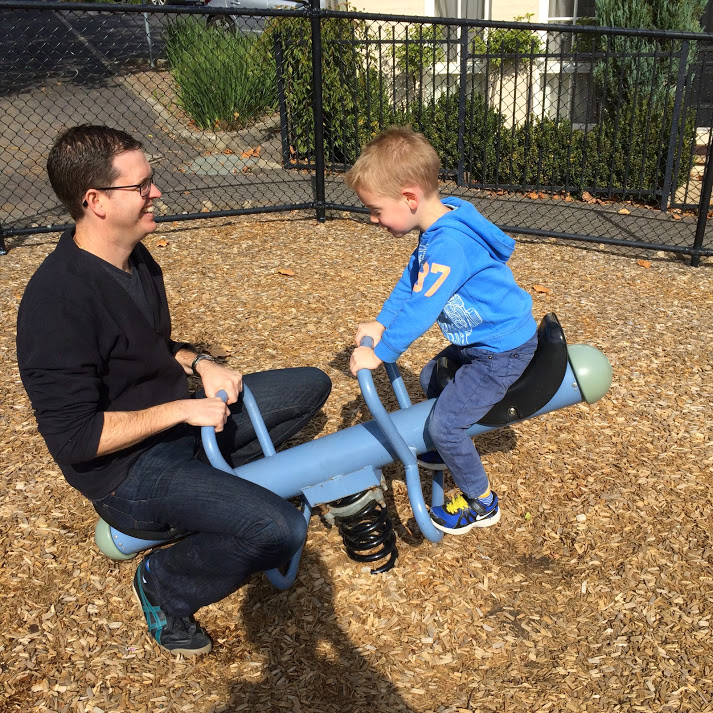
I find it easier to deal with my own stress than I do to deal with the stress of those I care about. In restaurants I struggle to even sit next to people (who I don't know from a bar of soap), that are in distress. I am like a sponge. When I do know people, and care from them, it is multiples more difficult. With myself, I value the philosophy of sitting with the light and the dark. A life without struggle would be a life without flavour. I work hard on my ability to, with the help of the relationships that hold me, cope. I would like to get to the point where I can accept the broader world's struggles too. I am not there yet.
There are lots of experiences in my life that were unpleasant, hurtful and traumatic. I don't believe in regret. Those dark places are part of the fabric of who I am. If you were to play history over again, nothing would be the same. Of the billions of ways things could have turned out, this is the only time it has turned out this way. Each and every thing that has happened is part of why it is so. Instead of regret, the way I try to approach it is to do something awesome. To savour the next step.
In all those alternate histories, the awesome thing I do now wouldn't have happened. The conversations I have now would have been slightly different. The way I experience things now would have been slightly different. The people I meet. The places I go.
Not regretting something doesn't mean it wasn't horrible. There are moments when people I love have been hurting deeply. Profoundly. Sobbing uncontrollably. Moments when I have been able to do nothing about that. Those moments hurt even more than the moments when I was that person. Those sections of time that seem to expand as they tear at you. That eat away at all that mattered most. Those times when time seems like an enemy. When it isn't thoughts, or actions, or problems that your mind chews on but a visceral pain. Where life hurts. It grates forward.
Grating is movement. I cope. I get another chance. I draw on the people who love me and I take another step. I don't wish those moments away. Wishing them away would wish away the moments that led to them. Wishing them away take away the world I live in. The people I love.
Instead I move on in a world I love deeply. A world worth celebrating.
I tell people that I study 'happiness and learning' which basically means I can think and write about anything. Because if it is not about one of those, what is the point? I got push back yesterday, and a book recommendation. There is more to life than happiness. There are the four humours (sanguine, choleric, melancholic, phlegmatic / air, fire, earth, water / spring, summer, autumn, winter). Life is hollow if it is just the pursuit of happiness. I do believe in 'The Art of Pain', and that the best you can wish someone is a little misfortune. Life comes through flavour and contrast. Strength comes through a little stress. But perhaps the stress itself has value, in and of itself, not just because it allows us to savour the other moments?
I have mentioned my cousin Charles before, in discussing the 'Normalising of Suffering'. He is a Psychologist (and an awesome guy) who focuses on helping people cope with Chronic Pain. We had a chat...
Charles on the left. His daughter's picture of me on the right.
Trev:
One thing Psychologists are trained to do which lay people aren't good at is to listen without judgement. It doesn't come naturally. I recently saw a David Bowie clip where he was giving MTV grief for being racist. The interviewer explained their point of view (basically saying they were giving people what they wanted) and Bowie responded, 'I understand what you are saying'. The interviewer pushed with, 'Do you see our logic?'. Bowie reiterated, 'I understand what you are saying'. Both the listener and the speaker tend to search body language for agreement, and it is a rare skill to be able to listen in a way that allows someone to carry on explaining their view without endorsing what they are saying. Without offering advice. Without trying to fix things yourself. It seems when it comes to Mental Health, the fixing has to be personal. Advice isn't that helpful.
Charles:
All true at one level. Before we find another thing wrong with us however, I suspect judging, like comparing and predicting, is a strong feature of a self-aware human mind with evolutionary benefits. The skill here might be how we learn to respond - with the difficult task of listening - to someone when judgement (and often discomfort) is turning up. I'm giving myself a lifetime to master this skill. I do think our mental health/lives are a personal journey of discovery. I suspect advice might prove unhelpful, because often our thoughts about our suffering are a reflection of an unchangeable past, which we are ruminating on and predicting will be our future. The real question to me however, is whether we need to be "fixed". Many smarter people than myself, would suggest that when we start a journey of trying to "fix" ourselves/others, life might start to narrow, our suffering increase, and simply more problems will emerge that will need to be "fixed".
Trev:
I completely misunderstood evolution until reading Daniel Dennett's 'Darwin's Dangerous Idea'. I had heard it compared to the Red Queen in Alice in Wonderland, who runs faster in order to stay in the same place, but the penny hadn't dropped. I understood evolution to be the upward trajectory of the past to the future. A prediction of progress. A prediction that things will be fixed. It is interesting that that is not at all how evolution works. The 'survival of the fittest' suggests we know in advance who is the fittest. It is more random that that. Evolution works by doing largely the same thing again and again. The minor, small copying mistakes rather than predicting strength add robustness. If surprises happen, small differences help survival. Perhaps that is similar to advice and fixing? Mental Health comes more from understanding what is. Some acceptance. Some appreciation. Perhaps that is why meditation is seen as one of the partners to psychology and psychiatry in helping.
Charles:
I think there is enormous power for a therapist/ a person normalising (as opposed to fixing) another's suffering. It validates the inevitable fluctuations of our inner world and our life. It also validates something that has already taken place and perhaps opens some space for moving in a chosen direction. One point here becomes whether an individual gives energy to their "problem/symptom" or to their "life". I don't think there is a right and wrong answer here (although we seem to bias energy to problems). Ideally, where energy goes should emerge from an individual's actual experience (e.g. there should be a reward for your actions). I do like the concept of variations. I think it is very useful to notice our patterned behaviour and try make, even arbitrary, changes at times. This likely encourages more mindful living, as well as likely opening new pathways of living.
Trev:
Normalising suffering is incredibly powerful. Knowing other people are also going through similar issues, and you aren't being punished in any way allows us to escape the idea that we are doomed. That random problems are actually a pattern that is going to carry on. Otherwise we can descend into self pity. Problems do seem to get a disproportionate amount of our energy, ironically because we want to get rid of them. A little like terrorists attract more attention than they deserve, and potato salad is more dangerous than sharks (more people die of food poisoning). A little perspective does seem to help. Even an arbitrary shake up. I know that when I have been in a rut, sometimes moving cities has done wonders. But even there it seems like I am offering a fix. I like the idea of art as a channel to normalising our internal struggles. Art as a form of listening.
Agreed Trev, I think art provides a channel to all internal experiences. It's a pity this is often missed completely at a political level. I am truly grateful (particularly to my mother) for being (at times begrudgingly) exposed as a youngster to various art forms. It seems to have vicariously impacted on me. Considering art in this way, also makes me reflect on nature's capacity to also offer self-insight. Taking this on a slight tangent, I previously talked about learning from experience. When considering a "channel", I think one of the joys of being the current generation/s is to learn from those who have come before us. We can view art, read books, etc., and learn, or appreciate something in a few hours, which may have taken someone a lifetime of studying/experience to understand. Each generation can building upon this expanding 'collective wisdom'.
Trev:
Absolutely. I find it interesting that we complain about people being selective in their Social Media profiles and crafting very positive views of their life. Photos of travels and smiles. At the same time, when people share the difficult stuff, it is hard to process. We feel they shouldn't be telling all and sundry. Art (including books) seems to provide an alternative. A way to share without fear of narcissism. It would be great if people could trust Artists enough to confide in them in the same way we do to psychologists/ lawyers/ doctors/ religious leaders. If the Artists are able to then strip out the personal identity which leaves people feeling vulnerable, we would go a long way to normalising suffering. The difficulties surrounding child birth, parenting, divorces, illness, moving home, renovations, family conflicts etc. that are the definition of normal life. In that way people would feel less isolated. Perhaps the books are there already? I am not sure how many of our real struggles are that different from generations past.
Charles:
I would agree that our day-to-day struggles do seem the same as they were for our recent ancestors. Collective Wisdom (which requires sharing struggles) would be useful in this space. I do think however modern humans are exposed to suffering at a level never seen before. Within a 10 minute time frame I can face my own suffering and then surf a wave of suffering from Iraq, to Sierra Leone, to the upcoming Iowa primaries. When we can't face our own suffering, how can we manage the world's suffering? I imagine avoidance in various forms is our go to strategy. With this in mind, we cannot rely on psychologists, psychiatrists, religious leaders, etc. to help us. The reality is most will never access this support. It seems the wider audience (yes through art, education systems, communities) these ideas and coping strategies (not necessarily 'fixes') spread, the great chance of wiser collective choices about the world we want.
Trev:
That is why I think lay people can learn a lot from the listening skills of these professions. We need to be able to draw on the support of friends and family when professional listeners are scarce. There are also wonderful books which can provide solace. Matt Haig is writing some incredible pieces in championing Mental Health. 'The Humans' is a funny, warm, and very readable look at the messy but beautiful lives we lead. 'Reasons to Stay Alive' is the story of his own personal struggle with depression. The Book of Life lists a number of artists, writers and philosophers who have made contributions which can help us normalise the challenges of life, and celebrate the good bits. As you say, accepting rather than fixing pain so you can direct your energy to things that matter. Not letting the pain define us.
Charles:
And so we circle back to the beginning. My practical tip to listening better would be to slow down and attempt to listen 1% better. When you ask how we can do anything 1% better, I think we often have an answer and can immediately alter behaviour, without the overwhelming feeling of trying to make wholesale changes. Try the same with accepting something or giving energy to life rather than to a symptom. Trev, I will follow-up your suggested reading. From my 2015 reading, I would suggest Anthony Biglan's "The Nurture Effect" and George Vaillant's "Triumphs of Experience" as excellent insights into living a good life (including coping with suffering). Finally, in light of my "collective wisdom" response, perhaps Trev you could provide me and your followers and updated suggested resources list, based on your own learnings.
The fourth chapter of The Book of Life's Curriculum is on 'The Stoics'. One of of the cornerstones of what I look for in a philosophy on life is 'the ability to deal'. I think we all choose ways to fill the gaps in our understanding. To make sense in a world we don't have capacity to make sense of. The leaps, fudges, fakings and role playing lets us pretend to be confident. The beliefs help us think we have cracked the code. That the gaps are filled by something solid. What works for me is to try and find a philosophy that basically says I and we will be ok. That we are already ok. That helps you take the next step forward, whatever happens. I still think that our control is very limited to the moment in which we find ourselves. Sometimes our control is overwhelmed by the moments which lead us there, and we miss our chance.
The Stoics lend a solid foundation to that world view. If you imagine the 'Worst Case Scenario', it is often not nearly as bad as you think it is. It is one of the problems with woe is me moaning. It is very difficult to be self reflective. We can see the humour in other's complaints. How lucky they have it from a different perspective. It is very difficult to see how lucky you have it from your own perspective. The Stoics believed in something very similar to the Yogic practice of Tapas. A form of austerity or pushing yourself out of your comfort zone. Some take it to extremes, but the way it was described to me, Tapas should never do permanent damage. The point is to strengthen. Not to break. Much like the physical yoga exercises. Pain is never a good thing. A little positive stress is. A little harder. A little stronger.
We think in contrasts. If you are always fine dining or sleeping in an awesome bed, it won't feel fine or awesome. Michelin Star dining may have the same impact on you as Jungle Oats porridge. A First Class flight may be as forgetful as a daily commute on the London Underground. The Stoics suggested sleeping on the floor for a week a year, eating nothing but stale bread and water. I haven't done anything that extreme. My bed felt amazing after spending a week in a hostel though! Something as simple as making a cup of tea becomes a treasure.
One issue with Tapas I have is you can't claim that it helps you experience what it must be like for the people for whom that is not Tapas. The last World Bank estimate in 2012 suggests around 900 million people live at or below $1.90/day. I want to find out more about what that means practically. I can't wrap my head around the possibility. Particularly, what it must feel like if that isn't some philosophical exercise you are doing. If that is reality. Marcus Aurelius, one of the most famous stoics, said these exercise help you realise how little material stuff is needed to live a happy life. And that is the irony, even within the most extremely impoverished situations, there are bursts of energy, strength and resilience that inspire profound admiration.
My cousin Charles is a psychologist who helps people with Chronic Pain. The pain that doesn't go away. It seems to me we are mostly wired to take action. To come up with a plan to get from where we are to somewhere better. Charles says a big part of what he does is helping people accept the pain. By acknowledging the pain, you are able to give it the necessary attention. But no more. It reminds me of the Hulk when Iron Man is trying to irritate him into getting mad. He says he has learnt a trick to control it. You assume it is a trick to remain calm. But no.
'That's my secret Captain. I am always angry' Hulk
One of the things I have to work on the hardest is to just listen. I am a talker. When I go into meetings with a conscious decision to just keep quiet and listen, it almost never works. I have a buddy who was a little like Iron Man. He liked to poke. He used to get great pleasure out of listening to me planning a strategy for silence, and then just before the meeting whisper something like, 'but you wouldn't be you if you kept quiet'. Inside, I am always talking.
The talking comes from a bubbling of ideas of how and what we can do to defeat all the challenges in the world. The 18 year old idealist in me doesn't seem to have realised he has doubled in age. I have met lots and lots of equally passionate people. Everyone has something that gets us going. Something that sparks us off to rage against the world. Something we desperately want to change.
Yesterday I was wiki-walking through various philosophers. It turns out one of my favourite authors, Ursula Le Guin (The Earthsea Quartet) has written a book about Lao Tzu who another of my favourite authors, Josh Waitzkin, regularly talks about. So that will be my introduction to Taoist philosophy. I did enjoy one famous Laozi saying I found, 'Try to change it and you will ruin it. Try to hold it and you will lose it.'
It seems some of the big challenges in the world are pains we need to acknowledge rather than fix. Some require more listening to solve than action with big ideas. I said yesterday that happiness, for me, is a combination of a question and a practice. The bit that is missing there is the acceptance. Some things are what they are.
Lianne is a buddy from university. She has been reading my blog when she gets a gap, and was keen to write a post but had decided to write to me two nights ago to say she didn't have the time. Instead she wrote the post. I am really glad she did. Finding time for the things we want to do is tough. Finding time for those annoying little admin task that we don't want to do is tough. Almost everyone I know is really busy. Time is priceless and is the one thing we all have exactly the same amount of each day. Lianne is a physio. I am a big believer that sorting our bodies out so we give them every chance to function as well as possible is a core foundation of happiness. So I am super chuffed to get her insight. Lianne has always had the positive mindset that she identifies as making such a difference in her patients. Add that to being great with people and it is no surprise that she has found a path that brings her joy.
I am a physiotherapist and have been one of those fortunate enough to love what I do. I had the opportunity to run my own private practice in South Africa, and have now been working as an extended scope physiotherapist with a special interest in chronic pain and spinal conditions in the UK. The mainstay of my job in the Spinal Disorders Unit is to assess patients when they are referred to us, assess whether they need further investigations (blood tests, imaging etc.) and then to decide if their diagnosis is an operable one or one that would be best managed by conservative therapy (i.e. physiotherapy etc.).
Every day I meet patients who have terrible spines on imaging and yet are in a minimal or manageable amount of pain. And then I meet those who are in terrible pain and yet have nothing to find on imaging. Of course, there are always those in between, whose symptoms match those on scans, and they are the ones we offer injections to or surgery, and sometimes they still choose to continue with physiotherapy or no intervention as they are mending on their own.
Which brings me to the question, what makes the difference between these essentially two separate groups of patients? It's something we as a health profession have tried with no real success to understand, and it seems to confirm that we are indeed holistic beings, with emotional affect and psychological impact on our being. Now by all means, I do not mean to detract from those that are in severe pain, but it fascinates me how some people have found a way to cope with severe pathology and have apparently minimal impact on their life. Is this a case of them having better support systems in their life so that they can cope with more? Is it a case of them having an inherently greater capacity to cope with more stress/pain than others? Is it simply that due to the pathology being more severe, the body has compensated over time and therefore the impact on the body as a whole is less?
I know there is no one answer to these questions, but something I do see time and time again with my patients, is that often what brings them the most relief is helping them to adjust their expectations. If they know what their diagnosis or prognosis is, very often they are then happy to continue managing their pain, as long as they have the peace of mind that they can understand its natural course. Sometimes this is not so simple, and I end up having to help them to understand the complexities of chronic pain (read more about this here - a colleague's brilliant blog on language and chronic pain) but sometimes it is as simple as being heard and reassured.
Which brings me to the thread of this blog, is our happiness determined by our expectations for ourselves? Early on in my undergraduate studies when I was still wrestling with who I was and who I wanted to become, I was told that the career path I took wasn't important. It was what I did with that career that made the difference to my happiness state. I can honestly say there were many days in my early career when I wished I had studied something else, challenged myself in different ways. However, the more I have embraced my career path, the more it has rewarded me and given me incredible satisfaction, both intellectually and emotionally. I do think that our expectations are key to our happiness, and if these can be managed appropriately and realistically, be it with regards to our health, careers or even love, we are much more likely to be happy with ourselves and our lives.
In writing a blog about several topics in which I admit to being a complete beginner, I am going to have to rely heavily on the people I am writing for who cumulatively know most of what I am likely to learn already. I would love it if some of you found the time to write a guest post on the subject of happiness or learning. The framework I use for thinking about these things is what I call the '5 + 2 points' which includes proper (1) exercise, (2) breathing, (3) diet, (4) relaxation, (5) positive thinking & meditation, (+1) relationships, (+2) flow. Naturally if you would like to write about something that you think I have missed, I would love to include that too. If you are up to doing something more practical, it would be awesome if you did a 100 hour project and I am happy to do the writing based on our chats if that is how you roll. Email me at trevorjohnblack@gmail.com