Король Георгий, Кайзер Вильгельм и Царь Николай
были первыми кузенами. Их бабушка была королева Виктория. Когда мы говорим об
Восточном Весте, легко забыть, что это в основном относится к холодной войне.
«Западный» не белый. Большие идеологические разногласия прошлого века вызвали
кровопролитие и беспорядки во всем мире. Должны ли мы иметь монархов? Должны ли
мы иметь диктаторов? Должны ли мы придерживаться правила большинства? Должны ли
мы дать людям возможность самостоятельно выбирать? Должны ли потребности общин
быть поставлены выше потребностей отдельных лиц? Что происходит, когда
сталкиваются потребности разных сообществ и отдельных лиц? Государства-нации
создали историю, в которой разные места были принципиально разными, с
«народом». Стоит разгадать эти подразделения, чтобы увидеть, что нас связывает.
Showing posts with label Cold War. Show all posts
Wednesday, June 20, 2018
Wednesday, February 28, 2018
Samoa
Unlike other islands which were colonised and the populations replaced, the Samoan people's ancestors reached their country about 3,500 years ago. Only a small minority are not indigenous. In most countries, that is the other way around. People tend to wander. Including Samoans! The island group, including American Samoa (still part of the US) were known as the "Navigator Islands" because of their seafaring skills. Although Europeans visited from 1722, contact was limited until 1830s when English missionaries and traders began arriving. Germany, the United States and Britain started backing military efforts to support their respective business interests. Backing different local groups, there was an eight-year Civil War (1886-1894). A proxy for war between colonial powers. In 1899, all three sent warships resulting in the Somoas being divided between Germany and the US. Britain backed off in exchange for Tonga. New Zealand took over after World War I, and independence came (for what was known as Western Samoa until 1997) in 1962.
Samoa v South Africa
(2007)
Labels:
100 words,
Cold War,
Colonialism,
Countries,
Imperialism,
Religion,
Trade,
War
Tuesday, January 30, 2018
North Korea
The Korean War was fought in 1950-1953. The North was supported by China and the Soviet Union, and the South by the United States. All of Korea had been ruled by Imperial Japan from 1910, but like the Iron Curtain in Europe, the spoils were split between the victors of World War II. North Korea was subjected to a massive bombing campaign, and the land war became one of attrition. No peace treaty has ever been signed. Sino-Soviet relations split because of doctrinal differences in interpretation of Marxism-Leninism influenced by national interest. From 1961 on Chinese Communism referred to Soviet Communism as "Revisionist Traitors". In 1972, Nixon was able to visit China to begin thawing that part of the Cold War. More than one million soldiers and civilians were killed in the Korean War. It is viewed as one of the first armed confrontations in the Proxy Wars (e.g. Angola) that complicated other issues like Decolonization and Nationalism.
Korean Demilitarized Zone
Labels:
100 words,
Asia,
Cold War,
Colonialism,
Countries,
Global Citizen,
Globalisation,
Nationalism
Wednesday, January 17, 2018
Guatemala
Africa was carved up by European Nations at the Berlin Conference in 1885. Africa was part of the Old World, and its wholesale colonisation only came after that of the New World. A map of Central America in the 1830s before Napoleonic loosened a crippled Europe's grip is very similar to a map of Africa before the two World Wars loosened a crippled Europe's grip. Despite 'independence', like many African countries (Angola and South Africa), Guatemala then became a pawn in the Cold War. Beginning in the early C20th, Guatemala was run by a series of dictators sponsored by the United Fruit Company and the United States. A 1944 pro-democratic coup led to a decade-long war ended by a US-back dictatorship in 1954. The Guatemalan Civil War ran from 1960-1996, not co-incidentally ending just after Apartheid South Africa's demise.
Labels:
100 words,
Apartheid,
Central America,
Cold War,
Colonialism,
Countries,
Imperialism,
Nationalism
Tuesday, January 16, 2018
Grenada
The Sovereign State of Grenada consists of the main island, six smaller islands, and a population of just over one hundred thousand people. Although claimed by the King of Spain, there are no records of Spanish setting foot from the first sighting of the island in 1498 due to resistance from the Island Caribs. French settlement and colonisation began in 1650, and it was then ceded to the British in 1763. For four years, the islands were part of 'The West Indies Federation'. The federation wanted independence from Britain, but fell apart into nine states because of internal conflicts. The majority of the 3-4 million population of this Federation were of West African descent. in 1951, Grenada held its first elections based on universal suffrage. In 1967, Grenada shifted from being a colony to an 'Associated State' with free association with the United Kingdom, and autonomy over internal affairs. Independence came in 1974. In 1983, after a coup by a pro-communist government, the island was invaded by the US. A move criticised by former colonial power Britain and a 108 to 9 vote in the UN calling it a 'flagrant violation of international law'. The country has remained democratic since 1984 elections.
Labels:
100 words,
Cold War,
Colonialism,
Countries,
Imperialism,
Nationalism,
Slavery
Monday, January 15, 2018
Timor-Leste
Timor-Leste (formerly East Timor) is just to the north of Australia, separated by the Timor Sea. The first humans arrived 42,000 years ago with at least three major waves of immigration following before Europeans arrived. Today, 97% of the 1.2 million population are Roman Catholic. Used as an underdeveloped trading post, it was known as Portuguese Timor until it declared independence in 1975. Nine days later, it was invaded by Indonesia (with British, US and Australian support) and declared that country's 27th province. The fear was of a new communist country. Two decades of conflict followed until a United Nations-sponsored Act (the Cold War now over) based on 'self-determination' finalised independence. Timor-Leste became the first new sovereign nation of the 21st century. It is part of a free trade zone called the Timor-Leste-Indonesia-Australia Growth Triangle (TIA-GT), but is labelled by the IMF as "the most oil-dependent economy in the world". Nearly half the population lives in extreme poverty.
Labels:
100 words,
Asia,
Cold War,
Colonialism,
Countries,
Global Citizen,
Globalisation,
Immigration,
Nationalism,
Religion,
Trade
Tuesday, January 09, 2018
Chile
Chile is on the long, narrow strip between the Andes and the Pacific Ocean. Squeezed in, the Spanish colony (after 1541) had fierce resistance from indigenous Mapuche to the South, a desert to the North, and attacks from other European rivals. In 1808, Napoleon installed his brother as Spanish King. A National Junta (board) declared independence in loyalty to the heir to the deposed King. This was a catalyst for a move for full independence, which came in 1818, and was recognised in 1844. Sovereignty was strengthened by military might (an arms race), economic strength (discovery of silver ore), and populating contested areas with European immigrants. Periods of oligarchy, military coups, and political polarisation followed, with socialist democracy then deposed by a right-wing military dictatorship (1973-1990). Today, Chile is a high income economy with high living standards.
The five presidents of Chile since transitioning to democracy in 1990
Labels:
100 words,
Cold War,
Colonialism,
Countries,
Democracy,
Globalisation,
South America
Friday, November 24, 2017
Afghanistan
In the 19th century, Afghanistan was a buffer state in 'the Great Game' between the British and Russian Empires. The area was thought unconquerable despite being the source of many empires, and many empires having a go due to its strategic positioning on the silk road. Arab Muslims brought Islam to the area in the 7th century, but the locals had been influenced by Buddhists, Zoroastrians, Jews and others. In 1219, Genghis Kahn's empire swallowed the area. There were three Anglo-Afghan wars (1839-42; 1878-80 and 1919), but Britain eventually gave up, and there was increasing influence from Soviet Russia. In 1978, the communist PDPA Party seized power and the area entered the Cold War. 65 countries boycotted the 1980 Moscow Olympics because of the Soviet War in Afghanistan (1979-1989). Some argue that it was this war that sapped the last strength from the USSR, brought down the wall in Berlin, and freed Nelson Mandela.
Labels:
100 words,
Apartheid,
Asia,
Cold War,
Countries,
Global Citizen,
Globalisation,
History,
Imperialism
Monday, May 29, 2017
Seoul
The Seoul Capital Area is home to almost half of the 50 million strong population of South Korea. Seoul was transformed by the 'Miracle on the Han River'. This is the name give to the period following the Korean War (1950-53) which witnessed rapid reconstruction and development much like West Germany following World War II (Miracle on the Rhine). From 1910-45, Korea had been a colony of the Japanese Empire. After the World War, Korea was split in two as part of the Cold War with both governments claiming to be the legitimate government. The Korean War pitted the China backed North against the United States backed South. Seoul changed hands a number of times. An armistice was signed in 1953, but the two Koreas are still technically at war. Despite this difficult history, the city has thrived, and is ranked first by PWC's 'cities of opportunity' report, as the world's most wired. 95% of South Korean households have broadband connection.
Labels:
100 words,
Cities,
Cold War,
Colonialism,
War
Saturday, May 06, 2017
Cold Border War
The South African Border War in Namibia was fought between 1966 and 1990 as part of the Cold War and the Decolonisation of Africa. The battle was closely linked to the Angolan Civil War. These wars were pitched as a battle between 'Anti-Communist' and 'African-Nationalist' forces. Namibia had been governed as a colony of Germany till World War I, and was then given as a mandate to South Africa, 'until the local population was ready for self-rule'. Angola was a Portuguese colony until 1975 (The authoritarian regime in Portugal was overthrown in 1974). Post World War II, the conflicting ideals of self-determination, and the ideological battle between Capitalism and Communism, used the developing world as the battlefield. South Africa was viewed by the Soviets as a bastion of neocolonialism. The Soviet Union was dissolved on 26 December 1991. It isn't a coincidence that Apartheid ended in 1994, and Mandela was released in 1990. It also isn't a coincidence that parties on the left view free markets with skepticism.
Labels:
Africa,
Apartheid,
Capitalism,
Cold War,
Communism,
Globalisation,
Nationalism,
War
Sunday, March 26, 2017
Estonia
Estonians have been ruled by various other nationalities - Germans, Danish, Swedes and Russians etc. Like in Australia, wars have a way of forging national identities. Estonia got its independence from the Russian Empire towards the end of World War I, but was occupied by the Soviet Union in 1940. Nazi Germany pushed them out a year later, but the Soviets returned in 1944 on the East side of the newly descended iron curtain. Independence returned in 1991 after the fall of the Berlin Wall. It has a population of 1.3 million people, and is further divided into 15 counties. In 2014 Estonia launched a program aimed at location-independent Entrepreneurs (e.g. developers and writers). E-residents who aren't Estonian can benefit from banking, company formation, payment processing and taxation.
Creating nationality through stories, song and language
Thursday, December 08, 2016
Guinea-Bissau
The name of the capital is added to distinguish Guinea-Bissau from other Guineas. Initially the Portuguese traders stuck to ports like Bissau. For a while, the British toyed with a rival foothold on the offshore island of Bolama 40 km away. An armed guerrilla rebellion started in 1956 supported by Cuba, China, the Soviet Union and other left-leaning African countries. It is hard to disentangle the story of Africa shaking off its colonial yoke and the Cold War conflict. After a long war, official independence only came after a socialist inspired military coup in Portugal in 1974. The Estada Novo was a Corporatist Authoritarian regime established in Lisbon in 1933. The regime saw the territories outside Portugal as extensions of Portugal itself. Despite its small size (between Taiwan and Belgium), it is not ethnically or linguistically homogenous. Only 14% of the population speak the official language, Portuguese. 44% speak Kriol a mixed language spoken mainly as a second language for National Identity. There are 20 minor parties. No president has successfully served a full five year term since independence.
Labels:
100 words,
Africa,
Cold War,
Colonialism,
Communism,
Countries,
Facism,
Global Citizen,
Trade
Wednesday, November 23, 2016
Burundi
Burundi is still a predominantly subsistence agricultural society (90% of the employed population). Its population density is the second highest in Sub-Saharan Africa, and 30th in the world, at 415 people/km2. Unlike densely population Euroasian cities, Burundi is very rural.
It was right at the heart of the Great War of Africa in the Congo. King Leopold was known as the Builder King because of urban projects and public work in Belgium, off the back of the exploitation of Central Africa that killed an estimated 10 million people. Burundi became part of the neighbouring colony of German East Africa in the Scramble for Africa. WWI returned colonial control to Belgium. After WWI the war in the Congo was used as a proxy for the Cold War. China attempted to use Burundi as a base to support communist insurgents. Regional ethnic conflicts were inflamed by the general chaos in the area.
Despite the end of the Cold War and Colonialism, various genocides and multi-generational conflicts make building sustainable trust a deep and enduring challenge. One of the poorest, the country is also ranked the world's unhappiest.
Labels:
100 words,
Africa,
Cold War,
Colonialism,
Countries,
Global Citizen,
War
Thursday, October 06, 2016
Seychelles
Praslin - 2nd largest island of the Seychelles
With less than 100,000 people, the Seychelles is the smallest of any independent African state. Like Mauritius, the islands were visited but not inhabited until sea trade opened in full force. On the route between Asia and Africa, the 115 islands which make up the country were sometimes used by pirates until the French took control in 1756, naming the islands after the Minister of Finance. Britain replaced French power during the Napoleonic Wars in 1794. Independence was granted in 1976 as an independent republic within the Commonwealth. In 1979, it was declared a Socialist one-party state. As a player in the cold war, a group of South African mercenaries posing as a touring rugby team attempted a coup in the 80s. Multi-party politics started in 1993 (the year before South Africa's own democracy was born). The Seychelles is a member of various international organisations including the Indian Ocean Commission and the Southern African Development Community.
Comoros, Reunion (France), Madagascar, Mauritius, Seychelles
Labels:
100 words,
Africa,
Cold War,
Colonialism,
Countries,
France,
Global Citizen,
South Africa,
United Kingdom
Wednesday, September 28, 2016
Burkina Faso
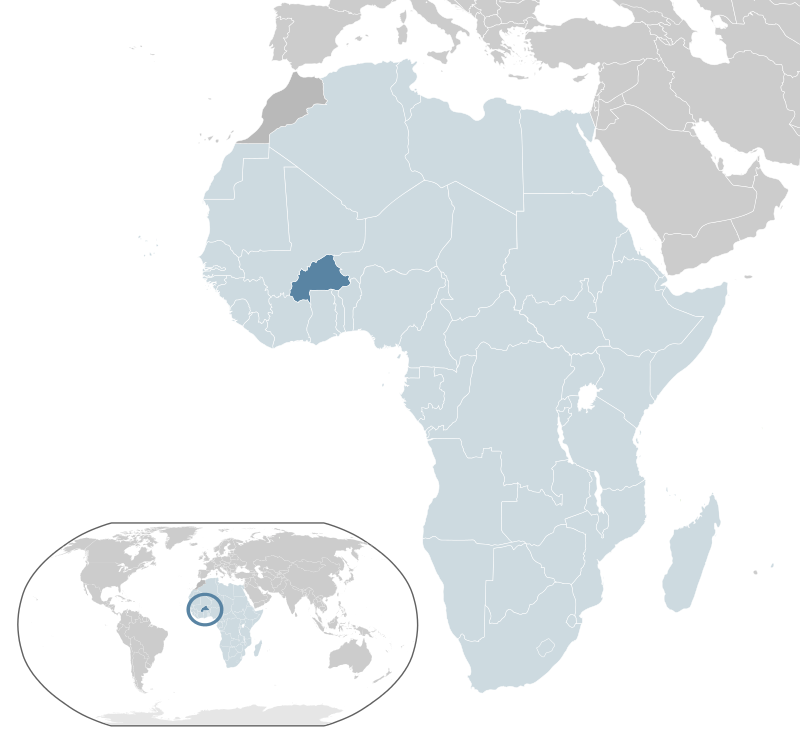
After being in power since 1987, Blaise Compaoré was forced to resign in 2014 by an uprising in response to his attempt to change the constitution to extend his 27 year term. Burkina Faso gained independence from France in 1960 after becoming a protectorate in 1896. Before then various British, French & German military forces had in turn fought or made alliances with different local people. It isn't clear when the local people arrived since the (now) land locked country is in an area very much part of the Old World - touched by hunter gatherers, and rising and falling Kingdoms and Empires. Burkina Faso was caught in the Cold War during the period of decolonisation following World War II. Sankara saw the global aid industry and free trade of the World Bank and International Monetary Fund as imperialist. Compaoré came to power through a French sponsored coup.
Labels:
100 words,
Africa,
Capitalism,
Cold War,
Colonialism,
Communism,
Countries,
Global Citizen,
Trade
Subscribe to:
Posts (Atom)