Showing posts with label Self. Show all posts

Friday, May 06, 2022

Own Silence

A danger with the idea that meritocracy works at an individual level, rather than a hand wavy “life is unfair, but you can progress from where you are” way... is that we can take the decisions people make about *us* too seriously. Whether you get a job. Whether you get a promotion. How big your bonus is. Whether someone recognises and understands the work you are doing. 

The strong temptation is to self-reinforce. To lean into the conspicuous. Separating our identity and the problems we are working on is a hard practice. 

We all want to do well. Which make measures of success feel like they are measuring who we are. Which can be a spiralling, relative, search for recognition. Imposter syndrome means most people are constantly self-judging. 

Aging does help you realise there are no real adults in the room, and everyone is just doing the best they can. Michelle Obama was asked how she managed the stress at being at a table with people that were very impressive. Chief Executives and Presidents are all just people with their own insecuritities. “They are not that smart”, she realised... as a different way of realising that “you are smart enough”. 

Some people get jobs due to connections... marriage, inlaw’s friends, birth, friend of a friend. Some people fake the right skill well to the right person at the right time. 

Even the people who are amazing at their jobs, are also useless at other things. Normal people who sleep, eat, and get confused. We don’t have access to what is going on in other people’s heads. 

Silence can appear like confidence. Our own silence is more raw.

Wednesday, March 09, 2022

Hiding your Needle

I used to enjoy having a well-stocked bookshelf of what I had read, as well as what I wanted to read. When I had friends over, I could give them a book. I would have a few copies of the ones I really liked. 

The bookshelf, photo collection, CDs, and DVDs were a visual story of what I was curious about. A conversation starter. 

When I streamlined, I gave most of those away. I also gave a way a lot of paintings. I had an art studio in Wimbledon for four years, and it was time to find homes for the paintings that hadn’t yet been adopted. I usually gave paintings to friends for special occasions. I love seeing my work on people’s walls. 

I still had some stuff to store that was sentimental. A good friend’s father had a business making children’s playground surfaces. That included having a warehouse for storing the materials. It is dangerous paying “rent” for stuff, but I was lucky. He let me have a corner to put things like my easel, and I guitar I had bought with the intention of learning. 

A former colleague looked after an electric keyboard I had the intention of learning. He had the intention too. 

Like Arya wrapping and burying her sword. A girl may have no name, and we may not want to identify with things, but turns out to be hard to let go completely. Going through the exercise of trying to let go is revealing.


Monday, February 07, 2022

Self-Sacrifice and Self-Reliance

The irony of growing up in Apartheid where a privileged minority received various advantages, is that that is not part of the deep soaked self-identity. 

Reach further back and the scars are of tough-love and self-reliance. “No one owes you anything” and “Life is hard. Make a plan”. That perspective is a positive-optimistic-negative view of the world. A Ja-Nee view that got baked into the stories of Racheltjie De Beer and Wolraad Woltemade. 

My great-great-(forget how many)-grandfather was Jacobus De Beer, who was a signatory at the peace of Vereeniging (the treaty that ended the second Anglo-Boer War). I had ancestors on both sides. The story of Racheltjie is of her saving the life of her brother by sacrificing her own. She removed her clothes to cover him in a snowstorm. 

There are repeated stories of self-sacrifice, but also self-reliance. A willingness to give to others, but not rely on or expect from others. A cultural sense of loneliness. A sense of fleeing others. 

I don’t have a full handle on how I ended up here. My Maiden name is Black. A surname given to expelled sheep thieves in the Scottish borderlands. All sorts of dodgy people, explorers, refugees, and randoms found their way away and down south. Unpacking stories is complicated.

Friday, May 21, 2021

Who Are You?

The thing you are (currently) doing does not define you. Knowing who you are, is the heart of choosing a path. The practice of Neti Neti (Not this, Not that), is realising that you can’t be something temporary. Problems should not be valued in and of themselves, or you are not really trying to solve them. You are making yourself a permanent part of the problem and extracting rent. You only genuinely try solve a problem if you feel a sense of ownership. Then it is worth your while to make your role in the problem redundant. Redundancy becomes something worth celebrating. If you make yourself redundant and there is no commitment to you as a person, then you are let go. They’ll say, “I paid you. It’s fair”, and lose no sleep. But that is not the point. Value is created over very long periods of time. Real meritocracy starts with the grunt work of building foundations. If you are building something long-term, there needs to be a deeper commitment. Participation, while you are involved, becomes all about ego and identity. Real wealth is created when you have a significantly more stable self-definition to reinvest in. When you have a path that learns, builds, and creates in a way that is connected to what really matters to you. 

Wednesday, May 19, 2021

Not This, Not That

Choosing your path consciously requires regular self-reflection. In Yoga, there is a practice called Neti Neti which means “Not this, Not that”. It is an analytical meditation on what you are not. It allows you to create some space between what you are, and the tools you use. In the world of money, we use price as a tool. Price is not value. You need to determine what your values are, and what you value. You can use price as a communication tool, but it does not have permanence. Similarly, salary is not worth. Salary is simply the price of someone’s labour. Supply and demand determine that price. Not some intrinsic respect-commanding, life-defining, ranking of merit. Quite often when people are making good money, they think it means they are valuable. It is dangerous to base your self-worth on pay, because supply and demand get disrupted. The barriers to entry that command that price can fall. The market changes. We create through destruction. You can do something incredibly valuable, but if lots of people can do that too... the price will be low. Price is not value. Salary is not worth. You are not your job. 


Thursday, March 04, 2021

Barriers that don't Serve

There is irony in one of the existential questions of being South African. Wherever you earn a living or sleep, there is a should I stay/go/return question that hovers. I think this is ironic (don’t you think?) because SA is also the country that gave the legal name to Apartheid. Apartness. Separate development. Self (and separate) determination. I did not leave South African as a big statement in 2008. I went to London to explore, make some money, and connect beyond my container. I do not support the idea that your opportunities and community should be determined by a random lottery of birth. When I came back to SA at the end of last year, the reasons were complicated too. It is also not a big statement. Your story is yours. The world is connected. I believe in the four freedoms (capital, goods, services, labour). You should be able to sleep/work where it supports your path. Your money should be able to do the same. Our goods should be made locally or globally depending on what works best. Let’s chip away at barriers that don’t serve us. 

Barriers that don't Serve


Wednesday, October 07, 2020

Firm Grip

 “tat param purusakhyater guna vaitrsnyam” Yoga Sutras

“The highest awareness of non-attachment stems from awareness of purusha (the Self)”

You are not your job. There are three elements to making money. A problem to solve, Capital to finance its solving, and a Container to solve it in. You are not the problem, the capital, or the container. They are all tools. “What are you going to be when you grow up?” is completely the wrong question. Money making, and waves of money anxiety, are not about who you are. It’s not about you. The problem with performance reviews, job titles, promotions, bonuses, hierarchy, measures of success, apportionment of respect, and illusions of meritocracy is we associate temporary problems and conspicuous signals with identity. We weigh and measure each other. This leads to impostor syndrome and voices in our heads constantly telling us we are not good enough. A firm grip on a more permanent sense of self lets you hold space between waves of money anxiety and your sense of what really matters.


Tuesday, August 11, 2020

Simplicity and Self-Reliance

I grew up in the Methodist Church which emphasised, among other things, two key values – avoiding conspicuous consumption, and self-reliance. There were regular debates over any money spent on renovations to the church buildings. The focus was on functionality. The founding stories were based in a break away from flashiness. A foundation of simplicity. I was in the English bubble of Apartheid South Africa, but the self-reliance stories of the missionaries, criminals, impoverished, refugees, and fortune seekers resonated with those of the Afrikaans bubble (and I had Romeo and Juliet style crossing of family stars). Protestants protesting. Fleeing the European religious wars. Hard tales and hard heroes from frontiers, like Wolraad Woltemade and Racheltjie De Beer. It didn’t surprise me when I discovered that the first stories of Racheltjie appeared a few months after those of American heroine Hazel Miner, who saved her brother in the Spring blizzard of 1920. Legal Apartheid ended and I left the church, but history and founding stories soak deep. Even if they pick up flavours that resonate from elsewhere.    


Tuesday, May 05, 2020

Self-Made


“Self-Made” implies unplugging from the Matrix. Choosing the red pill. I believe Free Will is possible, it is just incredibly hard. Even then, the self of independent decisions exists within the system. Yogis call the Matrix “Maya” (the illusion of the reality of sensory experience and of the experienced qualities and attributes of oneself). Even if you see the Matrix, you have to start through acceptance. Changing things from where they are. Wealth Compounds. Real wealth comes when the story is bigger than you. When you become a smaller and smaller part of the picture. Through supply chains. Customers. Stakeholders. Through institution building. Articulating and voicing asks and offers. Solving other people’s problems. Through empowering others to make decisions you aren’t even aware of, or don’t have the capacity to understand. Taking the red pill is realising that it is not all about you. That wealth creation is about coordination and releasing potential. Self-Made is an illusion.


Wednesday, April 08, 2020

Boat Repair


All advice is autobiographical. Like we are coaching a younger version of ourselves having gained some insight into the chaos. Like our world, is the world. I regularly review my story, and my reading of it changes. I call this the “Adult View”. Adult not always meaning wiser. Sometimes a bit more cynical. I have several chips on my shoulders. I am insistent on ownership because I have put my future in the hands of others, and had decisions made which I both disagreed with and was powerless to do anything about. The make-up of the teams I believed in changed to the point where the word team is rather abstract. Like the story of a boat that gets repaired until none of the constituent parts are the same as the original boat. I know I am like that boat. I am not the younger version of myself, neither physically (our bodies regenerate) nor mentally (the world I see now is not the world I saw then). The best we can do is build endurance and resilience, and be creative. Rather than wisdom, age brings the awareness that no one knows.


Tuesday, February 25, 2020

Managing Stress


Vusi Thembekwayo makes the point that if you can’t take leave because your business stops, you aren’t an Entrepreneur, you are Self-Employed. We glamourize Business Ownership, but part of running a Business is coordinating the efforts of others and smoothing their experience. Taking on the stress. Holiday leave. Sick leave. Maternity and Paternity leave. A regular paycheck. Security that if a reasonable job is done, it should be hard to ask the person to leave. Self-Employment means you end up needing to provide those benefits to yourself. You need an Engine or a Buffer to do that. For Businesses, this means a strong Balance Sheet (Capital not just Debt) and good Cash Flow (Money there when it is needed). The ability to weather difficult periods, and discipline during the good periods. If the underlying creativity is there, with patience and time, endurance and resilience increases. The stress doesn’t disappear. It is managed.


Thursday, December 12, 2019

Friends, Family and Foundations

A lot of businesses start with a form of nepotism which could also just be called pragmatism. Friends or family who trust each other, and have some driving reason they are prepared to work for less than they would “just getting a job”. The most successful business person I have worked with said it took him seven years to earn what he was earning before, “at a job”. That is after survivorship bias. Most small businesses fail. Self-identified Meritocracy rewards Executive Management ridiculously well, ignoring the years of sweat investment in getting the machine going. The marginal decision gets one sided credit (things going wrong aren’t symmetrically punished) and ignores the leverage of the institution building that has come before. The most pragmatic path seems to be to hop on the gravy train of lopsided meritocracy until you have enough of a buffer, and a few mates you trust. Then you can have a crack at going it on your own. That is what we call “self-made”.


Thursday, November 14, 2019

Building Time


One of the three legs of Rutger Bregman’s “Utopia for Realists” stool is a 15-hour work week. You can be financially wealthy and still be time impoverished. There are good ideas, and there are good business ideas. I like the concept of ring-fencing the time and energy we allocate to problems. To well-articulated and communicated ask-offer exchanges that are put in supply-controlled containers. Usain Bolt “charges for 10 seconds”. 15 hours may not seem like a lot, but it changes the way we view how we count. Time is a lazy supply-controlled container. A catch-all bucket that becomes the default. Thinking how we can construct a world that only requires a 15-hour workweek requires creativity. Building Capital to supplement our income. Shifting from charging for time. Snapping the definition of ourselves and our specific skill sets from the problems we work on. Freeing ourselves to work on things that aren’t problems. I don’t think time and financial poverty are things we just have to accept as the way life is. We can tweak reality.


Friday, November 08, 2019

Releasing Yourself


There is something Yogic about the progression of thinking about money. It starts with “What do you want to be?” which is all about you. It moves to “what problems are you solving?” which is all about the problem, but still has you at the centre of the solution. Then it shifts to “what problems are being solved, and who is best placed to solve them?” which shifts you out of the equation entirely (if necessary/desired). Then if the problems are being solved in an Engine that is generating energy, that energy can be used somewhere else that has nothing to do with problems. Not everything needs to be monetised. But we need money. Capital building can create pools of resources to direct at the problems we face. It can also create streams of income to support the things that are good ideas, but not good business ideas. Capital can set Labour free.

Not all good ideas are good business ideas


Wednesday, October 30, 2019

Conscious Connection


A big part of the “who are we?” struggle going on is a battle between Globalisation and Localisation. We live in a connected world. No man is an island. There is also no such thing as “The People”. You can’t draw borders around a group and define them with a stereotype by handing them a flag, teaching them a song, and losing your pooled tax money on a dysfunctional airline. We have communities we value. Places of worship, sports teams, social networks, languages, where we work, and interest groups. They overlap. The challenge is how to build together. Cracking on as individuals weakens the glue. Forcing glue on people creates partisan fist fights. I think we can do better. Dunbar’s number is the idea that there is a limit to how many interpersonal relationships we can have before we need to rely on prejudices and abstraction. About 150. I think we can add back names and faces if we consciously build communities of people in who we are willing to invest. If we balance the local and global forces with real people who we can see.  


Thursday, December 20, 2018

Rubik's Trev

I lived in London for 8 years before moving to the Shire. Most of it was spent with a normal job, until I decided that was overrated. Normal jobs give a "no need to decide" structure to days. The normal 5 days a week, and two-day weekend, loop. A physical place to go. Perhaps, new problems each day, but within a known category. My blog gives my days that structure now. Most days, that is the thing I know I will do. In the beginning, I used to keep a little log of ideas for blog posts. Gradually, it just became something I did automatically. Within themes. I carry on exploring, but the paths are less surprising. Perhaps I explore a new country, city, or language on Wikipedia, or learn aloud a little more about Universal Basic Income. Or I follow up on a conversation I have had with someone.

The "loopy place" I physically go is more flexible. In London, you can have a degree of anonymity. There are so many people and places, that I could find a little hidey hole and not be noticed. Places open. Places close. To get some recognisability to my loop, I went to my "Artist's Lunch" on Wednesday. Colleagues become the very human part of our loop. The idea of separating work and play is bizarre when we spend so much time at work. Leaving the normal working world meant, in a big part, leaving a group of friends. The Artists from the Wimbledon Art Studio which I was a part of for four years, became my point of consistency. 

Now that I live in the Shire, I still venture back to that Artist's Lunch as often as I can. I like feeling part of something bigger. Even though each Artist is doing their own thing, it feels like you have a degree of 'shared mission'. Similar to separating work and play, separating Competing companies is also rather unnatural. Professional or Trade groups and associations remind people that we aren't defined by the company that we work for. They would do well to have Artist's Lunches.

A "Buhr" was a small fortification. A "ford" is a place that crosses a river. I live in a small medieval town called Burford. Slowly, this Donkey is becoming a local. The South African guy with long hair who is either walking, on his kindle, computer, phone, or playing with a Rubik's cube. As much a part of the furniture as Lady Diana and her mobility scooter. When you regularly cross the river, the river becomes a part of who you are, and you become part of the river.

We like to identify with the thoughts in our head. With our decisions. More and more, I believe our decisions are loopy. "Narrative Therapy" is a form of psychotherapy that helps people create stories about themselves that are helpful. It helps people by "Co-Authoring". You identify the characters, themes, and plots. The backstories, and events, that create the way we respond to the twists. Rather than autonomy over each fork in the road, it helps people step back and look at the road. It helps people identify their knowledge, skills, and values. Choose your road.

To ensure we are focusing on the things that really matter. That we know the things we are becoming part of.


Tuesday, November 13, 2018

Boggles my Mind


We are all at the centre of our own Universes. What we see and understand is determined by what we have seen and understood. A Controlled Hallucination which plugs in new information to all the things we have processed before. In Mindwise by Nicholas Epley, he talks about reasons why it can boggle our minds when people don't understand things the same way we do.

The Neck Problem is that people are simply paying attention to different things to us. Our attention is limited, and other people don't dwell on the same things we do. The most important thing to us, isn't necessarily the most important thing to them. There are too many important issues in the world for us to focus on. We choose. We choose differently.

The Lense Problem is that we don't see things in the same way. The Curse of Knowledge is that the deeper you understand something, the more it restricts you from seeing something else. Once you can read, you can't help but 'hear' words in your head if you see them. They then frame everything else. If you can't read a certain alphabet or language, you just see squiggles... and you will see differently. The same with languages. The same with all the context, and shared context, required to understand. Nothing exists in isolation.

My mind and heart are regularly boggled. I think all of us have to struggle with miscommunication, misunderstanding and generally missing each other. That is why I increasingly believe that debate is overrated. When someone disagrees, we should be fascinated. We should explore that alternative way of thinking. In exploring with them, both of our ways of seeing will be changed.

That is what connection does. It changes us by changing how we experience the world. Together.

Tuesday, September 25, 2018

Healthily Selfish

You are no use to anyone if you crack. You are not loving the people who love you, if you don't look after yourself. Somewhere in between being dysfunctionally selfish, and dysfunctionally selfless lies the Golden Mean. Be a Half-Hearted Fanatic. Detaching from things ironically allows you to care about them more. Knowing that nothing defines you completely, means nothing can't be walked away from or towards. Equally, nothing can be completely walked away from or towards. Life throws endless challenges at us. We cope. Coping and thriving defines us. Looking in. Looking out. Looking after.


Monday, September 24, 2018

Evolving Self

It is romantic to say 'do what you love, and you'll never work a day in your life'. It is also very privileged. The vast majority of people do what they have to. Some get to choose. Increasingly, people are being empowered by health, wealth, and education to make more choices. People around the world are living longer, becoming connected, and gaining a voice. The choices on all of our menus are not the same.

Even in the United States, the primary determinants of your success are whether you come from a wealthy family, and if you got a good education. Of course, just being born in the United States gives you a much better menu than most people on the planet.

Many surnames come from the jobs ancestors did. Under 'know your place' feudalism, you probably did the job that your parent of the same gender did. Social Mobility has slowly increased as we have let go of the idea of God-ordained life roles.

We still answer the question, 'What do you want to be when you grow up?' by a job. Social Mobility is still often cross generational. Someone gets and education or chooses to work incredibly hard. They give their children a better menu. Their children give their children a better menu.

But things move faster now. It takes developing countries less time to implement new technologies. They can even leap frog entire generations of technological development.

There is no reason you can't be your own parent. Your own grandparent. 'Trust Fund' babies have Engines handed down to them because their parents, or grandparents, or great-great-great-grandparents worked really hard. Or did something bad to someone and got away with it. Or because God willed it. Promise.

You can be your own 'Trust Fund' baby if you build an Engine. 

Initially your labour is what generates your income. You are your job. Then maybe you start a business. The business isn't you. There is a separation of self. The business solves problems. *You* don't have to be the one solving the problem. Then eventually (and you can skip the own business step) you can invest in other people's businesses. 

My money is invested in two Funds and 20 businesses I selected. One of those Funds currently has 67 businesses in it, and the other has just over 20 too. So my money has more than 100 jobs. I care about how those companies do. It matters to me, but they don't define me. Any single one of those companies can go bust, and it won't destroy me.

I am clearly very privileged. My parents were professionals. A Teacher and an Engineer. I was lucky to go to a good school where my school fees were waived. I was lucky to have a Teacher as a mother who was incredibly supportive of my studies. I was lucky to be a stubborn, competitive, nerd who played by the rules. I then didn't pay for university because the first company I worked for paid for me. Rather than choosing a job 'for love', I chose the thing I would be best at (paid the most) that I would still be able to motivate myself to do. I was then lucky to get jobs at fantastic companies, surrounded by awesome people. Then I only had manageable obligations in terms of others to support, and was able to invest heavily for a decade.

My money earns way less than I did, but working is expensive. I now spend way less than I did when it was me earning.

I am now plotting a Community Wealth Fund. My dream is to be part of community of 150 people that all receive Universal Basic Incomes from the Engine we have built together. To do what I did for myself, but for a group of people.

You are not your job. You are your relationships with other people.

Tuesday, August 21, 2018

Proper Relaxation

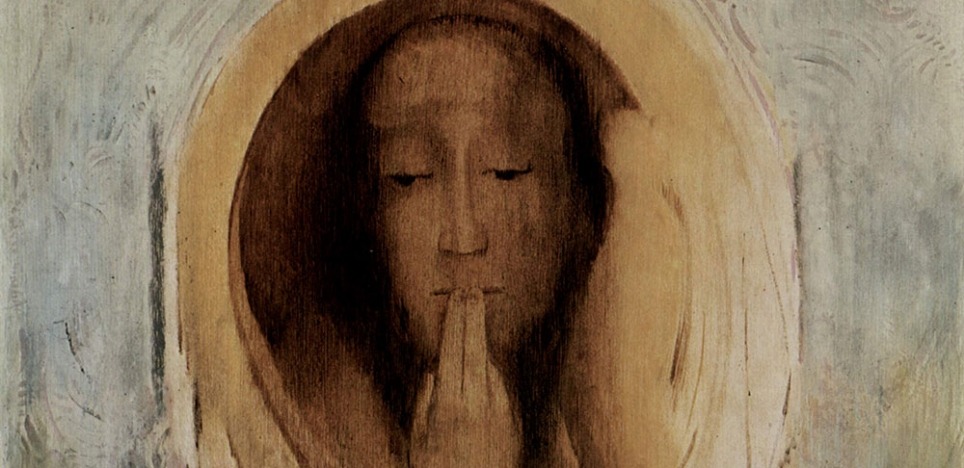
Relaxation is a skill you can work on. Proper Relaxation isn't passive. You can relax your body by being aware of where you are carrying the tension. The most advanced Yoga pose is a relaxation pose. In Savasana, you follow a process of 'auto-suggestion'. Moving around the body, you tense and relax. You use your breath to reawaken your body through relaxation. Mental Relaxation requires conscious practice. Our minds need a moment not to do the heavy processing work of running through a gazillion real and imagined scenarios. The most important relaxation is learning not to worry about You so much. To relax the boundaries between what is you, and what isn't. To pause the worry, issues, and lack of quiet that comes from figuring out your place in the world.

Relax Your Body
Relax Your Mind
Relax Your Self