Showing posts with label Constitution. Show all posts

Monday, July 13, 2020

Mapping Ignorance


It is important to map ignorance. Here be dragons. My impression is that we don’t have the necessary tools to unpack many of the complicated issues we are currently facing. There is far too much false confidence and debate going on. I have been part of “Men’s Groups” and “White Men’s Groups” trying to create containers for conversations to self-reflect. One common thread has been the over use of challenge. Like in the public debate, there seems to be limited ability to genuinely listen and gather information. Superficial curiosity is often strategic, still anchored to a particular pre-packaged conclusion the questioner is looking to confirm. It is like we are still engaged in the long history of Crusades and Civilising Missions. Having not learnt the lessons of the unintended consequences of true believers pushing into worlds they don’t understand. New tools are required. New rules of engagement. New honest map building.


Monday, September 30, 2019

Agreements and Action


A Community Wealth Fund is analogous to a Sovereign Wealth Fund. A Stokvel is a savings or investment society to which members regularly contribute an agreed amount, and agree to a constitution which controls how the money is dispersed. A Community Wealth Fund is a form of Stokvel. A group of people can come together and build an Engine which could pay the whole Community a Basic Income. This could start Pay-As-You-Go redistribution (while the Engine is being built), and part investment (then fully Capital funded when the Engine is big enough). The difference between a Community and Sovereign Wealth Fund is that “The People” isn’t abstract. It starts from the bottom up with names and faces. It starts with agreements. Agreements to build, and agreements to support each other. Agreements followed by action.


Wednesday, June 20, 2018

Что связывает нас

Король Георгий, Кайзер Вильгельм и Царь Николай были первыми кузенами. Их бабушка была королева Виктория. Когда мы говорим об Восточном Весте, легко забыть, что это в основном относится к холодной войне. «Западный» не белый. Большие идеологические разногласия прошлого века вызвали кровопролитие и беспорядки во всем мире. Должны ли мы иметь монархов? Должны ли мы иметь диктаторов? Должны ли мы придерживаться правила большинства? Должны ли мы дать людям возможность самостоятельно выбирать? Должны ли потребности общин быть поставлены выше потребностей отдельных лиц? Что происходит, когда сталкиваются потребности разных сообществ и отдельных лиц? Государства-нации создали историю, в которой разные места были принципиально разными, с «народом». Стоит разгадать эти подразделения, чтобы увидеть, что нас связывает.

Friday, June 15, 2018

Evolution v Revolution

The English Civil War tore England apart. Thomas Hobbes was 64 years old when the conflict began. He became one of the leading thinkers arguing for evolution rather than revolution. The War pitted Parliament against the King. Charles I lost his head in 1649, 140 years before the French Revolution. Hobbes argued that chaos and bloodshed were more dangerous than obeying (even unjust) authority. He argued for slow change. He also argued for a Social Contract. He argued the rule of Kings couldn't be justified by Divine Right, but by representative consent. Charles II was restored to the throne after Cromwell's death, but gradually the Crown became a Constitutional position. Constitutions are built up by slow, difficult discussions and agreement. Agreements are messy, emotional, and open to change. A recognition that we don't need to play the same way, but we do need to agree on some basic rules. Us doesn't start with a vote, it starts with an agreement that there is an us. It starts with common ground and something worth building together.

Monday, December 11, 2017

Righteous Indignation

I grew up with the story of Jesus overturning the tables in the temple as a parable around righteous indignation. That occasionally it is right to lose your temper. I am a big believer in tolerance. That rules should be clear, but based on consent rather than enforcement. I like rules that can then effectively disappear while people are creative within them. When people understand, and like, the agreements that they have made with each other. A friend observed that within my tolerance, I do get very angry. I do get triggered. I do have a deep seated belief in right and wrong. I find this tough to hear as I like the idea of being tolerant, and work at it. Yet bubbling under there is a raging bull. He also observed that growing up in Apartheid South Africa could have led to this scarred view of needing to stand up to power. The law was wrong. The law wasn't to be tolerated. It certainly wasn't consensual. I would love to let the bull chill.


Sunday, April 16, 2017

Switzerland


It is normal in South Africa to talk of democracy starting in 1994. Switzerland is famous for its federal democracy, which balances the need for central government, and local power on local issues. It has 26 cantons, with Bern the seat of the federal authorities. It has one of the world's oldest constitutions, and requires a referendum on changes. It also makes provision for the constitution to be rewritten to prevent the various additions missing context. Although there were local wars between Catholic and Protestant cantons, eventually they worked together to manage areas of common interest, and ensure peace. Despite seeming an 'advert for democracy', Switzerland was the last western republic to grant woman the right to vote (1971/1991). Looking back, I also struggle with the ideas of American 'Founding Fathers' as leaders of democracy given the gaping holes. History is far more messy than we would like. The growth of cooperation hasn't been a straight line. Sometimes we need to stop, pause, listen and rewrite with our new context. 

Friday, November 25, 2016

Human Rights

Rights are a story. Good people can disagree on what they should be, and there is no objective way of showing one to be correct. The only basis for creating a set of stories, and an underlying common story we can all share is to start by listening. Ideological arguments are fairly pointless if there isn't a set of shared facts and shared assumptions. The more global you get, the less agreement there will be. The more local, you get the more agreement there can be. We know from personal relationships, and breakups, that even at the ultra local level it is brutally difficult. Pillow politics is perhaps the hardest. Family tensions are something that unites almost everyone I know. The starting point for consensus has to be finding what we have in common. What it is we are fighting for together.

Wednesday, September 21, 2016

Nepal


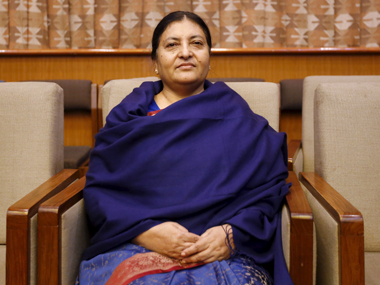
In about 500 BC, some small Kingdoms arose in the area of Nepal. A prince of one of these renounced his wealth to lead an ascetic life. He became known as the Buddha. Small Kingdoms rose and fell with the British East India Company and the Kingdom of Nepal eventually coming into conflict over annexing smaller states - resulting in Nepal's Anglo-Somebody war (also known as the Gurkha War in 1815/16). There has been rapid change in the last two decades with an executive monarchy under the King in 1990, and now a new 2015 constitution forming a seven state federal democratic republic under President Bidya Devi Bhandari.

Nepali President

Friday, August 26, 2016

Saudi-Arabia


Large Scale Governments were originally forged through force and conquest. The Kingdom of Saudi Arabia was formed in 1932 after 30 years of conquest bringing together four regions. It is one of the few remaining Absolute Monarchies with hereditary power. Saudi Arabia is home to the two holiest places within Islam - Medina and Mecca. Muhammad was requested to come to Medina to act as a peace maker between bitter warring tribes. Thought to be the world's first, the constitution of Medina committed the tribes to mutual co-operation under his leadership. Mecca is home to the Kaaba and is the direction Muslims face during prayer. More than 15 million pilgrims visit the spiritual focal point each year.

Remaining Monarchies in the World
Red (Absolute) Orange (Semi-Constitutional)
Dark Green (Constitutional), Light Green (Commonwealth)
Pink (Sub-national Monarchies)