Showing posts with label Communism. Show all posts

Wednesday, November 14, 2018

Donkanofski

I grew up in a very religious community at the tail end of the Cold War and Apartheid. Ideologies end up having strange bedfellows, and we tend to believe the particular cocktail we were born into. Aged 13, I can still remember an argument in my Maths class when I suggested to someone that Jesus was probably a Communist. I was a Church-three-times-a-week boy, so this was a pro-Communist sentiment, and it didn't go down very well. I didn't know about Mao and Stalin, but I did know about a loaf of bread and a fish that fed a lot of poor people. I probably should have been doing my Maths, but my nickname isn't Donkey because I am quiet.

The Apartheid Government was one of the regimes being supported by the UK and America in order to hold the wall against Communism. Mandela was released in 1990, the Berlin Wall fell in 1991, and South Africa held its Apartheid ending elections in 1994. Many members of the African National Congress still call each other Comrade.

Like someone who grew up watching 'The Wizard of Oz', then went to watch 'Wicked', I ended up studying Money because I hated the control it had over me. One of my first courses at University was 'Thinking about Business' (TAB). A couple of friends and I used to call it 'Free Market Indocrination' (FMI) and came wearing red shirts. Twenty years later, we still greet each other with a variation of our nicknames with the addition of a Russianised '... anofski'. Donkanofski, Tapiwanalotaflopski, and Robanobadropski were the Comrades-in-Chief.

As someone who could be described as a Capitalist Activist... I am clearly a convert. But I am probably more accurately described as an Anti-Capitalist's Capitalist. I still believe that money doesn't mix well with certain ideas. My blood still boils enough at Corporate culture, that I far prefer living off a Basic Income (Generated by Capital) to working for money.

In particular, I have big concerns about money mixing with Housing, Health, Law, and Medicine. I still believe there are good ideas, and good business ideas. They overlap significantly, but there are some good ideas that get perverted by money, and there are some great ideas that are impossible (/not a good idea) to monetize. I call myself a Neoliberal, but that is now as much of a swear word as me calling Jesus a Communist in Durban in 1993 South Africa. "The Establishment" is the Wicked Witch, and the torches are out to burn things down. I believe some things are better run privately, and some things are better run by Institutions that are democratically controlled. We are gradually learning which is which as different places try different things. Through trial and error, and global best practice.

Nothing is as simple as any ideology claims. The world is messy. The Wicked Witch of the West has a completely different version of the truth. A truth that works for everyone is hard to come to, if we aren't able to pause and look at things from other perspectives.

Tuesday, March 06, 2018

Tajikistan


Civil war has often followed independence from foreign conquerors. Tajikistan became an independent nation following the 1991 dissolution of the Soviet Union. Its Civil War lasted from 1992 to 1997. This was not because of ethnic diversity. The vast majority are Tajiks, an Iranian group of people speaking a variety of Persian. Like the Germanic Migration Period (375-568) and the Bantu Expansion (from 1,000 BCE reaching South Africa by maybe 300 AD), distinct 'Nations' of people are often connected by hints at the past in their word choices. Their primary language has Persian roots. The second language is mainly Russian. The religion is mainly Islam. Lingering reminders of the various powers that have come and gone. The majority of ethnic Russians left when the Soviet era ended. The Civil War was fought between regional groups with opposition parties seeing reduced Russian influence as an opportunity for their brand of ideology.


Wednesday, July 05, 2017

Beyond Enough

Communism's maxim of 'from each according to his capacity to each according to his needs' has two key parts. The first is decision making, and the second is reward. 

The fatal flaw in my mind of the noble goal of prioritising the needs of everyone, is the central decision making. The reality as humans is our capacity to both think and feel is limited by biological constraints. The meat and bones that make up our abilities. If you put distance between decision makers and where those decisions are felt, things fall apart.

The second flaw is in the reward. Incentives. How do you get people to 'fill their capacity' and go further than they need to, to merely meet their own needs? They may exert effort for those close to them, but again... Our capacity to care is as limited as our capacity to think. Communism's answer in all the experiments of the last century was force.

Capitalism answer is trickery. The answer to the question 'How much is enough?' is more. By investing excess in Capital, others benefit. The owner notionally is in control, but in reality our capacity to make decisions is limited. We have to trust others. We have to delegate. Both Communist Dictators and Capitalist Control Freaks have to find a circle of people to make decisions, and take actions. We have to have people act on our behalf, and once again, the bigger the distance between actions and intentions, the more room for error.

Instead of owning big and bigger houses, more and more cars, etc., the trickery of Capitalism is to permit 'ownership' of a number. This shifts Conspicuous Hoarding towards productive assets. The stuff that makes that number grow may be factories making food, or houses, or cars... but the owner becomes incentivised to carry on working. Why does a Billionaire carry on working when they are spending as much as is humanly possible already? They just grow the number. More.

Rich Now

Rich Then

Both of these systems were dealing with a world of scarcity where the majority of us were in poverty. In material terms the contribution of global institutions, trade, democracy and increased cooperation have been hammering our collective poverty. Mixed economies which have tried to learn the lessons from failed systems of the past. An 'Establishment' that tweaks as it goes.

The next beautiful question is what happens once we have enough. What lies beyond enough?

Saturday, May 06, 2017

Cold Border War


The South African Border War in Namibia was fought between 1966 and 1990 as part of the Cold War and the Decolonisation of Africa. The battle was closely linked to the Angolan Civil War. These wars were pitched as a battle between 'Anti-Communist' and 'African-Nationalist' forces. Namibia had been governed as a colony of Germany till World War I, and was then given as a mandate to South Africa, 'until the local population was ready for self-rule'. Angola was a Portuguese colony until 1975 (The authoritarian regime in Portugal was overthrown in 1974). Post World War II, the conflicting ideals of self-determination, and the ideological battle between Capitalism and Communism, used the developing world as the battlefield. South Africa was viewed by the Soviets as a bastion of neocolonialism. The Soviet Union was dissolved on 26 December 1991. It isn't a coincidence that Apartheid ended in 1994, and Mandela was released in 1990. It also isn't a coincidence that parties on the left view free markets with skepticism.


Monday, March 20, 2017

Belarus


Like many nations, Belarus is younger than some people. I knew the trigger for World War II was the invasion of Poland by Nazi Germany, and Soviet Russia. I didn't know there had been a Polish-Soviet War in 1919-1921 in which Poland, fearful of German and Russian imperialism, had looked to push its borders as far east as possible. Belarus was a newly formed country, declared independent after the Russian Revolution of 1917. It lost half its territory to Poland. World War II didn't end with a reversal of how it started, i.e. an independent Poland. The modern borders of Belarus were formed in 1939 with the Soviet Invasion of Poland. In 1945, the Byelorussian SSR became a founding member of the United Nations. Independence was declared in 1991 following the dissolution of the Soviet Union. "Europe's last dictatorship", Alexander Lukashenko has served as president since 1994.


Tuesday, December 13, 2016

Monopoly on Poverty

Money is the story we tell ourselves to try release potential. The ideological conflict of the last century between Capitalism and Communism was as much about the flow of information as it was about inherent moral goals. Capitalism filters decisions out. Communism centralised decisions. When the world is changing rapidly, money allows decisions about allocating resources to change rapidly as supply and demand changes.

Supply and Demand fails to carry information rapidly, i.e. the market fails, when barriers prevent the free flow of information. At one end, it is why Competition Commissions break up Monopolies. These laws are called 'Anti-Trust' because the price no longer accurately reflects the overall cumulative decisions of everybody. Monopolies have barriers that have gone beyond rewarding them for creativity, and instead allow them to extract wealth. Barriers that don't support a win-win cooperative economy.

The same concept should apply at the other end. When certain groups of people have a monopoly on poverty. Poverty prevents full participation in the economy. It has barriers that prevent people from leaving. It prevents competition from those who don't have the resources to survive. It prevents competition from those who don't have a buffer to experiment. 

Two of the factors that make the US economy as innovative as it is, are its lenient attitude toward Bankruptcy and the wealth it has already created. If you know failure won't destroy you, and you know you can have periods without income because you are building something with a long term perspective, it is far easier to be creative. First rule, survive. Then you can create.

An Unconditional Basic Income is the missing horn of Anti-Trust law. No individual can have sufficient knowledge to understand what we all do together. We all do better when we are all decision makers. When we are all empowered.

Money is blood that connects us. A language we all share even with people with very different aims and belief. If we stop its flow to all the parts of the body, they fall off, and we all suffer. 

Missing Horn

Thursday, December 08, 2016

Guinea-Bissau


The name of the capital is added to distinguish Guinea-Bissau from other Guineas. Initially the Portuguese traders stuck to ports like Bissau. For a while, the British toyed with a rival foothold on the offshore island of Bolama 40 km away. An armed guerrilla rebellion started in 1956 supported by Cuba, China, the Soviet Union and other left-leaning African countries. It is hard to disentangle the story of Africa shaking off its colonial yoke and the Cold War conflict. After a long war, official independence only came after a socialist inspired military coup in Portugal in 1974. The Estada Novo was a Corporatist Authoritarian regime established in Lisbon in 1933. The regime saw the territories outside Portugal as extensions of Portugal itself. Despite its small size (between Taiwan and Belgium), it is not ethnically or linguistically homogenous. Only 14% of the population speak the official language, Portuguese. 44% speak Kriol a mixed language spoken mainly as a second language for National Identity. There are 20 minor parties. No president has successfully served a full five year term since independence. 


Thursday, November 03, 2016

Retain, Reinvest and Create

If you believe that earnings should be tied solely to labour, you are not a capitalist. Capitalism changes the form of labour that is not consumed. It reinvests it. Like taking the profits from Oil, Gold or Corn and investing them in infrastructure, factories and sportsfields. If all you do is spend what you earn without investing some, you have very little flexibility to absorb the shocks of life. A 'bad season' can wipe you out. 


Most of our 'capital' is the cumulative effort of thousands of years of learning. We earn because of our ability to speak to each other. We earn because of the constitutions of our countries. The trade between our countries and others. There are no self-made Billionaires. There are no self-made tradesmen. No man, or country, is an island.


A Universal Basic Income can be thought of as a dividend on our Social Capital. It can also be viewed as 'Retained Earnings' that are reinvested in people. If it frightens you as a 'Communist' idea because it lets people earn off the efforts of others, you are not a Capitalist.


Communism tied the means of production to labour. 'From each according to his ability, to each according to his needs'. The incentive to produce more or create a life was stripped away, because the decision of who needed what ever was produced was stripped from the individuals.


A Universal Basic Income instead empowers individuals, and communities, to look up from the stresses of trying to survive to figure out their needs. To respond to however they are motivated. To create meaning for themselves and their communities.

Monday, October 24, 2016

Albania


The Ottoman Empire in Europe collapsed after the Balkan Wars. Many of the political elite in Turkey were ethnically Albanian. The rise of nationalism, and failure to reform, saw groups wanting independence. Albania declared independence in 1912, although there are Albanians on either side of any of their borders with neighbours. Italy invaded in 1939 and it became a Nazi protectorate in 1943, before the Marxist-Leninist party took control through till 1991. Falling out with Russia, China and the West, Albania had a big focus on agricultural self-sufficiency. Post-Communist Albania saw people redirecting their remittances, selling homes and cattle to put cash in large scale Ponzi schemes. A crash starting in 1996 saw this 'wealth' disappear. There has been a long, slow, rebuilding of trust and Albania is now an official candidate for membership of the European Union.


Leader from 1945-1985

Wednesday, September 28, 2016

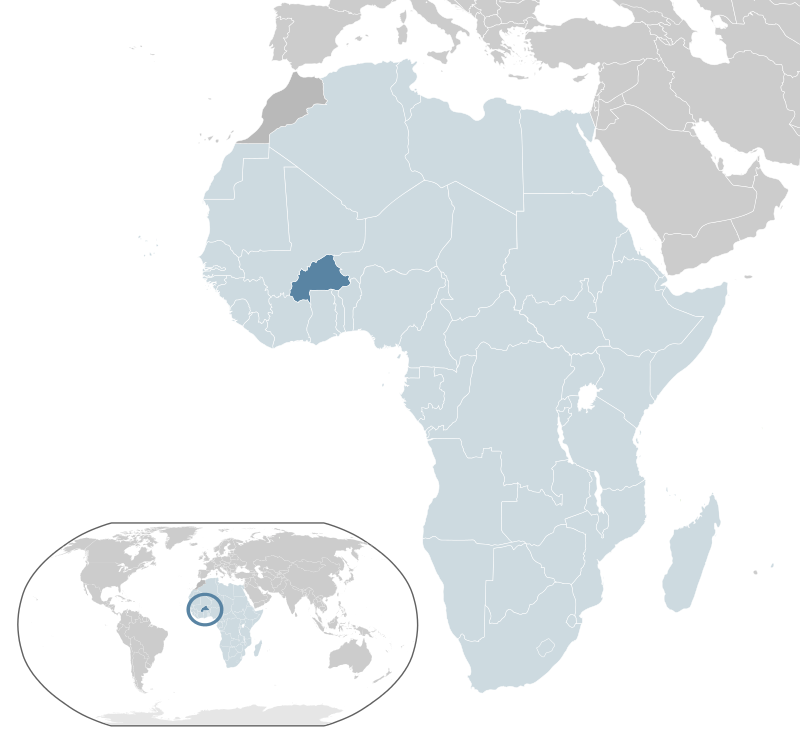
Burkina Faso


After being in power since 1987, Blaise Compaoré was forced to resign in 2014 by an uprising in response to his attempt to change the constitution to extend his 27 year term. Burkina Faso gained independence from France in 1960 after becoming a protectorate in 1896. Before then various British, French & German military forces had in turn fought or made alliances with different local people. It isn't clear when the local people arrived since the (now) land locked country is in an area very much part of the Old World - touched by hunter gatherers, and rising and falling Kingdoms and Empires. Burkina Faso was caught in the Cold War during the period of decolonisation following World War II. Sankara saw the global aid industry and free trade of the World Bank and International Monetary Fund as imperialist. Compaoré came to power through a French sponsored coup.

Wednesday, September 14, 2016

Laos


There are just seven* remaining one party states - China, North Korea, Cuba, Vietnam, Eritrea, Sahrawi* and Laos. I hate the politics of polarisation in modern democracy where entrenched parties force division. Lenin banned factions in the communist party at the 10th party congress.  The American Founding Fathers did not intend for politics to be partisan either. Madison was worried about factions grouping to pursue their self-interests at the expense of the greater good. After a long post French Independence Civil War, Communist Forces prevailed in Laos with one party in 1975. One party states enforce discipline. Laos is ruled by Military Generals. All around the world we are still learning to be able to disagree while not clumping. To tease out ideas without forcing others to agree, and to realise that we are still on the same side.


Clumps

Saturday, August 13, 2016

Cuba


The majority (64%) of Cubans have a European background and around 9% a connection to Africa. During the Spanish colonial period, the majority in many countries became 'Mestizo' (ancestry from all over) and this became a fundamental part of the national identity in places like Mexico. A quarter of Cubans have this joint heritage. The indigenous people of the Caribbean and Florida were the Taino and Arawak. Cuba became a de facto American state in 1902 after the Spanish-American war. After later independence, the island state became a focal point in the ideological battle between Communism and Capitalism, almost leading to a nuclear war in 1962. The Cold War freeze extended to Apartheid South Africa. The Cubans were big supporters of the fight to end racial segregation. Apartheid ended 5 years after the fall of the Berlin wall in 1989. Nelson Mandela was released in 1990.


Friday, June 03, 2016

The Revolution (with Stu)

Trev:
I have been surprised by some of the positive posts going up about Gaddafi and Hussein etc. I recently saw a clip where Mandela was criticised for who he was friends with. A lot of 'villains' were on the right side of history in the fight against Apartheid. Looking at why they don't get criticized now seems like a lesson in the Cold War and the web of relationships that led to. The big conflicts 'Christianity v Islam', 'Islam v Israel', decolonising etc. all seem connected. In the Communism v Capitalism clash, you seem more keen to get people to come right out and say Communism was evil. Can you see why that is hard?


Stu:
I absolutely get that it is hard. Plenty of the greatest intellectuals of the 20th century found giving up on the Soviet Union extremely traumatic and some never did. Communism seems to be an appealing ideology and they were on the right side of some really important battles. But too often this leads people to make excuses for communist crimes or arguing that they actually weren’t so bad in the first place. The real world is messy in ways that resist neat moral categorisation, but attempts to achieve communist goals repeatedly had awful (and after a while, predictable) outcomes. Given how many attempts were made to do it, I blame the system.


Photos from Jammie Steps, UCT


Trev:
When I was in first year, the was a course called TAB - 'Thinking About Business'. Some friends and I called it FMI - 'Free Market Indoctrination'. We added the suffix -inofsky or similar to each others nicknames. My understanding is that Marx didn't proposed many actual solutions, he was more focussed on pointing out holes. Others who followed created the -isms. There is something deeply appealing about the ideals of a society that looks after everyone. You recommended 'The Future and It's Enemies' to me which changed my views on central planning vs. empowerment of local decisions. Still, for students, there also systemic concerns with the mortal enemy of communism. Mercantilism, Colonialism and intrinsic hereditary class/privilege have also led to awful outcomes. Do we need to label them as evil? Or do we need to get more comfortable resisting the categorisation and looking to pull the best bits out of histories stuff ups. A slow unwinding of prejudices and improvement of the system.


Stu:
When I argue that communism is evil, I mostly mean actual communist governments. I think the balance of bad over good is so extreme that evil is the right word. I do think we should apply the word to some other systems/governments like fascism and apartheid etc too. We can still acknowledge and learn from the good bits but that doesn’t absolve them morally. I get the impression that you think communism doesn’t deserve to be called evil because it was inspired by noble motives or that it’s not bad in its idealistic, unimplemented form? Even in theory I don’t think communism is so great (though maybe not evil). For example, to my eye, “From each according to his abilities to each according to his needs” has a menacing quality, like you’ll be forced to work. I also don’t think extreme material equality it a good goal at all. So where do we disagree?


A Memorial to the victims of Communism in Prague
(Including those who were not arrested or killed)

Trev:
I think we disagree most on the use of the word Evil. I use it very sparingly and specifically. I am more keen to use it to describe individual actions rather than people or ideologies. Evil for me requires a malicious intent I seldom see. I think most people believe their underlying drives, assumptions and goals are noble. I understand that Marx wrote either his graduate or PHD thesis on Epicurus. Epicurus seemed more interested in the idea of communes or shared spaces. He founded lots of monasteries which only later became religious places. The ideas were more around simplicity and what is the good life. I think that is the romantic seed that attracts people to the idea of Communism. Equity more than equality. Caring rather than distribution of surplus. The later -isms were failed big government autocracies also accompanied by Nationalism, Patriotism, Xenophobia and us learning to work with people who disagree.


Stu:
I don’t really mean to make this about the nature of evil. Maybe it’s enough to look at outcomes and see if they’re good or bad. I think of a *bad* system as one that you can plug good people into and it generates bad outcomes and a *good* system can take bad people and spit out better outcomes. My “communism is evil stance” = “when people try to implement communism, there are bad outcomes”. In the future, when everyone is allocated enough capital that they can live off the income. Is this communism? If so, sign me up. I’m not against shared spaces, caring, equity or critiquing our current modes of life to be less rat-racy/consumerist etc. Maybe this is part of the appeal of communism but I don’t think you can abandon talk of overthrowing the bourgeoisie and workers seizing the means of production and still be left with communism.

Trev:
I agree that Revolution is strongly linked to the word. There is a romanticism to fighting for what you believe in. Banging out the theme tunes to Les Miserables. I don't know of revolutions that didn't turn into terrors. The School of Life has two relevant sections in looking at Goethe and a shift from 'Romanticism to Classicism' and Hobbes, who lived through the English Revolution, looking at whether it is worth while trying to overthow government. Pragmatism and 'the middle way' is much less exciting, but I think much more effective. It also seems to be the broad consensus, and perhaps the reason for the great enrichment and the decrease in violence over the last 50 years. But it is boring. We can't just bang on about X being better than Pop Music. The masses still have power, and labelling Communism as evil allows popularists an entry point. The question is, how do we convince those shouting from the roof tops, that Capitalism isn't evil! That we can build enough capital for each individual to live the good bits of the Communist ideals.


From Romanticism to Classicism

Stu:
Can you elaborate a little on this please "The masses still have power, and labelling Communism as evil allows popularists an entry point." I don't quite follow. 

Trev:
A lot of people get very angry about capitalism. A lot of people get very angry about being left behind by globalism. A lot of people generally get very angry rather than listening. Pitchforks and fists. If we label something that people believe in as evil, they stop listening. For me the rise of Corbyn, Trump, Sanders, Farage, Le Pen, Malema etc. is partly because people don't feel listened to, or are told they are stupid, or they are evil. I think we need to consider everyone, not just get our thoughts represented. Lots of people shouting from the roof tops think Capitalism is evil. That the system isn't working. Many of those people believe in a Communist world despite the bad outcomes you have talked about. I think we would be better off if we didn't consider evil. If we could continue getting better at talking to each other. The masses have power and that can either be anger through attacking ideologies or inclusion through listening.

Stu:
The way I see it is that my “communism is bad” stance is my conclusion after considering it. There are different approaches to making the case and I think this is more your focus? Like, not putting people who might be sympathetic to communism on the defensive etc. I don’t disagree with you, but that doesn’t change my opinion on communism and I don’t want to be unclear about what I really think. Let me turn it around a bit. You’re very straightforward about your views on immigration restrictions (as you should be!). But plenty of people feel threatened by immigration in a similar way to those who feel left behind by globalised capitalism. Isn’t there still a place for bluntly speaking out against borders?

Trev:
I am a deep pragmatist. I don't think my views matter that much. I certainly believe the views of others matter more. Speaking bluntly may give a sense of moral high ground, or at least a feeling that 'at least you spoke out', but I think what we do matters more than intentions. I don't have the answers but I suspect a debate approach only works once there is a relationship. Once there is a lot of common ground. I do speak out bluntly about borders. That is definitely a whole conversation on it's own. I don't feel like I am putting myself against anyone in that debate. I also don't think I am winning in that debate. I also don't think there are enough voices in that conversation. I think the heart of people who still shout for communism is the idea of community. I think that is something we can all agree we need to continue to work at getting better at building. Hopefully whatever people think there can be less shouting and more building.

Stu:
I know my views don’t matter and a lot of what you see online really is virtue signaling, but it’s ok to have opinions about stuff. I don’t really see myself as arguing with anyone in particular, let alone winning. I think too many smart people and intellectuals romanticize communism. It’s part of the same vibe that gets people excited about the next socialist/hard left thing, like Chavez or Syriza (a party where some people happily call themselves Maoists) when I think we should know better. Maybe unlike you, I think that communist ideology itself is partly responsible for the terrible outcomes (collectivization and antagonism to people from certain classes). Of course we should try to understand why the idea has had such enduring appeal. One of the reasons communism/Marxism etc are worth thinking about is because it appealed to many of the most impressive and interesting people of the past 150 years. But I think there are plenty of other movements/ideals that want more community and the word communism should be dropped altogether as something worth striving for, because it’s tainted. That doesn’t mean shouting or shutting down on discussion about how to do better.

Monday, October 26, 2015

Loaded Words

When I was 13, I got into a huge verbal fight, calmed by a confused Maths teacher, because I said 'Jesus was a Communist'. I had said it because I knew the person I was arguing with was Christian, as was I. Trev: Jesus good > Communism good. Him: Communism bad > Trev is insulting Jesus. I understood Communism to mean sharing - 'From each according to his ability to each according to his need.' Words are loaded. They mean different things to different people. Advice, and opinions, are autobiographical. People will react, emotionally and intellectually, to words we choose. They aren't always heard in the way we intend.

Words Can Create Fire

Monday, April 20, 2015

Tourism at Home (by Gemma John)

Guest Post

Gemma is a ridiculously smart and creative anthropologist who now works in the context of design, planning and architecture. She pointed out to me that the struggle I often write about, of silencing your perspective in order to be able to truly empathise, is right at the heart of what anthropology is about. To often when we listen to people, we are just waiting for our chance to speak. Whether we go on the defence or the attack, we still have our own story playing loudly over the person we are supposed to be communicating with.

Having recently won a prestigious Winston Churchill Memorial Trust Fellowship, Gemma is going to be travelling to the USA and Europe to research the interior designs of libraries in the light of their changing demands for users. In all my talk of third places, I must admit to having forgotten about libraries. Our shared spaces and living places tell a lot about what is important to us, and how we think about happiness. Gemma shares a story about what she saw on a recent trip.


Tourism at Home
by Gemma John

What does the architectural landscape tell us about our notions of happiness and wellbeing?

I recently visited the capital of Slovakia, called Bratislava, which is a small place in a rapidly developing part of Eastern Europe. Since it is relatively unknown throughout Europe, Slovakia was a bit of a random choice for a holiday, not to be confused with Slovenia. A friend of mine and I had decided to make the most of the long Easter weekend and it was the cheapest flight that we could find. We arrived in Bratislava in the morning in time for an afternoon walking tour....

The rich political history of Bratislava is written in the urban landscape. As a tourist, the landscape is a true reminder of the fact that architecture is more than material, but embodies ideas (or doctrines) about happiness and wellbeing. These ideas might be considered, by some, as about sadness and repression. To some, they might be disagreeable, but they are nevertheless concepts of social existence that remain evident for all to see.

The walking tour was an opportunity to be given a potted history of this great city. During the two and a half hours walking around the city, exploring the old and the new, we gained an initial impression of the complex history.

Austro-Hungary

Bratislava was originally part of the Austro-Hungarian Empire. When the Ottoman Empire defeated the Kingdom of Austria  around 1536, it became the capital of Hungary, and the home of kings, archbishops, and the nobility. Before World War I, the population of the city was mixed, consisting of Hungarians, Germans, and Slovaks. But, the city's demographic, and its landscape changed, becoming less mixed and more segregated over the years. Bratislava declared its independence from the Austro-Hungarian Empire in 1919 as part of Czechoslovakia. Hungarians living in Bratislava, who continued to show their allegiance to the Austro-Hungarian Empire, retreated or fled. The city became predominantly the home of Czechs and Slovaks.

World War II

During World War II, Nazi Germany put pressure on the Czech and Slovak population to separate, and Bratislava was declared the capital of the new Slovak Republic. Slovakia fell under Nazi influence, and its Jewish population deported to concentration camps, further changing the character of the city. At this time, much of the Jewish old town was destroyed. At the end of World War II, most of Bratislava's German population was evacuated by the German authorities, and expelled from Eastern Europe.

Communism

The Communist Party seized power of Slovakia in 1948, which once again became part of Czechoslovakia, and Bratislava was turned into the industrial capital. Prague became the cultural capital of Czechoslovakia.

1. Highway - Under the Communist Party, much of the old town was destroyed, such as the Jewish quarter. This was bulldozed to make way for an industrial highway, Panonska Cesta, connecting Prague and Bratislava.


2. Concrete Tower Blocks - It built the biggest concrete housing complex in Eastern Europe, Petrzalka, to house the majority of the population. The policy of the Communist state was orientated toward one of assimilation. Amongst many others, the Roma were resettled to urban settings, and the settlements were liquidised. The second largest minority ethnic group in Slovakia, and a nomadic group, the Roma were forced to live side by side.


3. UFO - Inspired by the optimistic futurism of the 1900s, the Communist Party built the "UFO bridge" in the late 1960s and early '70s, at the height of Communist excess. Since then, the metal clad UFO, perched on a two-legged tower, has been staring menacingly at the array of classical buildings across the Danube.


The Czechs and Slovaks fought for independence from the Communist Party in 1989 through means of peaceful demonstrations, known as the "Velvet Revolution". Czechoslovakia was dissolved in 1993, creating two separate countries, Czech Republic and Slovakia.

The people of Bratislava have become tourists in their own town: they use the features in their urban landscape to provide others with a narrative about their own past. The architectural structures reminiscent of the Communist era clearly fascinate them. They reveal the approach of the Communist Party to happiness and wellbeing. Every day, the city architecture reminds them of the ideas that shaped their past and their future, and that determine who they are today.