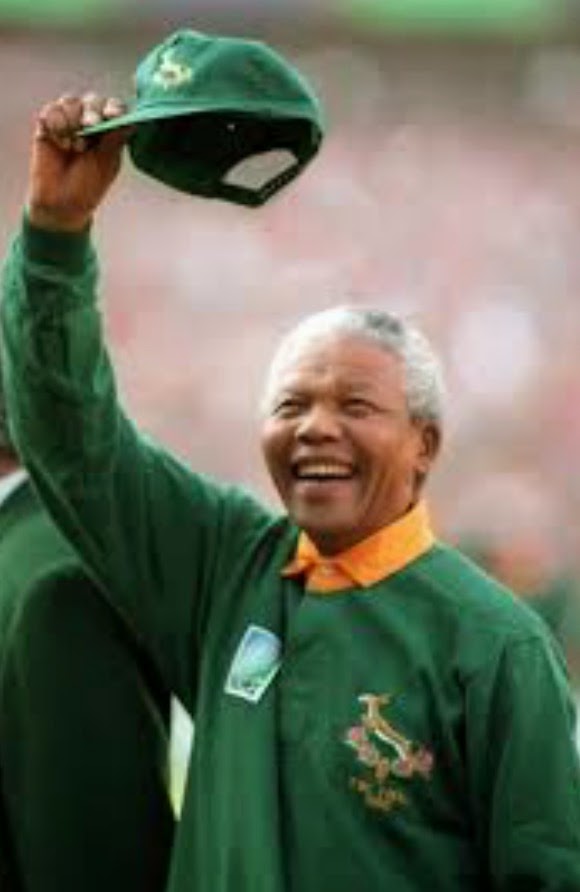
Showing posts with label Patriotism. Show all posts

Friday, July 17, 2020

Shifting Focus


You may not realise it, but you have a problem. I can solve that problem. There is no one else who can. Manufactured inadequacy. Projected confidence. Illusionary exclusivity. There is a reason why wealth is a team sport created in bubbles. If you genuinely care about the person, and your lives are connected, then creating a problem to extract wealth makes no sense. If you have a relationship with a person, it becomes impossible to hide that you are as confused and incompetent at most things as the rest of us. That you are just doing your best. If you care about someone, you stop looking for someone “better” to replace them, because the key is time spent. The person matters. Nepotism, Hereditary Privilege, Patronage, Clubs, and other forms of anti-Meritocracy are incentives. They shift the performance spotlight to a group bigger than ourselves. They make room for vulnerability. Family, children, friends, and community. They also have unintended consequences. I don’t know the answer, but the question is how to see real problems, be honest about our ignorance, and see the strengths in others that are not ours.

"American Progress" John Gast (1872)


Monday, January 30, 2017

The Idea


I grew up in Apartheid South Africa. I am white, English-speaking, went to a good school and had fantastic parents and brothers. I was 'free'. If freedom doesn't exist for everyone, freedom doesn't exist for anyone. We don't exist in isolation, and if we pretend to, we are all poorer for it.  I was not proudly South African until 1994. Part of a Rainbow Nation. That pride took a huge hit in 2008 with the Xenophobic attacks. The same borders defining Apartheid are how we define countries.

I am now an immigrant in the United Kingdom. In South Africa, I am officially a Soutie - with one foot in England and on the southern tip of Africa. Two homes. I was very proud of the British Citizenship ceremony in January 2015. It was like a United Nations convention with 48 people from all over the world hearing about a Britain that was more an idea than a country. More Rome. More America. A new world where ideas, relationships and passion are fired up to the dream of who we can be. Where we are empowered and empower each other. I was gutted when that dream was squashed in 2016.


I can get as fired up as the next guy. I love being part of a team. I am very competitive. But no. If my team is defined by crushing or standing apart from others, then I am on the wrong team. If I look left and right, and am gaining strength from those who would do others harm, I am on the wrong team.

So no. I am not Proudly South African. I am not Proudly British.

But I believe in the idea of South Africa, Britain, America and Rome. The idea that you can only whisper before it disappears. The idea that we are not defined by our difference, but by the things we share.


Friday, April 08, 2016

Finding Your Place(s) (with Neil)

Trev:
About a year ago I bumped into my high school headmaster in Sydney. It seemed like an amazing coincidence being more than 10,000 km from Westville in Durban, South Africa. Turned out there were about 3 other old boys near by. Growing up, perhaps it was the equivalent of seeing someone in Joburg. I don't think people only leave South Africa (or anywhere) for reasons of 'Grass being Greener'. There are just so many experiences to be had, different perspectives to be gained, and lessons to be learnt in the wide world out there. I have lived in London since 2008, and started travelling more widely in 2014. Neil Lessem, a friend from university has lived in San Francisco (an awesome city) and recently moved to Sydney.  

Neil (2nd from left) and me (third from right)
Smuts Trolley Pushing Team

Neil:
Hi Trevor, I am always amazed at the reach of my South African network around the world. When I attended graduate school at UCLA, none of my American classmates knew anyone else from where they grew up who was enrolled at UCLA at the time. I on the other hand had two friends from my high school in Johannesburg. Not only that, we were from the same year, in a graduating class of about 180 people. I have noticed that South Africans are very good at keeping in touch with each other as we move and as we travel. I think this is a function of two things 1) a funnelling into a very small number of elite institutions by the South Africans that will have the means to travel and live abroad; and 2) investment in peer networks because we come from a society that is traditionally not very mobile. Americans tend not to invest as much in their adolescent social networks because they know that when they finish high school they will move somewhere else for college, possibly work in another state afterwards, go to grad school somewhere else, and then ultimately settle down somewhere they may have never been before. 

Trev:
It is probably also true that this network we are noticing is mostly limited to the English speaking world. Although I do know of people who have ventured to China, South Korea, Bahrain, and Singapore. The two of us were part of the generation where Apartheid ended while we were at high school. I had a burst of 'Rainbow Patriotism' where the idea was to extend the idea of myself beyond my bubble. I would belt out the inclusive national anthem sung in multiple languages. Eventually, I even started supporting 'enemies' like Percy Montgomery when he pulled on a green jersey. I only got nervous about Patriotism in 2008 when I saw Xenophobic attacks starting. America seems to be 'self-sorting' itself. I read an article talking about 11 nations. A mobile society where you find your people rather than sticking where you are born. I like mobility, but the idea of us just moving from problems worries me. 

2008 was a wake up call for Rainbow Patriots

Neil: 
Hmm. I don't know if the network is limited to the English speaking world, but it is certainly thinner in non English speaking countries. This weekend I will be visiting with a friend from primary school days who is living in Ho Chi Min City. I do think the network is however largely restricted to English speaking (mostly white) South Africans. San Francisco is very much a self-selected community and one that I identified tremendously with. While it is incredible to be in a place where you feel secure and inspired by like minded individuals, lacking dissenting opinions can lead to a bubble like mentality. The other larger issue that you refer to is that not everyone can move. National borders and poverty bind people to places and regimes that they do not choose

Trev: 
I tend to avoid divisive issues as I think we get into partisan groups which (like businesses looking for a competitive advantage) end up disagreeing 'just because' rather than because they think it is in the interest of the larger group. That said, two of the issues I feel most passionately about are contentious. I think we live in a world of Global Apartheid. I was struck how divided some cities are. I didn't get to Oakland in San Francisco, but I did do a lot of walking in Chicago, Seattle and Vancouver. Even when borders and laws don't exist, Apartheid can exist. But borders and financial restrictions do lead to a two tier world of those who can and can't move to where the opportunities are. A Universal Basic Income and Unrestricted migration are things I feel strongly about. Even if they were in place, I think we would still need to work hard on figuring out the softer issues that keep communities divided and conquered. 

Apartheid restricted those without required skills to 'Homelands'

Neil: 
Agreed on both points, but curious to learn more about your idea of Global Apartheid. I would have thought it is subtleties in laws that cause these inequities to persist (like the war on drugs in the U.S.). What factors do you have in mind? 

Trev: 
I have more questions than answers. I think there are unwritten laws and entrenched prejudices that reinforce division as much as the 'letter of the law'. Some things like passports strike me as directly comparable to pass laws and dompas. The points systems employed allow people (like me) to get British Passports (or the equivalent in the US, Canada, Aus etc.). Although pitched as a skills exchange, there is plenty of evidence to show that people at all economic levels tend to add value as immigrants. I would argue that it is window dressing. I understand the fear people have of culture being overturned if the gates opened. I am interested in finding out more about the internal migration in the US. I don't think people move easily. Take Greece as an example, many people would rather struggle on, than move. 

Neil:  
I recall reading 'The Case for Open Borders' a couple of years ago, it really opened my eyes. "Think about what happened in the 1960s and '70s as more and more women joined the workforce in the United States. Was the result mass unemployment for men, as women took all their jobs? Of course not — the economy adjusted, and we're all better off for it. 'Would we really be a richer society if we kept half the population stuck at home?' Caplan asks. 'Isn’t it better to take people who have useful skills and let them do something with it, than to just keep them locked up someplace where their skills go to waste?'

On the issue of cultural corruption there is an interesting paper (Cultures of Corruption)  by Fisman and Miguel: They look at UN diplomats in New York City. 

They have diplomatic immunity and thus cannot be forced to pay their parking fines. The number of parking fines diplomats accumulate is highly correlated with the level of corruption in their home country, implying that cultures (good and bad) persist. However, (and this is the good part), over time cultural norms change and converge to to those of the environment in which the diplomats find themselves. Unfortunately, this is an environment of zero consequences, so they start accumulating more traffic fines. I personally do believe that the this would still hold true for positive social/cultural norms. 

Trev:
Corruption is a global problem, but I think transparency is slowly chipping away at it. As far as political resistance to open borders goes, two contributing factors are a fear of losing a way of life, and the belief that it is a 'zero sum game'

The first one is tough to deal with. Culture does develop. America is a great example of that. The rapid growth of urbanisation has seen cities change their character regularly. The speed of this change make it difficult to settle into a rhythm. Cosmopolitan life requires you to constantly be outside your comfort zone. It isn't surprising that conservative people tend to retreat (or stay in) rural areas. 

The second issue is easier to deal with. New people create jobs. Not just skilled people. There is plenty of evidence for this, and it makes sense. Releasing someone's potential benefits everybody. 

Neil:
Trevor, you win my vote. I am not sure about the retreat vs. stay thing. They are very different. Staying implies a desire to maintain the status quo, while retreating means an active lifestyle choice based on different preferences. A friend of mine recently said that all big city folk secretly want to live in a small town, but are too afraid to admit this to themselves in case it makes them happy. Just coming off a 16 hour workday yesterday, I wonder about the wisdom of this…

Wednesday, September 23, 2015

Orange Face

I have been doing some 'wiki-walking' looking at the cities, and countries, I have been visiting. Opening the Pandora's box has let me realise how little I know about all the connections that tie the various countries together. The Netherlands is a particularly interesting case. The first ever company, and the first ever stock exchange were in Amsterdam. Company is a loose description. The Dutch East India Company (VOC)  could wage war, had its own currency, could imprison people and even execute them 'legally'. Like buying shares in the adventures of Genghis, Alexander or Shaka. They spread far and wide.


I like thinking of alternate histories. What would have happened if? The British only came to South Africa as settlers in 1820, shortly after the ultimate defeat of Napoleon in 1815. Napoleon had done some damage to the Dutch and their golden age withered. The British filled the 'power void'. Despite the idea of the VOC, if there is one country in Europe you would hold up as the Liberal torch bearer, it would be the Netherlands. How would the world be different if the Dutch had stayed a major power? They were famous for being able to have uncomfortable conversations and became known as 'the publishing house of Europe' for putting out literature that was too controversial elsewhere. Hobbes, Locke, Bayle and Spinoza all worked here because they weren't able to push the boundaries elsewhere. That is a super cool reputation.

I am always interested by the lack of Dutch extroverted patriotism. A chap I met last night said they find World Cups and singing of anthems a little strange. It is not unusual for people not to know the words. He said most Dutch people are aware of both the good and the bad, and pretending that there is some inherent, better, Dutchness, doesn't feel good. A culture of acceptance feels better. I grew up believing patriotism was the fire that could pull the stories of lots of different people together. In South Africa there are 11 official languages, and a lot of healing to do. Cries of 'Proudly South African' and rainbows on faces are the banner around which we all gather. I have several T-Shirts with various prints of the African continent. 

In creating a common story, it is useful to go back to history. The tribes which we place ourselves in today seem cohesive and homogeneous. They really aren't. There has always been infighting. There have always been differences of opinion. People have left. People have returned. People are always moving. More and more I think the only patriotism there should be, is a celebration of the best bits of all the cultures we have created. A celebration of the different combinations of ingredients. A savouring of the flavours you can get exposed to by meeting new people.

I am proud of the Dutch history of encouraging conversation. I would paint my face Orange to celebrate that.

This pic was taken shortly after I visited Amsterdam for the first time 16 years ago

Friday, July 17, 2015

Common Ingredients

Benjamin Barber (‘If Mayors Ruled the World’) talks about the difference between Bridging Capital and Bonding Capital. Patriotism requires Bonding Capital. Cosmopolitanism requires Bridging Capital. In order to create a Nation State you have to create some sense of a shared story. The people within the borders need to be different from the people on the other side because of some essence. That essence may come from a shared religion, race, event or anything that elevates our sense of identity above ourselves. That feeling of your own worries melting away because you are part of something bigger creates a spark. It forges you together with others. It makes you care about them. It bonds you.


New York’s catch phrase is ‘I love New York’ and not ‘New York is #1’.  Being patriotic isn't just a sense of ordering a whole bunch of different places in terms of characteristics and arguing you come out best. It is a case of believing your essence is the best. You, and those with whom you have been forged, are the best independent of the things that make you so great. Your soul is different. Your soul is better.


The great thing about bridging capital is that people who aren't from New York can love New York too. Like chocolate. Liking one doesn't stop you liking another. Like wine, cheese, art, coffee, whisky, music, stories, theatre, etc. there are just combinations of things that you love. Different flavours. By falling in love with your city, you are falling in love with all cities. You can savour them.

The same argument applies to the idea of celebrating commonality rather than celebrating diversity. Commonality doesn’t mean mono-culture. It doesn't mean we must all be the same. Rather, it means celebrating common ingredients. How you combine those common ingredients creates the diversity that we love. But diversity doesn’t have to mean an exclusive difference between us. It doesn't have to create borders. Borders are stupid.

Sovereignty requires patriotism. It requires a belief that a characteristic groups a bunch of people in a way that someone can speak for them all. Slowly but surely we are realising that it is more complicated than that, and it is simpler than that. Each of us is unique, but only in the way things are combined. That is why when we meet people, they remind us of other people. Not exactly. Never exactly. But we seldom stumble across completely new ingredients.

If Sovereignty combines the characteristics of the people it represents, there is only one sovereignty. We are all Global Citizens

Thursday, May 28, 2015

Camaraderie, Concern and Mateship

One of the lasting impressions of my recent trip down under were the RSLs. The 'Returned & Services League' was formed 'as a direct result of the camaraderie, concern and mateship shown by the "Diggers" for the welfare of their mates during and after the 1914-1918 War.' For an outsider coming in now, it is a network of pretty awesome third places. If you live close by, you have to be a member to come in. Otherwise you have to sign in as a guest. My introduction was when I was looking for a place to watch the thing of which we do not speak. Aus only became a federation in 1901 and so the First World War was very much a part of their nation building. I was also there for Anzac day where they marched, finishing up at the RSL.

The Anzac Day march finishing at the RSL

Aussie & Kiwi soldiers were known as Diggers

As a separate thing, I have been reading 'The Fall of the Ottomans' to try get an understanding of the background to the Middle East chaos. Interestingly it turns out to be written by someone who was going to Gallipoli along with three generations 'lest we forget'. In walking to the site where his young great uncle had lost his life, Eugene Rogan stumbled across the memorial to Turkish soldiers. The tremendous loss of life on the other side, not often spoken of, lead him to try and understand what had happened on the other side.


I am a third of the way through the book and it is very 'Game of Thrones'y. It also makes the history that I did at school a little more relevant. We studied World (mainly the wars) and South African history, but you know what it is like at school. 'Mam, why does this matter?'. 'Sir, when am I ever going to need to know this?'. The challenge for teachers is creating context. With the recent Independence Referendum in Scotland, it suddenly becomes meaningful to see that the same vote in South Africa was only in 1960 and was only a 52% Yes result. My parents were then roughly the same age as I was when the new South Africa was born. The South African Republic was an independent country from 1852-1902. 50 years. Even the Zulu Empire had only started forming 1816-1828, not long before that. South Africa was a Union from 1910-1960. Just 50 years. It was a white only voting republic till 1994. Just 34 years. The new South Africa is just 21 years old. All this stuff changes very quickly and borders seem very random.

Another part of 'The Fall of the Ottomans' that was interesting was just how keen everyone was to get involved in the First World War. Many Aussies and Kiwis had 'helped out' in winning the Second Boer War for Britain. That war wasn't fought in trenches. It was won through the invention of concentration camps and the scorched earth policy of burning farms to stop the successful guerilla tactics of the First Boer War. So many Anzacs had heard tales of adventures to Africa with more Brits dying from disease than in battle. They weren't expecting the brutality of vast loss of life with industrialised warfare. They just wanted to see the world.

Although formed on the back of a war, the idea of 'Third Places' being the source of camaraderie, concern and mateship seems a very appealing model. Borders are random. Friendships are not.

Saturday, March 14, 2015

We Can Come Back

I had a pretty good track record with the survival of my glasses. I wore them from age 9 till a couple of years ago when I got my eyes zapped. Only one pair got destroyed. They were rimless glass ones. I got rather pumped up whenever the Boks played. I would stand up and belt out Nkosi Sikelel' iAfrika at the top of my lungs, even if the venue where I was watching wasn't really appropriate for such extroverted patriotism. Another fun thing to do was to dive tackle my friend Rob every time we scored a try. Again whether appropriate or not. On one such occasion, my glasses didn't live to tell the tale.

It was only in 2008 that I started to feel a little uneasy about my patriotism. A series of Xenophobic attacks in South Africa made me start to question the value of any form of nationalism. The whole point that made me feel proud of South Africa was how Mandela had managed to forge together the idea of a country with no outgroups. Pride or support of only a specific group is a flawed model. We are better than that.

I have just finished a wonderful book by Jonny Steinberg called 'A Man Of Good Hope'. It details the journey of a man constantly searching for a better life. The protagonist, Asad, is a survivor of the Xenophobic attacks. He was in Cape Town at the time.

The magic of great books is that they open up the worlds of ordinary people with all their flaws and strengths to us. I feel as intense a sense of pride in the way Asad has approached the challenges in his way as I have of stories I have heard from cultures within the borders of SA. Growing up, I felt proud of the victory of the Zulu army at Isandlwana, but I also felt proud of the defence of the British at Rorke's Drift which resulted in eleven Victoria Crosses being awarded. We can look towards history and our people to form our identities and gain strength. Creating boundaries and limiting where we can draw this strength deprives us of a greater understanding of what we are really capable of.

History is messy. Figuring out who was right or wrong is beyond messy. It is impossible. A Man of Good Hope asks some really tough questions, but it also shows that people are tough. Life can throw stuff at us and we can come back the next day for more. Again and again. Life is tough enough without us making it harder for each other. Hatred sucks up a lot of energy. It would be great if we could direct that energy more productively.

Thursday, March 05, 2015

Flawed Model

Belief systems are models of the world. The world is awe inspiring and majestically complicated. We grasp at it in our different flavours of thought and culture helps us put together a way of responding. Culture is constructed to help us. Based on our chosen model.

But we aren't our culture and our beliefs are just a model. Models are useful mainly as a tool to help us think and understand our responses. In investing, a model of a business's financial statements and prospects can grow more and more complicated as you add assumptions. What if this happened? How would it affect the business? What would the knock on effects be? Building the model is useful. Excessive trust in the model at the end less so. Reliable results and predictions can make you less prepared for the cases it is wrong which may have profound effect. Look up the story of 'Long Term Capital Management'.

I think the same is true of cultures. We have to be quite brutal though in not believing that something we have based our lives on defines us. I was just a little guy at the tail end of Apartheid. I can remember learning to put the old South African flag together at cub scouts. It was only around age 10 when Mandela was released and I started understanding some of my parents' grumblings that I figured out something was really odd about a life where the only people who didn't look and sound like me were servants. I heard of Nkosi Sikelel' iAfrika as an additional national anthem of our country. The anthem of the excluded. Then Mandela did something profound. He didn't say I am alongside those who sing 'Die Stem'. He said I am those who sing 'Die Stem'. I am a Springbok. This broke a model. It said there was a better one. It was a gift that asked the same. I became very proudly South African. Proud of Shaka. Proud of Rachel De Beer. Proud even of the complicated legacy of Rhodes. In saying I am South African you accepted the good and the bad and worked on creating a new model.


I became wary of 'South African' pride after the Xenophobic attacks in 2008. I am busy reading a tale about the treatment of Somali refugees in South Africa - 'A Man of Good Hope'. In the UK where I have been living, there are also rumblings about immigrants. Last night I watched with a sense of historic embarrassment 'The Imitation Game'. Amongst thousands of others, we lost one of the best minds the world has had to our homophobia. Cringeworthy. Xenophobia makes me cringe in the same way. I think the only way to respond is to say I am Somali. I am Maori. I am Aborigine. I am Zulu. I am Afrikaans. I am British. I am South African. I am American. I am Chinese. Each time you engage a culture, it is not a case of engaging an other, it is a case of engaging yourself.

We have found flaws in our model of national pride. Let's build a new one. 

Tuesday, March 03, 2015

The World Upside Down

When I was a little chap, I loved the World Upside Down Game. Lying on the floor you look up at the ceiling and imagine a world where that was the floor. You need to step over the edges as you walk through doors. The floor has a light pointing upwards in the middle. Taking a bath is particularly awkward.

The game quickly descends into madness. Things clearly can't all be upside down. Unless you go to Australia. In the real world upside down you get to watch world cup cricket during the day. Even though you are upside down, you don't really realise it. The friend who I am staying with's driveway  is straight out of Kill Bill. Theoretically it should have been easy to walk up this near vertical path with my backpack since I was upside down. 

No, everything can't be opposite. The advantage of there being lots of different places is that we can see how differently things can be done. With social media there isn't even a filter so that we only hear the things that make it past the editor and potentially the government censors. As you travel around the world is mostly the same with a few different flavours, but we should be able to easily spot the things that are upside down. The things that need to change.

I spoke in 'Not Personal' about the Asymmetry between companies who don't depend on one particular employee and employees for whom jobs come to define a big chunk of their lives. The same thing exists at a Nation State level. Within a country, you can move around quite easily between cities and find places where things are done well. For all the problems facing Europe, I am a big fan of the idea of free movement of people and ideas. This can decrease the dependence of individuals on states in the same way states aren't dependent on (particular) individuals. You can vote with your feet. In the same way I believe companies would treat staff very well if it was very easy for them to leave, countries would have to work harder for loyalty if the same was true.

The same could be said for politicians. Sports teams have recently started professionalising coaching. You can get someone from a different nationality helping the team. I would be keen to see something similar for politics. What if we could see someone doing a great job doing somewhere else and they could then come run for president elsewhere? Alarm bells go off in our tribal cores! No. The person must be one of us. Why should a country have to work for loyalty? Where is your patriotism! 

I have realised my patriotism lies with good ideas, good people and figuring out how to do things better. Sometimes that requires looking at things a little differently.

Steep driveways are still steep in the World Upside Down

Monday, February 09, 2015

Honest Time

There are lots of ways to communicate. We often think of honesty as a choice. Like someone can ask a question and the person answering can choose to reply without the layers of protection we build. I don't think that is true. Honesty is often time. Time allows someone to hear the words come from their mouth, feel your response and their response to your response. Feel whether those words are true. Time allows us to find other ways to communicate. Time allows you to push beyond your comfort zones and test any truth out for size.


Mya shared a wonderful clip of Derek Paravicini from a 60 minutes profile. Derek is blind, has severe learning disabilities and autism. The incredible story shows how Derek came across music and the ability to communicate through sound. His teacher talks about how other people learn to put emotion into music. He says Derek is learning about emotion through music. Eventually Derek was able to perform with a full orchestra where he headlined shows. His ability to communicate with the orchestra relies on different skills since he is unable to see the conductor. It relies on honesty.


Yesterday, Steve showed me the presentation below on 'The Empathic Civilisation'. It is the same idea Patrick was talking about in levels of moral development. Slowly but surely we have been expanding the circle of people we care about. Tribes would unite through religion. Religions could be united in nation states. There doesn't seem to be a reason why we need to stop there. Nation states are fairly young. We can go beyond that to become Global Citizens. Part of how we do that will be through music, art, dance, sport and shared festivals. As travel, social media and other methods of communication allow us to share the awesome bits of various cultures I can't see how old barriers can stand up to our ability to recognise bits of ourselves in others. And care.

No matter our disadvantages, we find ways to communicate.


Friday, February 06, 2015

Safe in Your Tribe (by Neville Scott)

Guest Post: Neville Scott

I met Neville in my first job after university. He headed the glamorously named 'Modelling Team'. It was their job to work with the Actuaries in Product Development to take whatever ideas we had and clarify them. If ideas could be clearly articulated, they could be built into models that could do what they were meant to. Neville also arranged weekly learning sessions where we would focus on a different concept that would help in our quest to think better. One of the most lasting lessons I got from those Monday mornings was the idea of describing something (and yourself) by what it is rather than what it isn't. I wrote about this idea in 'Aporcupine Apineapple'. Neville is always curious and has lots of interesting ideas. I hope this is the first of many guest posts.


Safe in Your Tribe
by Neville Scott

Many years ago I saw an experiment on a TV program. They set up a huge pyramid of coke tins in a supermarket. With a touch sensor and a device to collapse the pyramid when touched. Successive people looked at it, touched it, and then witnessed the calamitous collapse of tins clattering noisily over them and all over the shop. Lawyers, doctors, housewives, ministers, children all touched it and triggered the collapse, and every single one declared loudly "I never touched it!"

They all lied.

The experimenters put forward an interesting hypothesis. People are herding animals who don't individually have all of the tricks needed for their own survival and need to stick together. Herding creatures know that expulsion from the herd means death. And apparently collapsing a monster pyramid of coke cans in a supermarket generates a significant herd-rejection fear.

On the science level, we've got at least two completely independent brains: the survival brain (amygdala) and logic brain (frontal lobe). Simplistically our amygdala maintains lists of life threatening stuff. It got high speed hard-wiring to sensors (sight, hearing, ...) and hard-wiring to the central nervous system to trigger action. If it senses something on its list, it fires survival actions. And it doesn't consult the far slower-acting logic brain. It doesn't concern itself with morality or logic. Its sole job is to keep you alive. It manages its list:
  • Every time it learns of a new risk it adds it to the list. Cars. Rocks. Pointy things. Big Johnny.
  • If it is repeatedly exposed to a listed item with no ill effect it may shift down the list. Even off the list. Fear of heights can be overcome.
If you abuse it for too long it gets confused and can malfunction and start firing false alarms. Anxiety attacks, panic disorder, PTSD, shell shock - these are the survival brain misfiring. Apparently most people are born with spiders & snakes pre-coded on the list. And mice are born with cats in their list - a newborn mouse panics when exposed to cat hair.

The frontal lobe does the thinking and moralising and logic stuff. But it doesn't have the same hard-wire privileges of the amygdala. It gets information far later and takes longer to respond. Throw a ball at a person. They will invariably duck immediately, then say "what was that?". The survival brain saw the danger immediately and generated the ducking survival action. The frontal lobe eventually woke up and got vaguely fascinated about what they hell just happened. It seems we are hard-wired to survive; and be logical later.


The Amygdala (left red) and the Frontal Lobe (right blue)


So we've got these brains operating independently. When we're scared the survival brain is dominant and triggering defensive responses. When we're safe the logical brain is dominant and making moral and sensible decision. Simon Sinek tells us why good managers make you feel safe.


Let me stretch the hypothesis and suggest that herding creatures feel safest when they are in the company of others that "feel" like the same herd: Genes, Qualifications, Profession, Race, Religion, School, Politics,... The 911 attacks triggered enormous herding polarisation. Winning the rugby world cup defined the "South African" herd and aligned those within it against an external common enemy. My takeout is that environments of perceived safety allow morality, tolerance and peaceful co-existence. Perceived danger awakens defensive responses and cause polarization into herds and survival responses. "I never touched it!"

The moments when the brightest, most trusted people look you straight in the eye and blatantly lie. They're scared. Something has awakened their fear of herd expulsion. For managers and governments: if you want teamwork and a sense of national identity - make people feel safe.

---------------------------------------------------------------------------------

In writing a blog about several topics in which I admit to being a complete beginner, I am going to have to rely heavily on the people I am writing for who cumulatively know most of what I am likely to learn already. I would love it if some of you found the time to write a guest post on the subject of happiness or learning. The framework I use for thinking about these things is what I call the '5 + 2 points' which includes proper (1) exercise, (2) breathing, (3) diet, (4) relaxation, (5) positive thinking & meditation, (+1) relationships, (+2) flow. Naturally if you would like to write about something that you think I have missed, I would love to include that too. If you are up to doing something more practical, it would be awesome if you did a 100 hour project and I am happy to do the writing based on our chats if that is how you roll. Email me at trevorjohnblack@gmail.com 

Wednesday, February 04, 2015

Include and Transcend (by Patrick Madden)

Guest Post: Patrick Madden

Three important points about levels

In the first post of this series I talked a bit about how morality can be thought of as a line of intelligence that develops over time by gradually increasing the range of entities we see as morally valuable. We start with egocentric morality (only I matter) and grow via ethnocentric morality (we matter) through a still broader morality (all of us matter) and so onwards.

Thinking with levels of development in this way is useful because it’s clear and methodical and can inform policy. It can also be very problematic if we don’t understand it properly. So here are three points about levels that are important to understand.

Higher is not better, just more inclusive

Firstly, levels can be usefully thought of as efficacious adaptations to the environment. An egocentric morality is good for a two-year-old child, whose development relies on looking out for herself above all, while ethnocentric moralities better serve young adults for whose development collaboration is crucial. The upshot here is that the ‘higher’ levels are not better than the lower levels, they’re just more inclusive. This is crucial point for thinking and talking about moral development: it means value judgements are optional rather than given with the data. We don’t have to judge our own or others’ moralities relative to each other: we can simply see it as it is and stop there, short of condemnation. That usually helps!

(We can of course choose to judge moralities relative to one another. And – according to some but not all moralities – we ought to.)

Include and transcend

The second important point is the principle of “include and transcend”. Ethnocentric morality does not deny or exclude egocentric morality. Obviously, a morality that values my clan does not exclude me because I am a member of my clan; it just includes others as well as me. A morality that values all beings does not exclude my clan; it just includes other clans also. The principle of development in every line of intelligence, not just the moral line, is inclusion and transcendence: in growing, we include the view of the former level and we go beyond it.


Many ladders, many rungs

The third important point is that there are many ways of grading levels. The one I’ve used here (with three levels up to and including humanistic morality: egocentric, ethnocentric, humanistic) just happens to serve because it’s simple. Others speak about preconventional, conventional and postconventional (then post-postconventional) morality. The important point here is that the data doesn’t, from its own side, give us objectively discrete or discontinuous stages. Rather, we deliberately choose a particular, convenient framework for categorising the data into stages so we can talk about them. If we choose a framework of three stages, we could equally choose one of six or eight. Many ladders, many rungs.


Why does this matter?

If we don’t understand that higher is not better, just more inclusive, then we have to judge others’ morality. Firstly, that’s terrible for conversation. And secondly, it also keeps us limited to a particular stage of development – our kneejerk move into judgement limits the range of information we can consider objectively.

If we don’t understand the principle of include and transcend, we might fear that moving beyond a particular stage means sacrificing our own interests altogether. It usually does mean sacrificing some of our own interests, but it’s more a case of subsuming them within a schema that includes them and other things, to create something that’s even more valuable.

If we don’t understand that the number and characteristics of developmental levels are contingent on our chosen theory and not given to us by reality from its own side, we might be far too confident that our view is The Correct View. That’s almost always a terrible mistake because it precludes curiosity.

The next post in this series will discuss how different levels look to one another. What is it like for someone at ‘level 3’, for example, to hear about ‘level 4’ – and vice versa?


Related Posts:
  1. Levels of Moral Development (PM) - increasing moral intelligence by increasing my range
  2. Empathy Armoury - We don't only have to be aware of our path
  3. Chipping Away - at our ignorance in a world that is impossible to understand
  4. Pause & Engage - getting past moral log jams
  5. The Bigger Tribe - Patriotism gets ugly when it makes enemies of those outside

About the Guest:
Patrick works with The Potential Project and you can find out more about what he does through his website and blog.

---------------------------------------------------------------------------------

In writing a blog about several topics in which I admit to being a complete beginner, I am going to have to rely heavily on the people I am writing for who cumulatively know most of what I am likely to learn already. I would love it if some of you found the time to write a guest post on the subject of happiness or learning. The framework I use for thinking about these things is what I call the '5 + 2 points' which includes proper (1) exercise, (2) breathing, (3) diet, (4) relaxation, (5) positive thinking & meditation, (+1) relationships, (+2) flow. Naturally if you would like to write about something that you think I have missed, I would love to include that too. If you are up to doing something more practical, it would be awesome if you did a 100 hour project and I am happy to do the writing based on our chats if that is how you roll. Email me at trevorjohnblack@gmail.com 

Tuesday, December 23, 2014

Running Towards (by Brian Levings)

Guest Post: Brian Levings

I go way back with the Levings (and Moll) family. Far enough back to have embarrassing photos. Ruth and I were in the same class for several years until the boys and girls were cruelly separated as is South African custom. Good for the boys since Ruth used to destroy us in the classroom. Brian was with my brother and I got to know him well too. I caught up recently with both of them, after several years, at a braai for a mutual friend visiting the UK. Brian and Ruth are both teachers and relocated their family a few years back. Dan Gilbert, author of the wonderful book 'Stumbling on Happiness', talks about how we used to live where we were born, do what our parents did, and marry someone from the neighbourhood. These are key factors in happiness and present really difficult choices with expanding options. As Megan discussed - the curse of choice. One of the challenges to tough choices is being second guessed. Brian sat down and responded to a challenge from the braai friend (who happens to be our mutual mentor, Richard Erasmus) to talk about some of the things that are tough to be honest about. His outpouring is raw.

Brian is the one in the short shorts on the left... less a couple of decades.

-------------------------------------------------------------------------------

Running Towards
by Brian Levings

"Someone got stabbed... killed... did you say murdered!? Ha ha, and you moved half way across the world!" On so many levels, this kind of comment must be what I as a white South African male (I guess ex if you look at my passport) who uprooted my family find the hardest to take, the hardest to keep quiet about - it's been years and is a real personal struggle for me.

A while ago, our very reverend Richard Erasmus asked people on Facebook what they find most difficult to be honest about - for me, this is it - you know what, I left it all behind, I dragged my wife away from her loving and incredibly close family, we said goodbye to a church and friends that have shaped our lives, I gave up an incredible job with my kids schooling mapped out at independent schools until they were 18, a house I could only dream of and I emigrated - AND I'm happy I did. There you go, I said it. I made the right choice and I'm glad I did it. I don't want to step on anyone's toes but you see, I have to walk on eggshells around those people who are just too blinkered to realise that not all of us ridicule the country of our birth, not all of us moved away because we couldn't handle the heat - I've read so many of the 'we're really not interested in you bashing our lovely country, just enjoy your life in the miserable cold damp of the UK' articles because... how dare I have made the right choice. How dare I be happy and feel safe with my loved ones. How dare I feel comfortable for my wife to be out alone late at night. How dare I rate children's current education as one that is strong and rigorous - I'm meant to be miserable under the grey gloom of the English climate but I am not. As much as I love South Africa and  speak well and fondly of her, no matter how much I sometimes yearn for the relaxed and friendly nature that is a South African, for the knock on the door which says, I'm here and no, I didn't put it in the diary 3 months ago, but I'm coming in, I am happy. My wife is happy. My children are happy.


I'm not an idiot. I knew there was crime here. I knew that people died here, horrible deaths too. I knew that it rained here, a lot. I knew that I'd be tearing my wife from her family and friends. Something leaving the country does very quickly is show you your true friends. I think those who have done so know exactly what I mean. But what I didn't know was how my breath would be taken away when I walked to the edge of the cliffs of Malta, what it felt like to be surrounded by Mediterranean culture eating and singing on the cobbled streets of an historic castle in Spain. I didn't know what it was like to take the Northern line for 3 stops, jump on to the Circle line for another 3 and whatever you do, don't stand on the left side of the escalator. I didn't know what it was like to drive on the right side of the road, or how difficult it is to get a car into an Italian roundabout, the chaotic nature of des Champs-Élysées traffic or what it was like to fall off one of those stupid snow chairs half way up to the blue route - never managed a black! The warmth of the Irish culture, the blue eyed ladies (sorry love), the palm trees swaying on a sandy Caribbean beach while sipping on a brandy and coke in a jacuzzi draped with sheeting and all the frills was all a world I did not know. Or what it was like to smell the disgusting gasses of walking into a volcano of the St Lucian islands; I had no idea.

I do now and I'm better for it. I make no excuse for enjoying it. I make no apology - as much as you may love South Africa, please know this: I didn't run away from, I ran toward something else - I never wanted to offend you, I never wanted to be seen as your hostile now that I've left. I just want to be seen as someone who left a country they love and have awesome memories of, but also, a person who wants to experience more of life, more of the world, more of other cultures and I'm tired of being labelled 'one of those people'.

---------------------------------------------------------------------------------

In writing a blog about several topics in which I admit to being a complete beginner, I am going to have to rely heavily on the people I am writing for who cumulatively know most of what I am likely to learn already. I would love it if some of you found the time to write a guest post on the subject of happiness or learning. The framework I use for thinking about these things is what I call the '5 + 2 points' which includes proper (1) exercise, (2) breathing, (3) diet, (4) relaxation, (5) positive thinking & meditation, (+1) relationships, (+2) flow. Naturally if you would like to write about something that you think I have missed, I would love to include that too. If you are up to doing something more practical, it would be awesome if you did a 100 hour project and I am happy to do the writing based on our chats if that is how you roll. Email me at trevorjohnblack@gmail.com 

Monday, December 08, 2014

Ignoring Cape Town

Our ability to ignore, forget and recreate memories in our heads makes us very resilient. Circumstances change and clouds pass so that a dose of time tends to heal. That is awesome, but an example of this selective ignorance once got my blood boiling. I had just met someone and when he discovered that I had studied in Cape Town, he said he had been there once but that he was not going back. When I asked why, his response was that the drive to the centre of Cape Town from the airport takes you past townships. He did not believe such inequality was acceptable. So, to rephrase in my own words. It was not acceptable to live next to poor people, you have to extract yourself completely. Commence boiling.


Alternate ways to live beneath the mountain

There is vast inequality in the world. It is the absolute level of poverty that concerns me more than the inequality but emotionally, relative wealth hits home harder. We feel more obligation to those who live closer to us. For the last couple of hundred years improved communication has made it possible for Governments to manage larger areas. Since everyone didn't know each other as well, the idea of nationalism and patriotism built up. Through anthems, art, sport, shared holidays and national events emotional connections were built up so that patriots cared more. Over the last few decades communication has improved even more, and I think it is time to start extending the same caring beyond artificially created borders.

The problem with expanding the bubble is that small bubbles do help us survive. The smaller our bubble, the more control we have over our circumstances and our thoughts. There are lots of tough questions that are easier to just put to the side. Peter Singer is a bubble popper. Since this blog project is about happiness and learning, a big part of that is the relationship we have with those who surround us, and what we eat. I spoke about how difficult I found the food questions Singer posed in 'Happy Meal'. I am also looking at the charity questions in 'The Life You Can Save'. There are substantial lifestyle implications in what he writes. One thing that is important to me through this process is how to change without the blood boil experience I mentioned earlier. The chap who wrote off Cape Town was coming from a good place, but his conclusion and the way he said it left me feeling moral outrage. That kind of bone rattling, hair spiking, heavy breathing, bicep bulging, nostril flaring zeal for destruction you get when you feel someone is judging something you love. Philosophy, morality, ethics, and religion ask tough questions a lot of the time. You can argue that it is worth leaving these issues aside, particularly when talking with other people, and sticking to 'Polite Chunks'. Possibly, but then you are not working toward sustainable happiness. In a world with sustainable happiness, you can visit Cape Town. Cape Town is awesome.