Showing posts with label Science. Show all posts

Friday, June 19, 2020

Don't Ask Jason

Jason would be my first call if I needed help burying a body. He would ask no questions. This is not a public confession of intent, or guilt. It is just as suggestion. If you suspect me of murder, don’t ask Jason if I did it. Loyalty is hard wired into us as a way of defeating mortality. We learn through death. Which is why Max Planck said, “Science progresses one funeral at a time”. It is much harder to unlearn than to learn. Death is a communal feature rather than a glitch. The Curse of Knowledge is that knowing one thing can make it harder to know, or even see, another. What we know is Path Dependent. The set of decisions people face is limited (or increased) by decisions made in the past. Hereditary Privilege is a feature. We care that the next generation will have more options. Loyalty means we can see and protect the good, even in the face of bad. Even very bad. It is also a glitch if it restricts the options of others. Removing structural bias means universally raising the basic options we all have. Having foundational loyalty to all.

History Matters

Monday, May 25, 2020

STEM Engine


What are you counting? I have always had a love for both Art and Maths. In deciding on a career, I chose to be pragmatic. The harsh reality is STEM (Science, Technology, Engineering and Mathematics) subjects are more efficient money-making containers. Money making requires something you can count. If you can’t count it, you can’t measure it. If you can’t measure it, you can’t manage it. If you can’t manage it, you can’t control it. If you can’t control it, you can’t make money from it. It is a fundamental misunderstanding of pricing to think qualitative subjects don’t add the value of quantitative subjects. Price isn’t value. It just reduces the complex down to a tool for comparison. It creates a market that allows Due Diligence (alternatives, reliability, fairness). This doesn’t mean we have to live in a STEM world. It does mean that STEM Engines are more reliable. It is far easier to use Maths to make money, and free your Art from the constraints of supply and demand. Build an Engine you can count on, for the things that count.


Saturday, April 01, 2017

Cookie Cutter

Trade of ideas has a long history. The world's great centres of learning were typically cities on trading routes - Timbuktu, Babylon, Rome, Alexandria, Constantinople, Beijing, London (List of largest cities throughout history). The lesson could then be carried home, and applied in very different ways.

Colonialism is not new. The world was populated by people venturing out. There was absolutely no way the people who reached the New World by foot could have regular contact with the people they left thousands of years before, and far away... until they were reconnected by sea. Colonies wouldn't have been reproductions. They would have been communities, that were influenced by and soaked in the local conditions.

Our ability to control requires tools: Shared language, shared text, shared religion, shared numbers took a long time to develop.


One of the changes with recent colonialism was that those on civilising missions believed they had discovered, and were sharing, answers. They didn't start with questions. It wasn't a conversation. 

Another flaw was an essentialism that gave some a superiority complex. A belief in the idea of a 'Master Race'. The 'divine right of kings' transferred from a sovereign, to a sovereign people. The Enlightenment emphasised the scientific method and started giving man incredible power over the surrounding world. Scientific Racism may be pseudo-science now, but it was just science to start with. Those who believed in Progress were also empowered by Darwin's theories in understanding evolution. This gave many missionary zeal to go forth, and bring light to those places that had not had the truth revealed.


Darwin himself regretted and stopped using 'Survival of the Fittest', and in later editions of his work replaced the term with 'Natural Selection'. The key strength of evolution is not progress, but adaptability. Resilience. Mistakes and differences create an ability to cope with whatever life throws at us.

We have a long history of learning from every part of the world we have ventured. Stuffing up. Reflecting. Trying again. A cookie cutter method of taking something that works, and imposing it on the world was not progress. It was a great way to decrease our resilience. Decolonising is equivalent to improving our conversational skills. Decolonising is a way of allowing ourselves to continue learning. To continue adapting. To continue coping.


Thursday, February 09, 2017

Voluntary Association

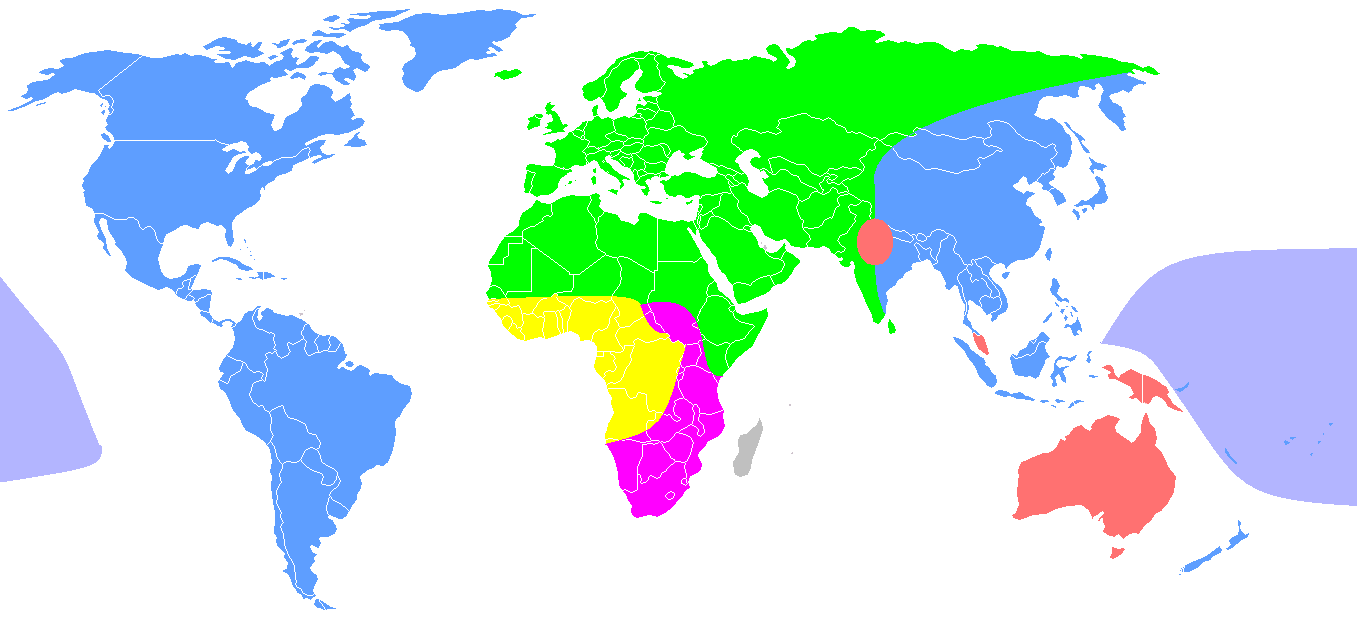
What would a world beyond countries look like? Empires didn't build national stories around ethnic groupings. That is a more recent phenomenon. In Rome, even Emperors had descended from conquered tribes. Leaderships of the Muslim world didn't stay with Arabia... it shifted to Persia and Turkey. I find it hard to reconcile the superiority and Scientific Racism that came out of the Enlightenment, with some of the loftier ideals. History was rewritten to make it sound like progress was white, not a vast web fed by ships, silk roads and trans-Saharan caravans. 

The false categories of Scientific Racism
Caucasoid, Congoid, Capoid, Mongoloid, Australoid

My only explanation is the idea of progress as a linear progression. Once a solution is found, it just needs to be spread elsewhere. Instead of looking for the local layers of human truth that help us understand the cold hard facts, in context. We mixed up scientific truth with human truth. If we suddenly lost all knowledge, in 1,000 years scientific truth would be gradually rediscovered and would be the same as it is today. But the way we understood it could be very different. Understanding is a human truth. Human truth could only be a new story, sharing some recognisable rhythms, but never a perfect copy. The idea of scientific progress as a linear progression to a single destination of human truth is dangerous.

The idea of nations was a partial recognition of the need for local solutions. Nations are false, made up categories, in the same lazy way racism was. Born out of self-determination. Then looking to form governments to outsource responsibility. With insufficient resources to go around, this division has only institutionalised global apartheid. It has built governments up as the primary problem-solving machine... which naturally cut us off from each other.

If we stop looking to government to do things, but build up stronger cross-border voluntary associations, the power of nations to do harm will continue to diminish. For example, as the world has gotten richer, I believe there are enough people who want to end poverty that we no longer have a wealth problem, we have a coordination problem. 

We can channel the energy we do into elections into building positive voluntary associations that get stuff done.

Tuesday, January 17, 2017

Facts


I believe in facts. I believe there are relationships that hold the physics, and chemistry, of the universe together in the way it exist. Some of these relationships are fragile, and changing. Some are longer lasting. Permanence is a something that by definition will remain an infinite unknown. Our attempts at understanding facts, and using facts, make use of the only tools we have. Human tools. Our understanding of facts can only exist in the stories we tell ourselves to understand how those facts affect us. Something that we believe is false can still have power if other believe it is true. So false can be real. Through a process of bold assertions, mistakes, and learning, our relationship with facts evolves. When we believe A and B, and we can't believe both... we feel uneasy. Cognitive Dissonance. Sometimes we have to choose. Because we are human, we don't always have to. We can take another step in a world we will never understand. A world that is complex, ambiguous, uncertain, and beautiful. 

Facts are relationships, and so are fictions.


Wednesday, January 11, 2017

Science and Truth


The Science I was trained to believe in has a clear concept of truth. Scientific Truth is not something you invent. It is something you discover. If you don't discover it, someone else will. While believing in truth, Karl Popper argued that it is impossible to prove something is true. Instead, science progresses by proving things false. The most important thing is to make it very easy to detect if something we believe to be true, is false. Another white swan doesn't prove that all swans are white. One black swan proves that not all swans are white. The things you believe to be true should be made easy to attack if they are false. If there is lots of wiggle room, then it is your truth, not the truth.

Friday, April 01, 2016

Pretending

I was a serious teenager. My Art teacher pushed me hard to let go. To be less academic about my creativity. On one occasion, he 'accidentally' bumped some shoe polish onto one of my paintings to get me to relax. Telling someone to relax is normally only productive when they are already relaxing. I was a tightly wound spring. I found the feedback insanely frustrating, but slowly pushed myself to partition my thinking world and my art world. Art became a release for me. A place where I could put any angst thoughts aside and just paint. From inside.

Self-Portrait at age 15 (1995) and then at age 20 (2000)

Later at university I went to a hypnotist show. I was very disappointed that I couldn't participate. I had to watch my friend act as superman and rescue a girl in the crowd I had had my eye on. I wanted to be that superman. I wanted to rescue that girl. But when I went up with the volunteers to get hypnotised, and went through the process of relaxation, we were told, 'you are now completely relaxed, you can't lift your hand'. So I tried to lift my hand. I could. So disappointed, I stood up and walked off stage. And sat having jealous thoughts about the man of steel.

I learnt enough about myself over the years that I was preset to try lift my hand. Not just to accept that I couldn't. Not just to follow things. Even if I really wanted to. I am a complete show off. I also hate faking. You can see the conflict. Acting is faking. In method acting, the actors have to lean into the role completely. Become the character. Even though it is not really true.

After reading more about hypnotism, relaxation and tricks of the mind... my Art and then Yoga became areas where I let go. I stopped trying to plan everything, know where I was going, or believe in advance that I know what my restrictions are.

I will always be the doubter. I will always look for consistency in beliefs. I will always believe in Karl Popper's scientific definition that something is only 'scientifically interesting' if it can be stated in a way that can be disproved. I will always try lift the hand.


But... not all the time. Sometimes there is value in leaning into the story. Beauty has no requirement that it should be disproved. We can suspend disbelief. Put aside ideas of consistency, logic, rationality, progress, proof and fact. Not because they aren't true. 

But because life tastes better if we sometimes pretend.
2014 Abstract

Sunday, September 06, 2015

Zero One Thinking

Given the incredible power of computers, it boggles the mind that essentially they boil down to strings of instructions based on zeros and ones. Yes and No. Left and Right. Light and Dark. On and Off. Rationality is all about providing rules and process for deciding the optimal decision. But what is optimal? Most of my formal training has been in rational, logical, statistical, mathematical thinking. It has been a search for strategic mistakes and errors in thought. The study of making better decision. This is the way I have been taught to view Science. That if you can't state something in a way in which you are making a useful prediction, that can be proved wrong, it isn't Science. It may be beautiful. It may add value. But it isn't Science.


Obviously Scientists don't own language. People use the word 'Science' to mean various things. People who refer to themselves as Scientists mean various things. Lay people mean various things. It may simply be used interchangeably with knowledge/fact/rigour/systematic study. The definition I use when using the word comes from Karl Popper and 'Conjectures and Refutations'. Specifically a quote I love.

'These are men with bold ideas, but highly critical of their own ideas: they try to find whether their ideas are right by trying to find whether they are not perhaps wrong. They work with bold conjectures and severe attempts at refuting their own conjectures.' Karl Popper


Last night I watched Ex Machina. It sent my mind spinning, and is an awesome look at what intelligence actually is. One interesting part is the discussion of Hardware, Software and Wetware. Our minds are effectively ridiculously advanced computers, but computers that makes lots and lots of mistakes. We forget things. We struggle to focus. Our decisions depend on our moods. There is no right and wrong, there is just different. If a mistake is made, there is always a next decision that matters more. The computers we currently have are great at doing mundane boring things. We want to automate mundane boring things. We want computers at toll booths and cleaning toilets so that the people who were doing those tasks can spend the time visiting old age homes, calling their Moms and Dads, or Kuiering. A lot of out time is wasted on stuff that isn't interesting. Computers are great at boring. Interesting is where we rock, and interesting is wet. Interesting empowers rationality by adding emotion, relationships and context. Interesting removes the ability to generalise and opens the ability to learn.

Happiness may lie in decisions, but not in the way we think. Not in the Zero One Thinking. The making of the decision may be the interesting bit - the raw, messy, individual, connected, moment as things change.


Saturday, August 16, 2014

Ironing Out The Ugly

Some thoughts. Some things. Some people are beautiful. It is not a question of proving or disproving this. There are elements of beauty like rhythm, consistency, symmetry or the emotional response they cause that can let you discuss whether you think something is beautiful or ugly - but it is a sense. Unless you are looking for marks based on a rule based techniques - you can't be right or wrong. You can have ideas or make something that doesn't subscribe to the rules of a certain type of beauty, that may work for another kind. One kind of beauty can have conflicting rules. Problems that the leaders of that school of beauty iron out as the school evolves.

Some thoughts. Some theories. Some predictions are interesting. Science is an example. It was Karl Popper who said that if you can't state something in a way that it can be proved false, it isn't Science. A Scientist should always be able to state all their beliefs in such a way. That is what makes the belief interesting. Science doesn't have schools of thought. If two ideas conflict, at least one is wrong. Sorry.

Artists, Musicians, Priests and Poets don't have to risk being wrong. But they can also evolve - they can also iron out the ugly. They can also have reformers, revolutionaries and visionaries who push us to see the world in a new way.

Both beautiful and interesting things aren't static.

Saturday, September 21, 2013

Middle Aged Breakthroughs & Taller Giants

Part of Malcolm Gladwell's '10,000 hours theory' was to say that even the very young who had achieved world class performance had typically worked very hard. I have never liked the fatalistic belief that if you haven't done something by a certain age you never will, so the theory appeals to me.

Though I haven't looked into it deeply, and many medically educated people who I know have (and disagree with me), I don't agree that someone can't learn to speak a language fluently as an adult as easily as a child. My contention is that it is simply a matter of time and distraction. Pit me against a 5 year old or a 10 year old, remove any other of my responsibilities and I will kick their ass (Not literally, I am very much against child violence).

Now this is interesting - in 'Average is Over', Tyler Cowen shows how the average age of Nobel Prize winners is increasing. In 1905, the typical winner in Physics made the breakthrough at age 37, but by 1985 the average age was 50. Science is getting more complex, to the point where it takes groups of people to validate new proofs because no one person understands the whole proof. It also takes longer to 'climb onto the shoulders of Giants' because the Giants are taller. I like this partly because young whippersnappers who do particularly well can sometimes be (unintentionally) discouraging to other people who are interested in a particular field - perhaps they give up earlier than they should have.

Science also become more of a collaborative exercise. It becomes harder/impossible to understand everything. You have to become content with understanding your bit, and that bit becomes smaller and takes longer to reach the more we learn.

Still... Exciting times.

Friday, January 22, 2010

Creation

"There is grandeur in this view of the world"
I have been very much looking forward to seeing Creation starring Paul Bettany as Charles Darwin. I was surprised to see it on the DVD store shelf while just across the road it was showing at the cinema, so watched it with the idea that it was obviously going to be really bad... i.e. made for DVD. But it wasn't, it was great.

It is the story of the inner turmoil of a mans fight as he realizes that something he has been taught since birth disagrees with everything his inquiring mind is telling him. But more than that, it is the story of what happens when choosing the truth means having the courage to go against everything the world is saying is true, and against what those you love believe is true.

We owe a lot to people like Galileo, Copernicus and Darwin in having the will power to come up with truly world changing theories that shattered the way people had seen the world before.

What I like from the movie though, is a clear distinction between religion and faith.

I have a lot of faith. But my faith is in people. My family, close friends, a belief that in general the world is moving in a positive direction and an optimism that despite the fact that the world is a very very random place, we have it within our own grasp to fight for the happiness of ourselves and those who we love. I think this is a grand faith.

Sunday, August 16, 2009

An Adventure of Ideas

As with most philosophy books I have read, I spend half the time feeling like I am reading another language, but every now and then reading a few passages that grab me. If the balance between the two is too much on the side of greko-mandarin, I put the book down quickly.

Nassim Taleb mentioned Karl Popper a lot in 'The Black Swan' and 'Fooled by Randomness', and the stuff he said resonated... so I got the book based on the concept which most appealed to me.

That we should have bold ideas, and then attack those ideas vigorously trying to find the holes. That you should spend your efforts on interesting problems that can be disproved. Don't sit oohing and aahing at someone who promises they can bring rain, and dances until it eventually rains. Rather, spend time on ideas that could be disproved.

I find this idea both empowering and exciting if somewhat scary. It is safer to just accept dogma. It is more comfortable. I guess it depends whether your curiosity outweighs your comfort.

Here is one of my favourite sections so far.

Because, as you said, we are not passive receptors of sense data, but active organisms. Because we react to our environment not always merely instinctively, but sometimes consciously and freely. Because we can invent myths, stories, theories; because we have a thirst for explanation, an insatiable curiosity, a wish to know. Because we not only invent stories and theories, but try them put and see whether they work and how they work. Because by a great effort, by trying hard and making many mistakes, we may sometimes, if we are lucky, succeed in hitting upon a story, an explanation, which 'saves the phenomena'; perhaps by making up a myth about 'invisibles', such atoms or gravitational forces, which explain the visible. Because knowledge is an adventure of ideas.


Thursday, January 08, 2009

Cashmere and Caviar

Paul Sereno does a TED talk looking at the evolution of dinosaurs and his exploration in Niger in building a family tree of dinosaurs.

A few days ago, I posted about what happens when you are 'too far down the line' meaning that you have committed yourself to one idea or career or belief and it just costs too much to change. Paul Sereno started out life as a failure at school. He really didn't like science. He loved art... and went on to become an artist. A chance visit to a Natuaral History museum got him fascinated and he never looked back. He is now an eminent scientist on a mission to get children interested in science.

A couple of things stood out for me in his talk. One was how hard scientists end up working, presumably for very little. Once you have enough to eat, and a certain level of security... some people do things just because they find them fascinating. I love that word. Fascinating. Imagine that was how you got to approach your day at work. I am lucky, that is how I do feel about my job but there are too many people who just accept the way it is.

Dan Gilbert in 'stumbling on happiness' points out that it is not long ago that the three most important questions in determining how happy we were were not questions over which we had control:

1) Where do you live?
2) What do you do?
3) Who do you spend your time with?

It is not long ago that we had to live where we were born, do what our parent of the same sex did, and spend time with the people who lived where we lived.

You now have a choice. And that doesn't stop once you have sunk costs. If you are an artist who gets fascinated by science, it is easier now than ever to change. If you are an scientist fascinated by art... likewise.

Aah... but the spanner in the works. You have to put the food on the table. So maybe this is a very first world kind of idea. More than likely it is. But I suspect the actual level of wealth you need for the basics is not really that high... and if you get fascinated by science or knowledge or ideas or anythings other than cashmere and caviare, the world is yours for the taking.

Exciting times.

Monday, November 10, 2008

Elevation

I have now finished Haidt's `The Happiness Hypothesis' which I highly recommend.

I will have to read it again several times, and like other things I have read recently it seems rather the start of a course with no end rather than a book. That is probably part of the reason I have `fallen in love' with reading over the last year. I used to like reading, and occasionally would have passionate affairs with amazing books (Catch 22, The Power of One, David Copperfield), but when they finished it was a case of what now... Having been introduced to Non-Fiction, what is great is that my list of `to read' seems to grow exponentially with every book I read leading to a dozen others.

But more of that another time...

Haidt talks of the emotion of elevation, something akin to the feeling of divinity. Some Christians say that even if you lived in a remote area and had never come into contact with another human, you would know God exists because of the beauty that surrounds you. While I disagree with the conclusion, I often experience the emotion too. Not often enough mind you, and it is something to search out.

That feeling of awe, not of `god-fearing' awe... but inspirational awe. `Oneness' with the rest of humanity and a warm glow.

Before you get the impression that I am getting all sentimental, why I so liked Haidt's explanation is that as an Atheist, you feel a sense of loss at having once believed in `something greater'. I may no longer believe in God, but I still have that emotion of elevation and that makes me feel good!

Haidt laments Science's lack of wonder and awe, and says that we have a lot to learn from religions when it comes to science... not in terms of facts (where science focuses all its energy) but in terms of embracing emotions such as elevation.

The world around us has so much to be in awe of, and so much to inspire. It also has the opposite, the stuff that disgusts us and leaves us depressed.

But that sounds like a challenge to me.

Exciting Times.