Showing posts with label Yoga. Show all posts

Wednesday, November 16, 2022

The Conversation

My big take-away/practice from my experience of Yoga is managing expectations. Personally, I wrestle with triage and trade-offs. There is so much going on, and every choice has unintended consequences. I work on developing an ability to accept being “a part of the conversation” and create meaning/purpose as a part of something bigger where I am not constantly judging myself/others. 

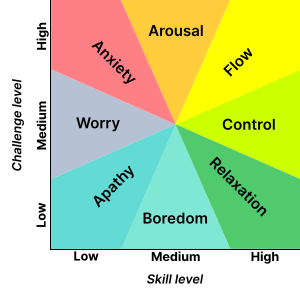
Mihaly Csikszentmihalyi called this flow. Those moments when you are balancing skill & challenge so finely that it focuses your attention and time seems to stand still. There is no anxiety where the task seems beyond you. There is no boredom where the task doesn’t engage you. 

Where learning and activity merge in a playful way and mistakes don’t chip at your sense of self, but build your wisdom. Where you are a participant and connected to everything else. There is no time for panic or worry because you are breathing into the stuff that matters.

Monday, October 31, 2022

Milk from Water

The five basic points the yoga I practice returns to are: proper breathing, proper exercise, proper diet, proper relaxation... and “positive thinking and meditation”. I translate that for myself as proper mental health. 

Stilling your waves of anxiety is partly perspective. I don’t believe it is all just about “how you see things”. There is real work that needs doing, but you also need a framework that works specifically for you and your ego. For the voices in your head that judge, compare, motivate, and care for you. Yogis call this “Ishvara”. 

Real truth is too complicated and not constrained by human thought. We have limits to how we can see and understand. Within our limits, experience, and understanding, reaching for our own Ishvara is the closest we can possibly come. 

Yoga offers a wild array of stories and deities as options for you to choose something that resonates for you, as a tool. I chose Saraswathi... the goddess of creativity and learning. 

In meditative practice, you can focus on the various objects and symbols that are being held. Saraswathi sits on a Swan. The Yogic name I was given by the Swamis at my Teacher Training was Hamsa (the name for that Swan). 

“A hamsa can differentiate between milk and water. Give the bird a bowl with milk and water mixed, it will only drink the milk and leave the water alone. This signifies that the hamsa knows what is pure and what is not, and can separate the true extract from a mix of things.” 

The Swan’s self-grooming is seen as a metaphor for a knowledge seeker. 

For some people, mantras are useful. Coming back to a sound or idea, that gives you guidance. It doesn’t have to be obscure... you can just return to thinking about your breathing. It could be a mentor. Someone you have a conversation with when you realise you are not feeling okay. 

What you are doing is building a framework that works for you. A daily practice that allows you to exist in a world that constantly asks uncomfortable questions.


Monday, October 17, 2022

Are What You Eat

“You are what you eat” is mostly literal. Our bodies regenerate every seven to ten years. When I started yoga, my diet had mostly descended to what I called “the triumvirate of happiness”. If completely literal, I would have become the love child of a mango juice, white magnum ice-cream, and a microwave Tikka Chicken Masala curry from the local Little Sainsbury’s by the Lower Richmond Rd petrol station. I was living by myself and this was my default “because you are working hard” treat to myself. 

When I got into the habit of going straight from work to yoga, my diet also improved because I would have some yogi soup after the class. The magnum ice cream was replaced with an oat cookie, and the juice with some tea. Learning to cook is not unlike learning a language, and often needs someone to show you. You can get CEOs who don’t know how to fry an egg, because they have never prioritised being competent at life. Either because they were well supported, or they allowed their body to fall apart. It is not unusual for someone not to know how to make mash potatoes, or even have tried various vegetables. 

Our palates change over time. There are tricks to expand your repertoire. If you are trying to shift towards a more plant-based diet, you need to learn the vocabulary of eating more widely. As a South African, I come from a big meat-eating culture. I have also got a weird, quirky relationship with fruit. Particularly messy fruit. Something odd from my childhood (my excuse) gives me obstacles with regards to the textures, smells, and spray. You can get over that, I am told. I try with smoothies, which I enjoy and make occasional more direct attempts. 

I did discover soups as a similarly fantastic indirect middle-of-English-winter diet shifter. I got a Ninja Blender which both blends and cooks. You can put stock with any vegetable and have great soup half an hour later. The more you learn the components of cooking, the easier it is to solve both the health and the taste issues with joy, which boosts energy levels much more than the kick of my three yummies.

convenience

Friday, October 14, 2022

Young and Enthusiastic

Exercise is not something that is “in addition” to what we do. It is fundamental. Yoga talks about releasing yourself from your identity. So why does it then focus so much time and energy on the physical body? It does this because the body is the vehicle for our thoughts. It is the vehicle for the obstructions that we have. 

Much of physical yoga is really about learning to sit comfortably. To sit comfortably, you need to do exercises because your lower back or shoulders may be tight. Working on your hips and spine flexibility can help you get to the point of stillness. If you are constantly distracted by muscular niggles, or not being able to breathe properly, it is very hard for your anxieties to fall away because you have fires that keep needing to be fought. 

Building exercise into your daily practice is not the last thing on the priority list for “when you have finished the work that needs doing”. Work normally has the refill option on default. You never finish for the day. You need to look after your physical body and mental well-being to be able to do that work. That can hide and seek you if you haven’t done it for a long time. 

Even if you used to be active, you can blink and ten years can go past since you last raised your arms over your head. When I was a young (enthusiastic if not very talented) rugby player, we used to do those exercises where you spin your arms around. You don’t do that in the office. Suddenly you realise that sitting is the modern day smoking. You can lose yourself at a desk without noticing the cumulative effect of inactivity.


Monday, October 10, 2022

Pause the Music

It’s dangerous if you need, rather than want, the music to keep on playing. One of the challenges with work relying on any one particular individual is we only get concertina leave. Leave can become the thing we work towards, a reward for all the energy we need to focus on delivering. Leave becomes a glimpse of an alternative reality. You take some time to wind down from work. Then, as soon as you wind down it is almost time to mentally prepare for starting up again. 

If you do “worry work”. If the kind of work you do is not the kind that you leave in the office. If it is the kind you carry with you all the time, because you are solving complicated problems. It can be a mental challenge to avoid living with those problems 24-7.

What was fascinating with the Yoga Teacher Training course I went on was that it was, a full, four weeks. I started feeling relaxed, but going to layers and levels of relaxation that I had never gone to. I wasn’t stressed, but I also knew with a deep confidence that I wouldn’t be stressed in two weeks' time. I am also a creature of routine in a world that is too chaotic for that to normally be possible. The course was in an alternative construction of reality. 

I was waking up on rhythm. Going to bed on rhythm. Eating on rhythm. I was also exercising twice a day, eating well, and in a beautiful environment. It was a simple, inexpensive, bubble. There was nothing flashy about it. We were engaging and talking about stuff that really seemed to matter and unpacking the world. It was a beautiful time.

It shifted something deep inside me. I had warned a friend to come get me if I didn’t come back. You hear these stories of people going off to Ashrams, never coming back, and cutting themselves off from their communities. I did go back. I did re-engage, but it had a lasting effect on how I saw things and what I thought was important.


Friday, October 07, 2022

Building and Rebuilding

A big part of life is who we partner with. I have gone through difficult break-ups and a number of years of losing myself in the process of building or rebuilding a picture of the life I wanted. In 2011/2012 I used yoga and my art studio as tools to find myself again. 

One of the investment lessons I had learnt is that you should never be a forced buyer or a forced seller. When you want anything too much, and when it becomes your absolute focus, you can lose focus on everything else. If you are in a corner, and you have to make a decision, that may be the most important time for you to make the opposite decision. When you feel like that is the only thing that matters, at the cost of everything else, then it may be time to walk away. 

I had to really dig deep and come to terms with myself, and so I went to the mountains. I went to Austria, and it was just a magical time. As a South African boy, one of the things that blew my mind was REAL snowflakes. Crystals of fragile beauty. Snow with those mathematical patterns that cast spells as they stop time in their gentle floating till they softly butterfly kiss and lie with the ground. I had seen blobs before. The wet and soggy sort that grinds London to a halt like summer sweats or any other extremes. In Austria, there were magical mornings with clear skies and silent walks. The Yoga Teacher Training I did was over the year end, and a bunch of Swamis came from all over the world to join the small group I was in for the period between Christmas and New Year.


Monday, October 03, 2022

Different Paths

The Yoga Centre I went to had an American Swami leading it. A tall guy who was full of life and joy. On a weekend retreat I joined, I had a conversation with him about my path and where I had gone, which was towards atheism, and away from religion. I moved to the UK for two gap years between school and university, and was introduced to a much more secular society. When I got back to Cape Town, it was the other extreme. A lot of my fellow students were both very religious, and very evangelical, and I found that difficult in terms of tolerance and allowing for other people’s ways of thinking. It pushed me away and toward a (watered down) Richard Dawkins's “God Delusion” view. 

I did a lot of reading and had to unpack my own relationship and history with religion. By the time I got to Yoga, I was resistant to things like singing. I didn’t do the chants. I had stopped saying the Lord’s Prayer and no longer resonated with the church songs I had grown up singing. It was hard to sing words I didn’t literally believe in. 

In the conversation with the Swami, he explained the philosophy around different paths. His was a non-combative approach that didn’t claim to understand everything. It is not some truth you are wrestling with, that someone else knows. You are grappling with the vastness. There was a recognition of the human limits of ability to deal with the unfathomable. There were four different paths. 

Karma Yoga is the path of action. Where you are able to park your anxiety and focus on contribution through getting stuff that needs doing done. A Bahkti Yogi may find stillness in art, music, creativity, love, relationships and worship. A Raja Yogi targets stilling the waves directly through mental exercises, meditation, and breathwork. The Jnana Yogi is more intellectual with stillness as a cognitive journey coming through study, philosophy, and knowledge. Searching for and finding moments of stillness through and within discussion and reading, in a similar way to what I had been doing in a Christian setting, but without my internal antagonism. 

Interestingly, that conversation with the Swami helped me both make peace with my lack of belief, and to re-engage constructively with the Christianity and the community that I had largely walked away from. One with whom I was not in conflict with, but merely using different tools from.

Friday, September 30, 2022

Changing to Accommodate

I had obstacles to overcome with the Yoga Centre I joined. The style did make a few minor adaptations for Western tastes. Like moving breathing exercises to the start of classes, so people didn’t just leave after the “exercise”. And charging, because there weren’t enough people from the community willing to finance the centre. 

The school was conservative, and on the surface seemed religious. I was told Yoga was not religious, but it looks, swims, and quacks like a duck? There are people who treat it like a religion, and the Vendantic philosophy has big overlaps with Hinduism. Again, there are many who will argue that Hinduism and Buddhism were philosophies, not religions. That is not something I understood. I am from a Christian background, which despite the multiple and expanding versions (with a long history of schisms) still (as I understood it) argues that there is one fundamental truth... even if there is disagreement about what that is, you have to wrestle with it. 

That always worried me. If we can’t come to an agreement, we have to go our separate ways. Fortunately, the yoga centre was “holistic”. I could ignore lots of the pageantry, and focus on the practical bits. Proper breathing, diet, exercise, relaxation and mental health. Five basic points to return to whatever you are struggling with.


Monday, September 26, 2022

Creativity and Learning

One of my frustrations with my religious roots was when I was having a conversation with someone, and the tone of their voice changed. Ken Robinson, who passed away in 2020, was one of my favourite presenters. It sounded like he was having a conversation with you. You get the feeling it is two-way, even when it is just him talking. It felt like he was also listening. 

I got really frustrated when people I was opening up to put on their “lecture voice” (it's not unique to religious conversations) or what I called the “Bible voice”. If I was talking to someone about one of the issues that I was facing, and suddenly I realised from their tone of voice, they were not listening anymore. They were telling me a story. The issue I mentioned triggered a story I had probably heard multiple times before. I was a regular once-on-Friday, twice-on-Sunday church attendee. I knew the Bible stories. 

It was difficult for me when someone stopped listening, and went onto what felt like automatic pilot. It was also difficult when I reached some kind of impasse, where the answer wasn't satisfactory, and I was still struggling. The philosophy, as I experienced it, was also antagonistic towards other world views. You do not need to explore widely, as the truth is in the Bible. I went to lots of churches, while I was growing up in Westville, although the Methodist Church and the Baptist Church were the main ones. I did not go to the Temples or Mosques. I did not even go to the Catholic Church. I did read “The Life of Pi”, and felt a kinship for his search where he did end up exploring all these various religions. I read “Sophie's World” which opened up this idea of Philosophy. Of exploring widely around the meaning of life. I loved the name Sophie. The idea of a Goddess of knowledge. At a later stage, when in the yoga world, with a new understanding or perception of what a deity is, or what imagination of god was useful for me, I chose Saraswathi. Saraswathi is the goddess of creativity and learning.

Wrestling the Truth


Friday, September 23, 2022

Culture of Critique

I had some obstacles to overcome to do yoga. The centre I went to taught very traditional Sivananda Yoga. Sivananda himself was a medical doctor who lived in India. Then when he moved on to his yogic path, he spent a few years doing Tapas. Living a simple life off the generosity of strangers, while wandering and thinking. He then he started an Ashram and mixed his medical life with yoga. He took on some disciples and started a community called the Divine Life Society. 

Now growing up, I had my own experiences with what we called the Hari Krishnas. I remembered people wearing orange who kind of give you a flower or a book ”for free”. Then you feel reciprocal obligation to give them some money in return. I honestly didn't know a lot about the Hari Krishna movements. But what I did know came from a place of fear. The belief that it was almost culty. 

I grew up in a religious Christian environment and I mainly went to the Methodist and Baptist Church. I had a difficult relationship with religion, because it was very much a part of my life growing up. It was my received truth, but received truth with a culture of critique. You can see how the philosophy of western science developed out of a belief in a single truth, because it meant that you could go quite hard at it. It meant that if you did not understand, the fault lay with you. That the truth was true. It does not matter how hard you go because you are not going to dislodge it. And I did go hard.


Wednesday, September 21, 2022

Bite Size

In the first-ever introductory yoga class I attended, the intention was just to allow you relax. They did not teach a lot. It was just a taste. 

As a Marketing Actuary, I also learned that you don't try and give people too much information in one session. You can't dump knowledge. The way we learn is in small bites. We adapt slowly in successive approximation. Learning little bits, and gradually connecting everything. Good teachers don’t correct all your mistakes every time. 

The main aim of that first session, with a yogi named Bhima, was to feel relaxed. The default in learning is often to move on from simple things. To feel like we know how to relax, walk, breathe, swim, and run. Mastering something that is simple on the surface requires unlearning a lot of bad habits. With a little bit of guidance. In that first session, I walked away feeling a connection to that stillness. 

The first question we were asked is "how do you relax?" The most sophisticated yoga posture is called Savasana. Also known as the Corpse Pose. Like in investing, one of the most sophisticated responses is "doing nothing". Physical yoga is mostly about learning to relax the body. Investing is also about learning to let money do the work for you.


Monday, June 13, 2022

To Practice

Meditation isn’t the absence of thought. You aren’t failing if you aren’t still. Meditation is the practice of returning to focus. Learning to deal with noise. Letting thoughts flow through you without fighting them. You can do that, in part, by returning to five simple points. Proper exercise, breathing, diet, relaxation, and mental health. I have been doing Yoga for 13 years, and much of that time has not been in the traditional “yoga class" sense. I did do two one-month-long teacher training courses which were amazing and protected (a real opportunity to completely focus on my own health), but reality is more challenging. My yoga now mainly consists of rocking my daughter to sleep, or walking with her in the local forest. Finding 90 minutes to bend and stretch is more challenging. My yoga practice now includes detaching from daily investment price moves! From not seeing work challenges as Trevor challenges. From believing that the problem is the problem. Taking a breath and nudging away at a solution. Yoga comes in many forms. The form I choose is via Saraswati (Learning and Creativity). Mihaly Csikszentmihalyi’s concept of “Flow”. Engaging in ways that are challenging enough to grab my attention (not bored), but not so far beyond my skill level to create anxiety and worry. Still I dip into worry, and anxiety, and my practice has to be to constantly come out of that. To gain comfort with discomfort. To practice.

A Hamsa (Swan) sits at Saraswati's feet


The Basics

Start with the basics. “The Five Points of Yoga” are a foundation for approaching any concern. Proper exercise, proper breathing, proper relaxation, proper diet, and positive thinking/meditation (i.e. proper mental health). It is easy to get overwhelmed, and even grappling with the craziness of life can be addictive. I enjoy complexity, and I like being part of the conversation, but it can feel too much. A crippling sense of trying to get it right, or do the right thing. I often feel frustrated with the world, and the way things work, because I care. Seeing the conspicuous and huge problems. Hans Rosling identified five key problems (before Covid) which concerned him the most - the risks of global pandemic, financial collapse (abstract debt and interconnectedness), world war (weapons of mass destruction), climate change (unintended consequences of long term behaviours you realise too late), and extreme poverty. These are huge issues. Particularly if we are gradually deconstructing the artificial bubbles we live in (and allow us to pretend some problems are solved). Which also means it is more common for us not to understand the expectations we have of each other. Biases and prejudice are short-cuts from long embodied behaviours and agreements. If everybody already knows the dance, fewer people step on each other’s feet. All this can be draining. Yet I don’t want to be someone who doesn’t care. I don’t think detachment is running off to a cave. We need to participate, but I like the idea that participation starts with the basics. Something as simple as remembering to breathe.


Tuesday, April 19, 2022

Multiple Paths

Yoga has multiple paths. Yogi philosophers describe four. Karma Yoga is the path of action. Bhakti Yoga is the path of love/worship/music/art. Raja Yoga is direct meditation, and internal reflection on the workings of the mind. Jnana Yoga, takes the approach of study and knowledge. Attempting to understand how other people have looked at the world, contemplating, looking for patterns, learning, communicating, and simplifying. 

Yoga isn't only done on a mat. You can use all four paths or focus on one. Despite the same destination, the path is something you choose for yourself. Choice through becoming aware of what works for you, from where you are. Choice through iteration. Through trial and error. Through micro-ambition. Small, achievable goals that add up. An ounce of practice, followed by another ounce. Creating a loop that engages you. 

The concept of flow is meditative. You are fully engaged because your particular skills and knowledge match the challenge in a way that fully engages you. You are neither anxious because your ability is stretched beyond capacity, nor bored because not all of your attention is on your point of focus. 

The ideal is to build a daily practice that allows you to engage and create meaning in a way that resonates with your intention. 

Releasing the control of temporary problems and waves of anxiety does require a certain amount of attention. They go away if and when you deal with them. 

The key is to create a level of separation from the problem. “You are not the problem, the problem is the problem.”


Thursday, April 14, 2022

Not Two

Yoga means union. The idea that everything is connected, and that in “reality” there is only one of us - "Not two". Only the permanent is worth identifying with. There is, however, also the concept of Dharma. You will experience separateness and be on a path that is different from everyone else. 

Your actions matter. Actions have consequences. Maya is the experience we have that separates us from everything and everyone else. An illusion of reality, that is temporary and so not worth identifying with, and yet beautiful and still worth engaging with. In all shapes and forms. 

Part of detachment comes with awareness of how things have manifested/appeared/demonstrated. Noticing the emotion you are passing through but not being angry. 

You can view your mind as a controlled hallucination. Inputs come in – we feel, touch, smell, hear, and see. Then inside we ignore, accept, twist, contextualise, forget, project, and connect dots to create an impression of the world. We try make sense of the outside by finding patterns, and then acting. 

Acting in a way where we think we have a degree of control over the way our actions matter. If you want to still the waves of anxiety, and see beyond what is there... you have to deal with what is there. 

Realise what works where you are. Be aware of your story. Have a purpose... then create your meaning.

Not Separate


Tuesday, September 28, 2021

Near and Now

There is a tale of Alexander the Great coming across a yogi as he was venturing and conquering east. The yogi was sitting on a rock. Who has lived the good life? Look at all the things Alexander has done! Bertrand Russell’s book “In Praise of Idleness” opens up our weird relationship with the conspicuous. Our preference for fake work over space and reflection. 

We are not well trained to kuier. To spend and savour time with each other. When kuiering with someone, you turn off the measurement. Perhaps you are laughing with someone to the point it is contagious. Where the laughter goes beyond the joke, and you have a moment where you look at the person and think, “I am so glad you exist”. 

A connection that has nothing to do with weighing and measuring. You just see the other person, and get a sense that they are a part of who you are. Not the part of you that passes. The part you really connect with. 

The glorious nature of being human, is that when you are that connected, you can always feel that person's presence. Even if they physically die, they are a part of your story. You can close your eyes, and they are still there. Bending space and time. A close family friend described this beautifully in a recent virtual memorial after the unexpected passing of his wife due to Covid. The sense of her being near and now.

Tuesday, August 17, 2021

Learning to Sit

In Yoga classes you can see students who are incredibly stiff, partly because they are fit and strong. Forget the forward bend, a lot of athletic people will struggle to simply sit at 90 degrees with their legs out straight. Releasing that tension requires unlearning. Kids are very flexible, and over time because of a lack of holistic movement, adults gradually become stiff in very specific ways. When we specialise our use-it-or-lose-it bodies. To learn, you must support your capacity to deal with change. Creating space for honest feedback cycles and reflection. Understanding yourself well enough to know how you best receive feedback. 

When I wasn’t working (for money), I was part of a Men’s Group (surrogate colleagues?) where we provided support to each other. It was difficult because we saw the world very differently, and discussion could descend into unproductive debate. One way we attempted to overcome this was developing “Cards” or tools, where you could say explicitly what you are asking for. Sometimes you want advice (what would you do?). Sometimes you just want to talk (just listen and ask exploratory questions)… we called that the “Vulnerability Card”. When you expose yourself, but you don’t want to be punched. 

There are other times when you want very direct solicited challenge. The scariest card was “Invisible Man”, when you invite others to talk about you behind-your-back in front of you, while remaining silent (and NOT defending yourself).


Wednesday, September 30, 2020

Powering Creativity

Money is a blunt incentive. A way of getting commitment when you don’t have a deeper connection to the cause. Like salt, fat, and sugar in cooking, it is the easiest thing to grab at. To turn to more as the default answer. My preference is to get to a point where you take money off the table. If you think of money anxiety as temporary waves, used to push us one way or the other, then stillness allows you to focus on what is truly important and worth identifying with. You don’t want to identify with money. You do want to identify with your purpose. This means internalising disciplines. Internalising ambition. Internalising decision making. Creating buffers to absorb the waves, and engines to power your creativity.


Developing a Practice

Yogas chitta-vritti-nirodhah

Chitta is all the stuff of the mind, intellect, and ego. Our awareness. Our anxiety. Our identity. Our conscious, subconscious, and dreams. The stuff that has soaked deep to form the way we see the world, and see each other. Vrittis are thought waves. “This too will pass”, but the danger is when we absorb the waves, and identify them. When we think we are the storms, winds, and rains of challenges that seem to attack us relentlessly. Money Anxiety comes in this form. Fear of where it will come from. Fear of where it will go. Fear of the aftermath it will leave. Once understood, it is possible to develop a practice to control the financial waves. Working with them rather than fighting. Eventually finding nirodhah (stillness). Financial Yoga is developing a practice to still the waves of money anxiety.


Monday, September 28, 2020

The Space Between

Earning £100,000 a year can still be filled with anxiety if you are spending £120,000 a year. If you are living on the edge of your capacity to borrow and pay interest. If you are pushing forward and up as hard and as fast as you can. Earning R100,000 a year can be Zen-like if you have the self-discipline of a Langa Gogo, spending R80,000 a year a putting some to work. Those are extremes, but the point is the only comparison necessary is spending and income, and the space between. Not other people. Vrittis, are the thought waves of the mind. Yoga creates a system to control these waves. A path of self-restraint that brings focus to the things that are most important. Creating the ability to move with intention, rather than being moved by what the world throws at us.