Showing posts with label Stillness. Show all posts

Wednesday, November 09, 2022

Cease the Panic

Relaxation is deeper than “not doing anything”. The deepest of relaxation is far from passive. In Wu Wei (Action through Inaction), they call this De/εΎ· (pronounced “duh”) which is also translated as "inherent character/inner power/integrity/moral character/virtue/morality”. 

There is very much engagement with the world, but you are exuding a presence that seems to “get it”. A detachment from the noise. A true mastery that sees the world as full of beauty even in the face of challenges, and still draws energy from the wonderful opportunity that we have got to engage and be a part of it in all its bitter, cruel, joyous, invigorating, hammering, claustrophobic, harassing, confusing glory. 

The depth of relaxation starts to emanate from you when you are able to cease panicking about the mystery. When you stop feeling like you are being played by malicious chaos. I immediately think of Dr Sooliman of “Gift of the Givers” whose wife tells him he is an alien because of his ability to detach. He has been facing the world’s disasters head-on for three decades, and yet it is hard not to feel more relaxed in his infectious presence.

Monday, November 07, 2022

Through the Waves

Like a lot of South Africans, I am deep soaked in Righteous Indignation. I like that I have the capacity to get very angry, and am not willing to let that go. Yet, I also struggle with how ineffective and energy sapping regular rage can be. Overwrestling with how I think the world should be. A close friend, who had seen my anger, asked me how it was consistent with practicing to be a yogi. 

“Dharma” is partly understood as our purpose for being here. One of yoga’s key texts is the “Bhagavad Gita”. Ironically, for those who think yoga is just about bending and stretching, it is a story about war and a conversation between Arjuna and Krishna about “why should I fight?”. If everything is connected, an illusion, and it is so hard to make a difference as an individual... why bother? 

There is a point. Actions do matter, and have consequences. We do have responsibilities and obligations. We are building this world together. Part of that is learning about the reality of how we coordinate actions and consequences. That starts with a deep acceptance of the way the world is, because everything can only move from where it is. 

I am a very imperfect yogi. Full of aches and pains, and questions. Most of what I write is coaching myself to remember to come back to the basics within the complexity. Returning towards proper exercise, proper breathing, proper diet, proper relaxation and proper mental health. Practicing Tim Minchin style “micro-ambition”... small, achievable, goals that add up. There is a constant wrestle, and chipping away requires repetitive reminding that our actions matter. 

Waves, both positive and negative, keep coming. They are not malicious. They just are. The waves have nothing to do with who you are. Stillness comes from how we see these waves and whether they have the power to knock us off course. Stillness comes from finding a way to create meaning DESPITE the noise, through patience and time.

Monday, October 24, 2022

Deep Relaxation

What do you do to relax? It feels like one of those things which we should just know, but we have to learn to relax. Proper Relaxation is neither passive, nor simply “not doing”. It is like sleep. Sleep is a fundamental part of our learning process. Sleep is where we embed the way we see the world as we have seen it during the day, from the perspective of how we have seen every day. Where we store, work through, and connect our memories. 

Learning to relax properly involves tensing and releasing. One of the most advanced Yoga postures is called Savasana, or the Corpse pose. It looks like someone is just lying there. A lot of people will walk out of yoga classes at the end, cutting Savasana short because they only focus on the conspicuous exercises as the most important. What you see is not all there is. 

Savasana involves doing a body scan to methodically search out where you are holding tension. It is direct and intentional. 

There are levels of relaxation that flow from each other. Physical Relaxation, allows Mental Relaxation, which allows you to get to the point where you stop thinking about yourself. Many of our waves of anxiety come from worrying about expectations, our worth, or our place in the world. 

Deep relaxation allows you to connect with what matters. Like a passionate public speaker gets to a point where they are in conversation with the audience, and everyone is thinking about the shared idea... they are no longer self-conscious. Deep relaxation can allow you to be still, even when you are still in the chaos.

Monday, October 03, 2022

Different Paths

The Yoga Centre I went to had an American Swami leading it. A tall guy who was full of life and joy. On a weekend retreat I joined, I had a conversation with him about my path and where I had gone, which was towards atheism, and away from religion. I moved to the UK for two gap years between school and university, and was introduced to a much more secular society. When I got back to Cape Town, it was the other extreme. A lot of my fellow students were both very religious, and very evangelical, and I found that difficult in terms of tolerance and allowing for other people’s ways of thinking. It pushed me away and toward a (watered down) Richard Dawkins's “God Delusion” view. 

I did a lot of reading and had to unpack my own relationship and history with religion. By the time I got to Yoga, I was resistant to things like singing. I didn’t do the chants. I had stopped saying the Lord’s Prayer and no longer resonated with the church songs I had grown up singing. It was hard to sing words I didn’t literally believe in. 

In the conversation with the Swami, he explained the philosophy around different paths. His was a non-combative approach that didn’t claim to understand everything. It is not some truth you are wrestling with, that someone else knows. You are grappling with the vastness. There was a recognition of the human limits of ability to deal with the unfathomable. There were four different paths. 

Karma Yoga is the path of action. Where you are able to park your anxiety and focus on contribution through getting stuff that needs doing done. A Bahkti Yogi may find stillness in art, music, creativity, love, relationships and worship. A Raja Yogi targets stilling the waves directly through mental exercises, meditation, and breathwork. The Jnana Yogi is more intellectual with stillness as a cognitive journey coming through study, philosophy, and knowledge. Searching for and finding moments of stillness through and within discussion and reading, in a similar way to what I had been doing in a Christian setting, but without my internal antagonism. 

Interestingly, that conversation with the Swami helped me both make peace with my lack of belief, and to re-engage constructively with the Christianity and the community that I had largely walked away from. One with whom I was not in conflict with, but merely using different tools from.

Wednesday, January 13, 2021

Broad Framing

Every day we are presented with choices. We have a set of eyes and ears, a nose, a tongue, a whole body of touch sensitive skin, a mind, and thousands of relationships. We are aware. We absorb information. We are conscious. We act. But we cannot keep everything in mind when we do. What we experience soaks deep. Influencing the embodied way in which some choices become automatic. Memories, beliefs, arguments, loved ones, goals and desires disappear from our peripheral vision. Still, we choose. In “Thinking, Fast and Slow”, Daniel Kahneman uses 'Narrow Framing' to describe the way we tend to see each decision in isolation. They become life defining in our mind. 'Broad Framing' incorporates the context of all the other decisions. 'If you need to take care of something, the worrying will make you less rather than more effective' says Tyler Cowen. Broadening the frame gives things their proper place and stills the waves of worry.

Wednesday, January 06, 2021

The Great Wave

There will be many lessons learnt when we reflect on 2020, and unfortunately probably most of 2021 too. When the dust settles. One of those will be the danger of predicting things we pretend to understand, but have not experienced. Another will be the peril of basing society on hand-to-mouth existence, because of (amongst other things) a belief in “work ethic”. Asking children as they grow up what they will be, and meaning how will they earn a living. Existence based on a willingness to work, requires the existence of work. The ability to create real value requires reinvestment and a long-time frame. It requires breaking the cycle of feast and famine. It requires being able to pause. Sometimes for longer than we like. It requires a safe place to retreat to. We have to snap our earning addiction by creating capital. Capital is not hoarding. Capital works. Capital can create space for when we realise how much of what we thought we knew is not true. Capital allows you to be wrong without it being the end. If you have the ability to work from home. Be grateful you have work. Be grateful you have a home. Then let us build back better.


Monday, September 28, 2020

Holding the Flood

Money anxiety has the ability to flood our minds. This can be long-term stress where we don’t know how to overcome the barriers to the income required to fund the consumption dictated by our vision of what our lives should look like. The homes we want. The holidays. The entertainment. The fashion. The signals of conspicuous success. It can be stress about the trade-offs, even if we can over come those barriers. Habitual work for money consuming every morsel of energy we possess. It can also be short term anxiety. More immediate. Where the financial waves make our decisions as we hop from crisis to crisis. With brief gasps of air in between bills, or the rising damp of debt nibbling at our foundations. Before controlled movement, comes calm. Finding a path to stillness.


Wednesday, August 19, 2020

Stillness and Shadows

I am trying to get better at honestly recognising the advantages and disadvantages of every position rather than arguing for my preference. One of my favourite books is “The Earthsea Quartet” by Ursula Le Guin. The story revolves around the hero (unknowingly) wrestling with his shadow. Magic lies in discovering true names, and seeing the essence allows change. Like the concept of Wu Wei (action through inaction). Everything changes through acceptance of the starting point. I am a fundamental investor. Meaning I think the best way to make money is by solving real problems. This means I have a preference for being “Fully Invested” rather than trying to be clever and buy in and out because other people are wrong, “Time in the market, not timing the market”. The lesson of 2020 is you need to build in the ability to not do anything. You need to have endurance to afford to get out of bed, even if the world loses its health and mind. “Fully Invested” requires space. Action requires inaction. Garr Reynolds of PresentationZen.com talks of “Hari Hachi Bu”, the concept of eating till you are 80% full. Don’t fight stillness. Don’t fight shadows. Activity isn’t creativity.


Tuesday, May 19, 2020

Space and Time


Be super careful what you count. Not everything can be reduced to numbers. It is essential to be able to jump to an alternative reality free from the constraints of space and time. A reality that is still. Where you can breathe. Financial Mathematics is built around reducing decisions to Risk and Return. Around concepts like Time Value of Money and Opportunity Cost. “Net Present Value” is meant to be a framework for decision making. You set up the inflows and outflows into the future and discount them back at a required rate of return. Then you choose. The fundamental flaw in all of this is that neither Risk nor Return can be reduced to numbers. We see what we want to see, and models will show us whatever we most want to see. The world is complex, ambiguous, and random. By the time the numbers are out, it will be too late. Even then, there is so much noise our choices still boil down to judgment calls. Numbers give the illusion of control. Confidence gives the illusion of understanding. No one can, or does, know. What we can do, is build the ability to cope. We can value every moment without discounting it, and connect what comes before to what comes next. Not making anything so important that we lose everything. Making space and time.


Thursday, March 26, 2020

Strength Matches Gravity


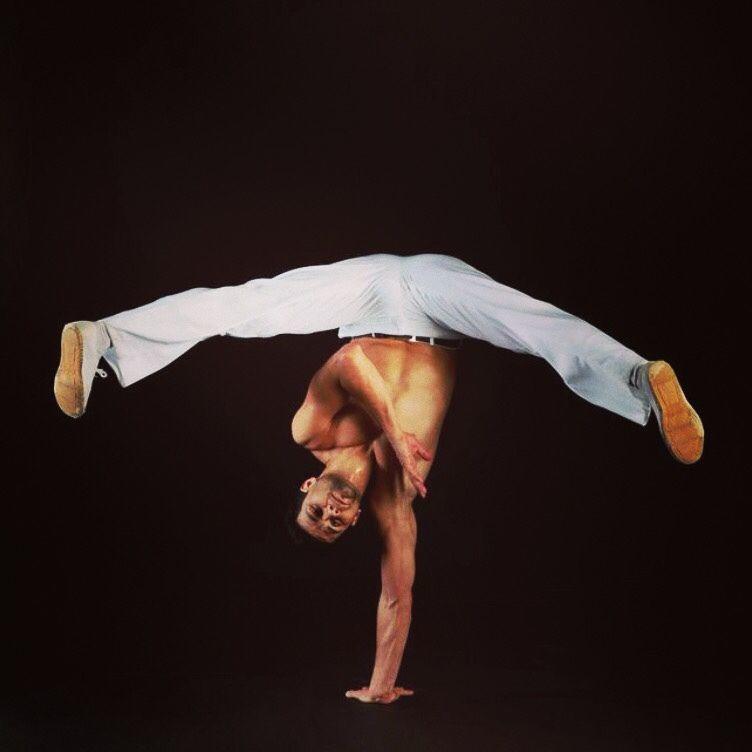
“Always On” is fragile. The most important factors in meaning and wealth creation, are time and compounding. Building incrementally on what was created before, over the very long term. That requires seasonality, redundancy, and excess capacity. Running hot focuses on creativity at the expense of endurance and resilience. Creativity gets the credit, but endurance and resilience have to be the priority. Sustainable Growth beats headline makers because of the reduced risk of ruin. Sustainable Growth means building the capacity to pause. To reflect. To unlearn. To relearn. You see it in those beautiful moments with dancers. Where their strength matches gravity, and they pause. Seeming to defy the laws of physics. That is true control. Real autonomy. Where complete acceptance of the way things are allows you to see deep enough for time and space to slow down. To go still. Then to emerge from the stillness renewed.

Poncianinho - Mojuba Capoeira London


Tuesday, June 12, 2018

Making Space

Yoga is the stilling of the mind. There are various ways to do that. Vedantic Philosophy talks of four paths. Through knowledge, devotion, action or a direct focus on the mind. When our thoughts are calm, and conscious, we are in a position to look more clearly at reality. Without that calm, life tends to live us rather than us living life. The path a specific person needs depends on their personality, desire, emotions, and situation. I tend to try think through things. To read. To discuss. To argue. I can get stuck in my head. Making space for other ways reduces how hard you are trying. Making space reduces the force being applied. At the moment, that is my focus. It seems like the opposite of productive. Do less. Ironically, things exist through, and are often discovered in, their opposites.

yogas chitti vritti nirodha

Yoga is the stilling of the mind

Monday, December 21, 2015

Protected by Rain

I love rain. Warm, inside and nowhere to go. I even like English winters with short days. If you use the few hours of sunshine to get outside, avoiding cabin fever. Work days should start after lunch if you are going to be in the dark anyway. When I worked in an open plan office, I used the ChatterBlocker app to play the sound of rain. The occasional rumble of thunder broke the monotony, and I could concentrate fully on whatever I was doing. No phonecalls. No emails. Nowhere to go. Just a little island to engage with something completely. Protected by rain. 


Tuesday, January 13, 2015

Space

As we become uber specialists knowing more and more about less and less, we become a little like that guy at the gym who only works biceps. He can't brush his teeth so his workouts aren't going to help with the ladies, and everything else looks like it is about to snap. TED.com helps provide connections to other ideas. Talks of 18 minutes from experts in various fields (with coaching and support on presentation skills) touch on 'ideas worth spreading' in a digestible format. They have recently extended the concept to books. TED books aim to expand slightly on the talks but still be in a format that can be read in one sitting. I just read my first TED book on 'The Art of Stillness' by Pico Iyer. 


Most books seem to have a single core theme or idea. Once you have got through the first few chapters you get the point. The rest of the book is padding. When a book offers multiple ideas we often tend to forget them because we only read it once, rather than chewing on the ideas and coming back to them again and again. Tyler Cowen is favourite of mine who has also tried to break this mould. I can strongly recommend two of his 'single sitting books'. 'The Great Stagnation' talks about the different requirements of a growing country bursting its Industrial Revolution, unshackling itself from poverty, and then a refining country starting to look at the how of living. 'Average is Over' is a fascinating discussion of what happens when average is no longer required? With computers and robots doing all the unskilled labour, what work will be required by others? This is not a new question. Keynes thought we would be working 3 hour weeks by now. He didn't quite factor in how afraid we are of free time. This connects to Pico Iyer's book and the value of learning to go nowhere. 


The concept of introducing space in order to enjoy life extends widely. Musicians talk of the beauty of the space between the notes. Some religious leaders talk of God being the spaces in between what we know for sure. One of my favourite examples comes from Garr Reynolds of Presentation Zen. He talks of always ensuring any talk you give is comfortably shorter than the allotted time so that you leave the audience interested in finding out more. Living in Japan, he connects his ideas to the Japanese saying Hara Hachi Bu which means eat till you are only 80% full.

Even if that means you have to stop mi